My Languishing TBR: D #AtoZChallenge2026 #Books #Bookreview
D is for Deathless
I’m doing folklore and book review posts to reach and please a larger audience. Previous years have shown select interest in both and to minimise blogging throughout the year, I’m focusing my efforts on April.
Focusing on an A to Z of my TBR (to be read) list, each letter will have books starting with that letter on my list, a book I’ve read and reviewed (with the review!) and one of my books matching the letter with a link about more info about the book.
If you’d rather check out my folklore post for today, go here.

My TBR
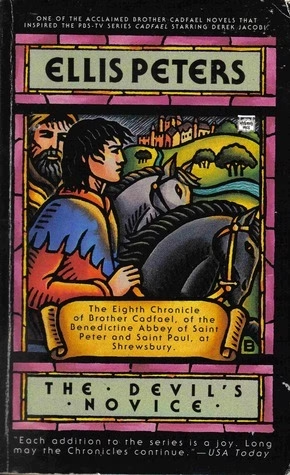


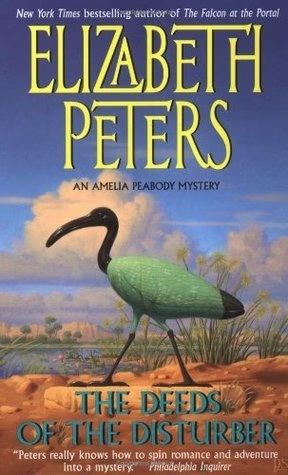


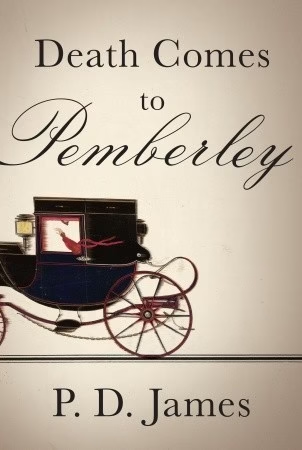


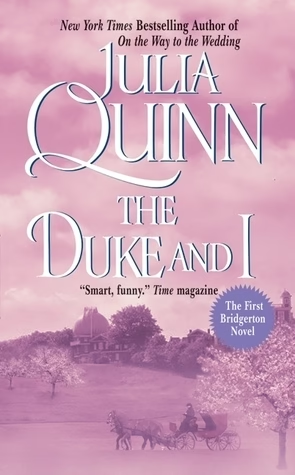








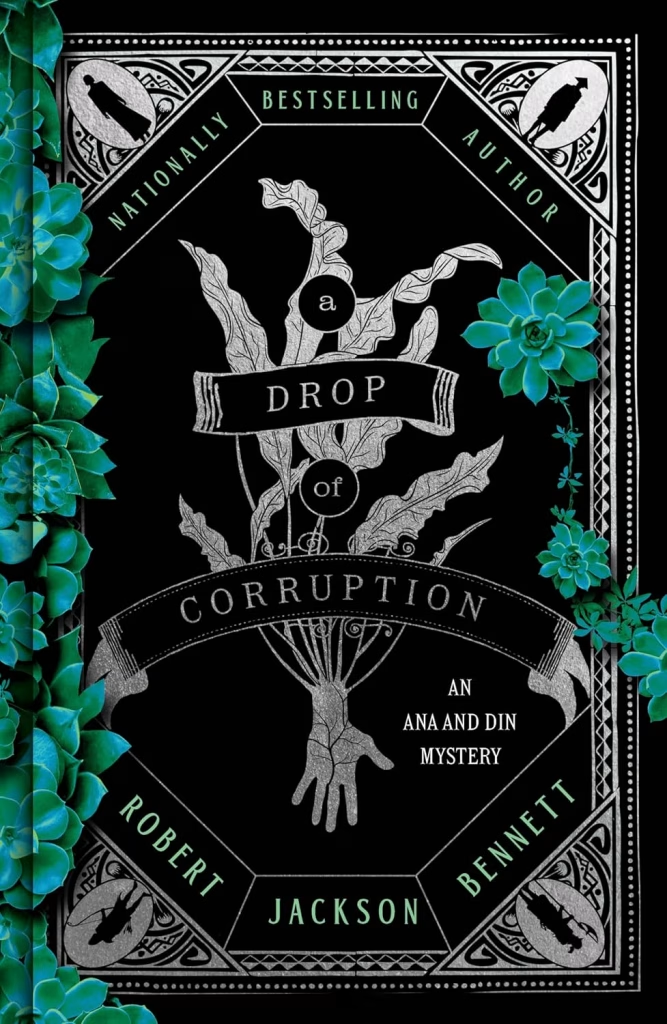
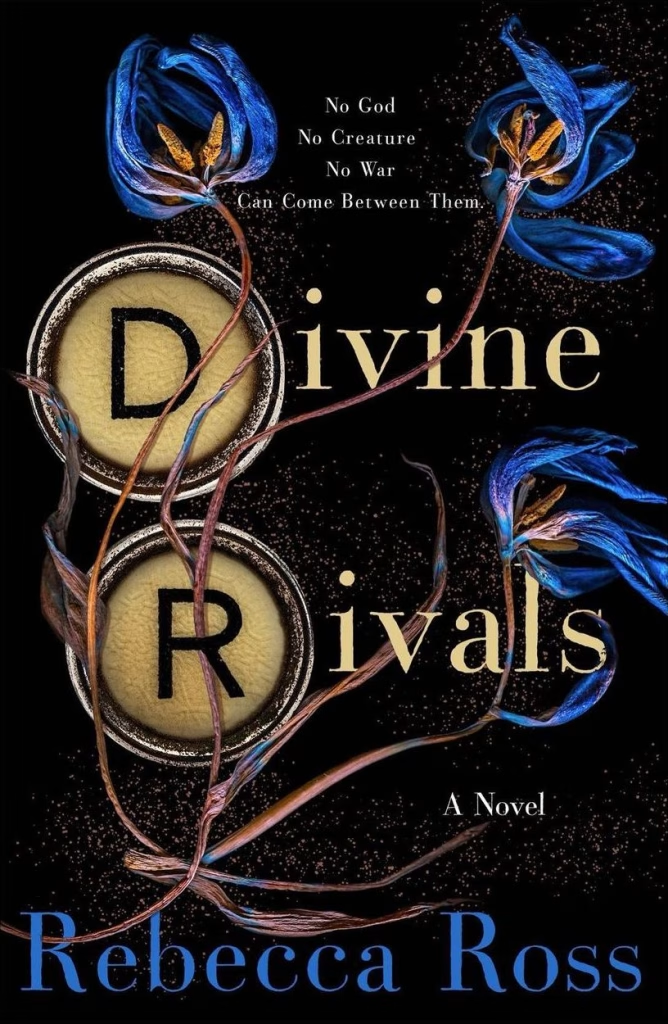
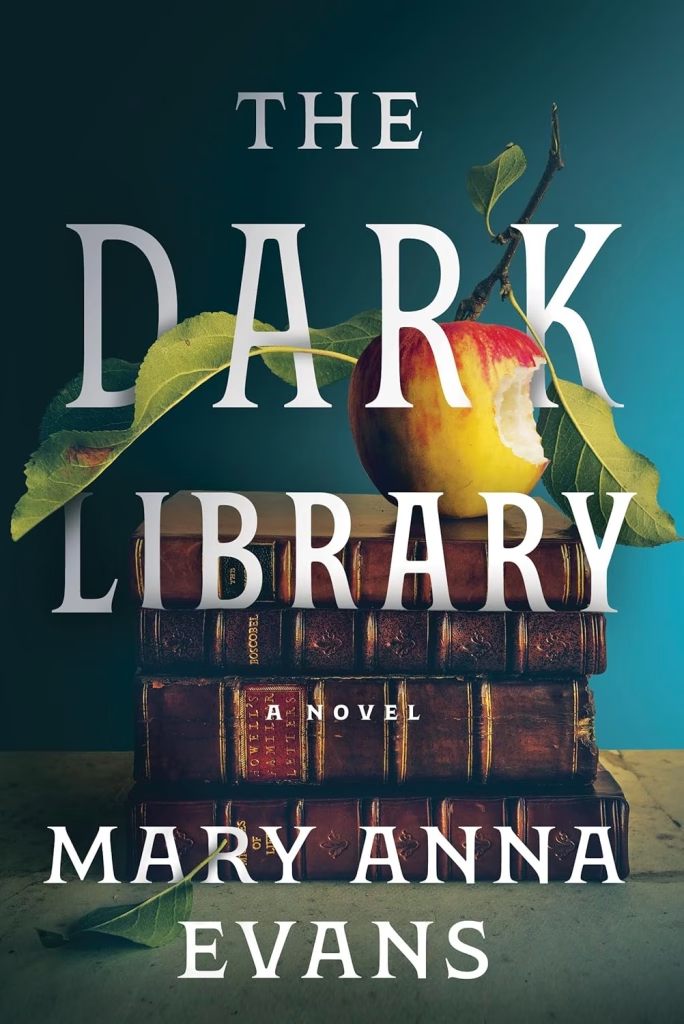
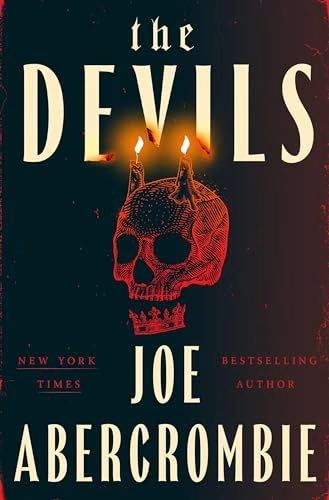
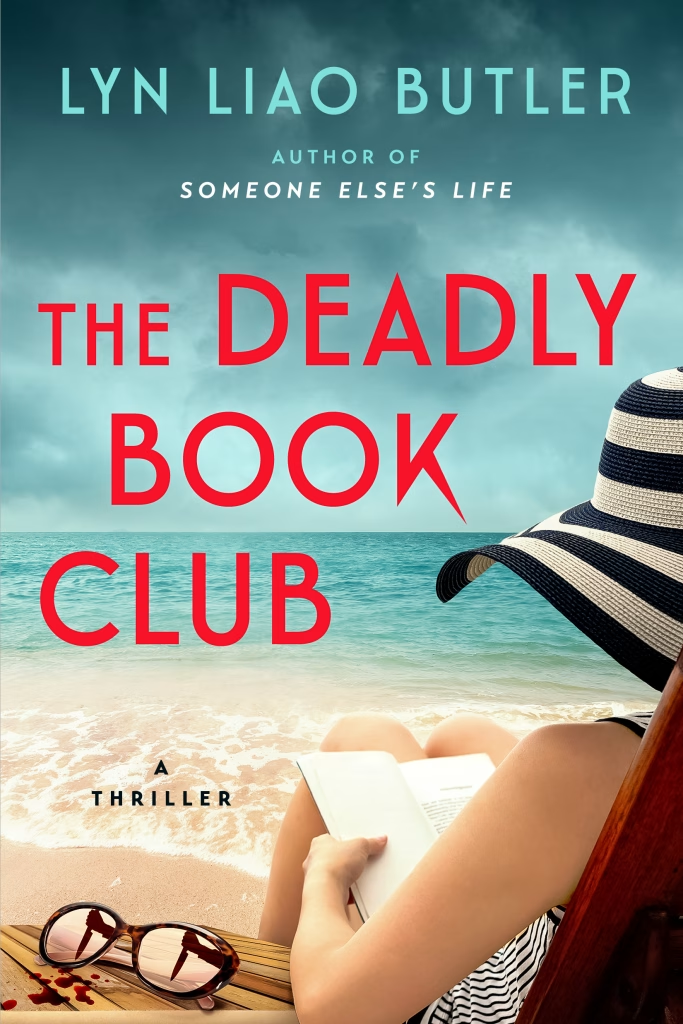
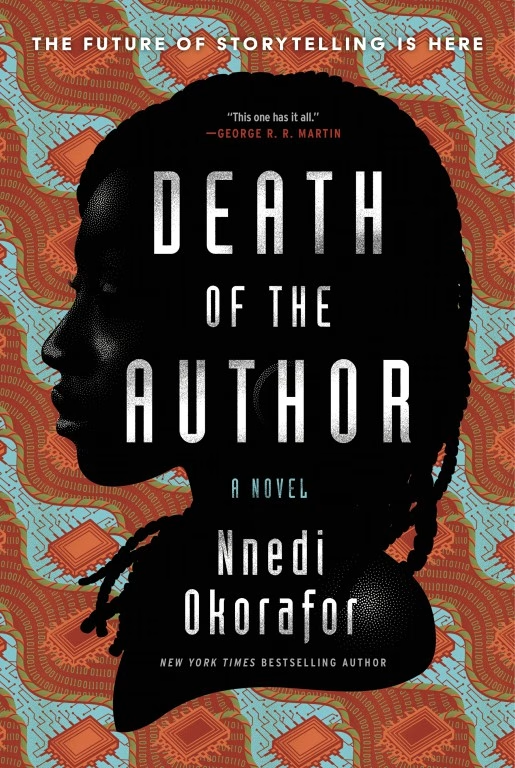
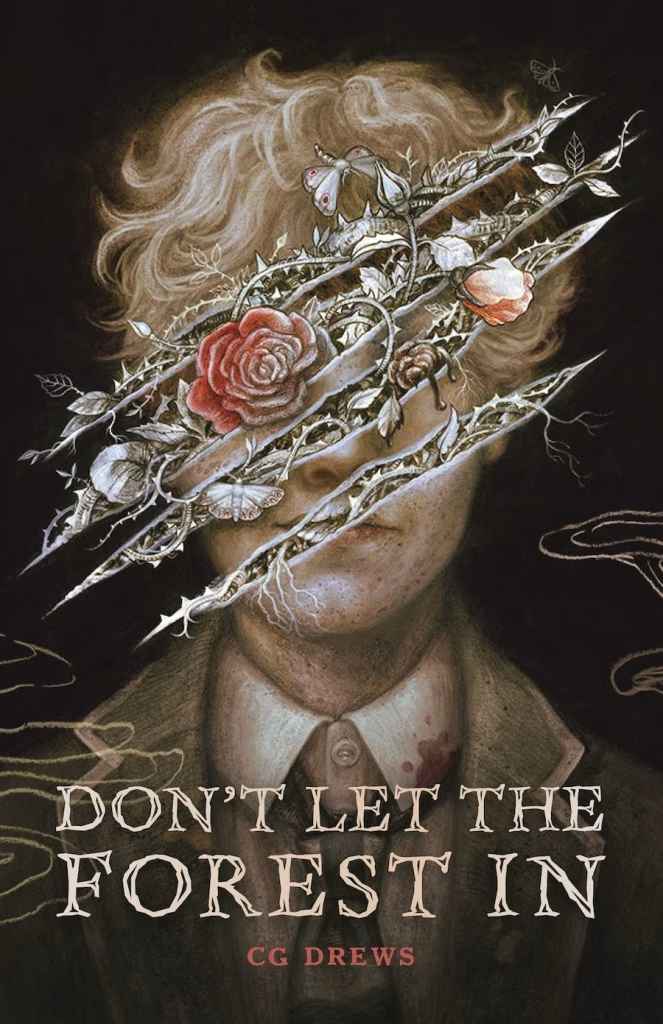
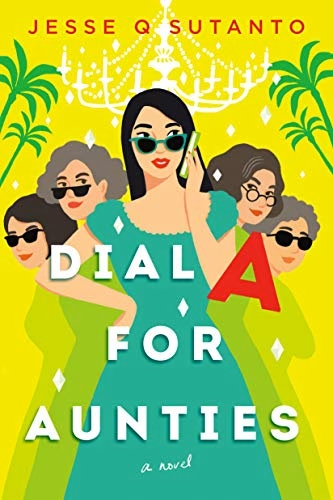
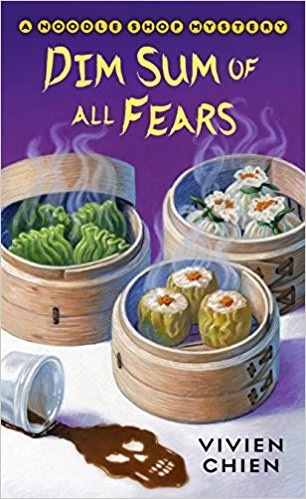
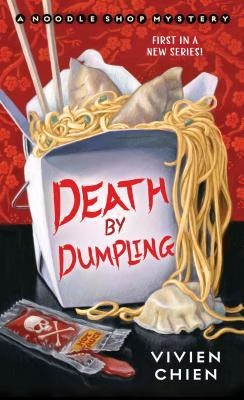
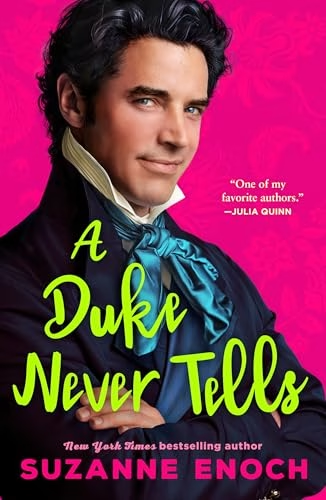
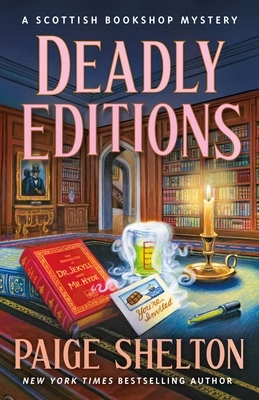
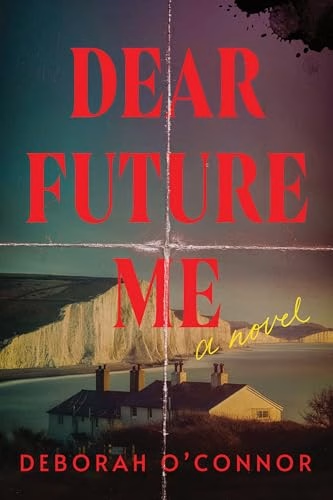
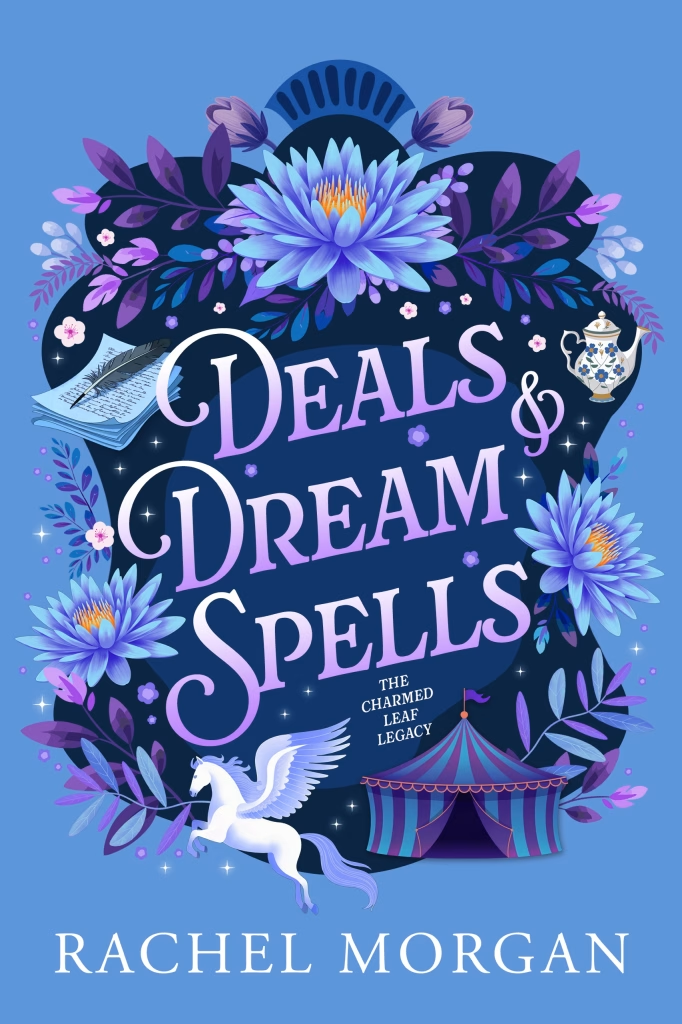
About the Book I’ve Read
Deathless by Catherynne M Valente
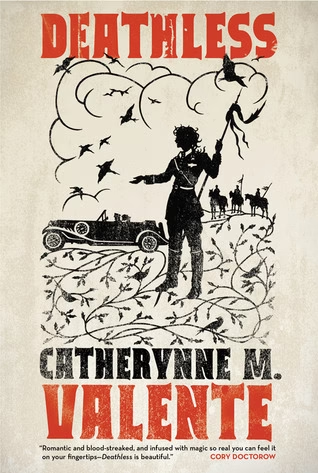
Koschei the Deathless is to Russian folklore what devils or wicked witches are to European culture: a menacing, evil figure; the villain of countless stories which have been passed on through story and text for generations. But Koschei has never before been seen through the eyes of Catherynne Valente, whose modernized and transformed take on the legend brings the action to modern times, spanning many of the great developments of Russian history in the twentieth century.
Deathless, however, is no dry, historical tome: it lights up like fire as the young Marya Morevna transforms from a clever child of the revolution, to Koschei’s beautiful bride, to his eventual undoing. Along the way there are Stalinist house elves, magical quests, secrecy and bureaucracy, and games of lust and power. All told, Deathless is a collision of magical history and actual history, of revolution and mythology, of love and death, which will bring Russian myth back to life in a stunning new incarnation.
Check it out on Goodreads.
My Review
You have to be in a certain mood to appreciate this book fully. It’s a brutal story of war, love, seduction, friendship, magic, power, and twisted realities. Don’t look for flowery prose romance here: even the seductions are as brutal as the world these people and creatures inhabit.
This retelling of “The Death of Koschei the Deathless” incorporates a lot of folklore surrounding Koschei as well as various creatures of myth, such as rusalki and domoviye. Combined with the Russian Revolution and its aftermath, it makes for a dark story that forged a fierce heroine in Marya Morevna. Marya is even scarier here than in the original tale. (Perhaps because we’re shown what she does and not just told.) And the reason for Koschei to be bound in her basement is even better than just being a prisoner of war as in the original tale.
I liked the allegory of war in Buyan and Russia “the war is never going well” and how it kept repeating throughout the story – and the ending. The literary device of three was well-used throughout (three birds, three sisters, three cottages, the names of places changing three times, etc.). Some people might find this repetitive, though.
The worldbuilding is rich and imaginative. One can keep exploring and finding new things in every setting.
The horse was my favourite character and I would’ve liked to interact with him more throughout the story – especially the second half where Ivan the Fool entered and made a mockery of everything Marya had been through. I get why she felt she needed him at that time, but I didn’t understand why she stayed with him.
The various birds were interesting (her sisters’ husbands, a Tsar of Birds, the firebird, etc.) and added even more magic to the story.
Baba Yaga was terrifying – and brilliant. I liked how she helped and hindered, how she exploited the wars while still keeping herself neutral. Not really like the folklore I’ve read about her, but this is fiction.
So, in the original folklore of Koschei, he is the worst of the worst, the biggest villain out there, and Ivan has a good heart who rescues Marya from him and they live happily-ever-after. This retelling has a slave-master aspect to every romantic relationship Marya has. Her domovoya had told her to know who rules the marriage… Until she runs away with Ivan, Koschei is her master. Then she flips it and rules both Koschei and Ivan (her two husbands) – she even has one in her bedroom and one bound in her basement. Even though this isn’t erotica, there is sex-on-page (with shackles in Buyan against a wall, Koschei cutting away her clothes, etc.). For Marya, Ivan is a warm, living body to hide in, while Koschei “the misunderstood” is her true love. Told you the seduction and love aspects of this story is messed-up…
Their stay in Yaichka was ridiculous as I had no idea what was going on. A fever dream, perhaps?
Except for the baby Sofiya, no-one is likeable or redeemable in this bleak book. Even Marya is an unlikeable heroine.
What was the plot? It doesn’t even seem to have a proper ending… There’s also no character growth, except if you see Marya becoming as abusive as her husbands as growth.
The italics in some places were overused and quite irritating.
A whole chapter is told by the domovoya who watched over Marya when she grew up.
But… There was something compelling about this book that kept me reading despite my discomfort, despite my dislike of the characters.

My Book
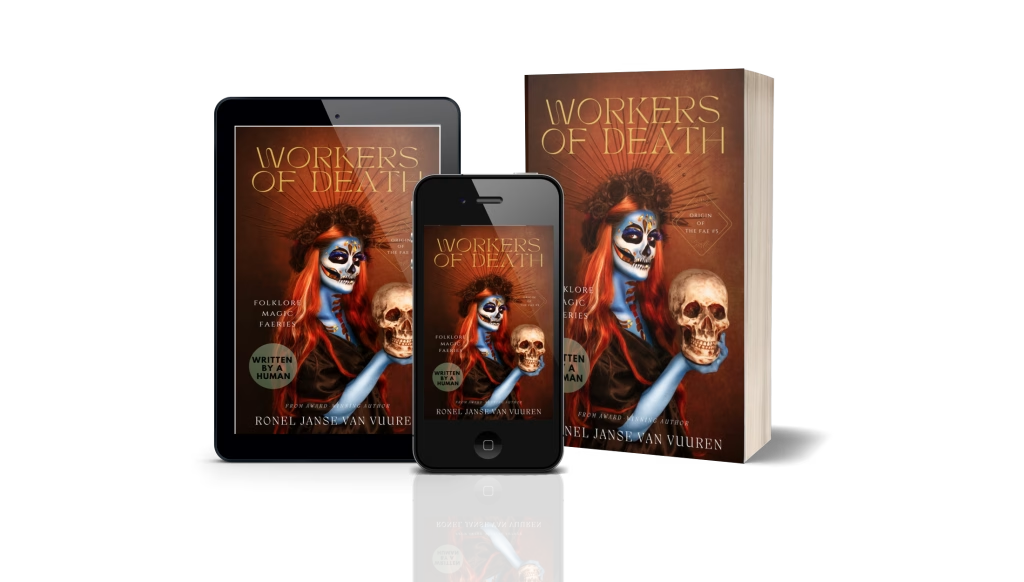
Workers of Death (Origin of the Fae #5)
I hope you enjoyed this. For more books I’ve read and reviewed, check out either my Pinterest board about reviews or my Goodreads profile. Alternatively, you can check out my reviews on BookBub. Have you read any of the books? Loved or hated any of them?
If you’ve enjoyed this review, you can support my work by buying me a coffee. It helps sustain my reading journey — from the books I buy to the time spent wandering through stories and writing them into reviews. Thank you for being part of it.
*FYI, my reviews are my honest opinion and if something bothers me, I tell it straight. How else will anything change? My opinions are based on being a voracious reader and book buyer, not an attack on the author.*




Gorgeous cover on Deathless! Wowzers!
I love looking at pretty covers 🙂
Interesting book. Not one I would enjoy, but it sounds like it’s something some might enjoy.
Not my usual type of read, but I’d liked the premise…
I’ve read three from this list. Oh, the BONES books! Haven’t read but probably should because I loved that show.
“Life shrinks or expands according to one’s courage.” – Anaïs Nin
J (he/him 👨🏽 or 🧑🏽 they/them) @JLenniDorner ~ Speculative Fiction & Reference Author and Co-host of the April Blogging #AtoZChallenge international blog hop
I enjoyed the show, too, which is why I have the books on my TBR 🙂
Reading stories from other cultures is always interesting. The initial one is … well, that is unusual. But by the third book, Ah, so that is a cultural thing. I wonder how many other cultures reading American stories go “well, there is another happy ending … and it was a horror story!”
Fair point…