Deadly Druids
D is for Druid
I’m weaving folklore and book reviews into a single offering, shaped to reach a wider audience drawn to both. In years past, interest has surfaced in fragments of each; now, I’m gathering those threads into April alone, so the rest of the year remains quiet and deliberate.
If you came only for today’s book review, you may follow the link here.
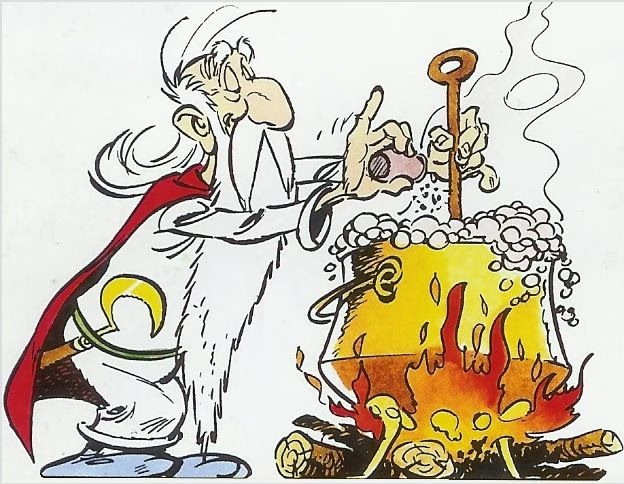
My first encounter with druids was in Asterix. Getafix (or Panoramix as I like to watch the French animated films with English subtitles) is still a firm favourite for me where it comes to druids.
Folklore
The Natural History of Pliny the Elder [AD 77]
CHAP. 95.—HISTORICAL FACTS CONNECTED WITH THE MISTLETOE.
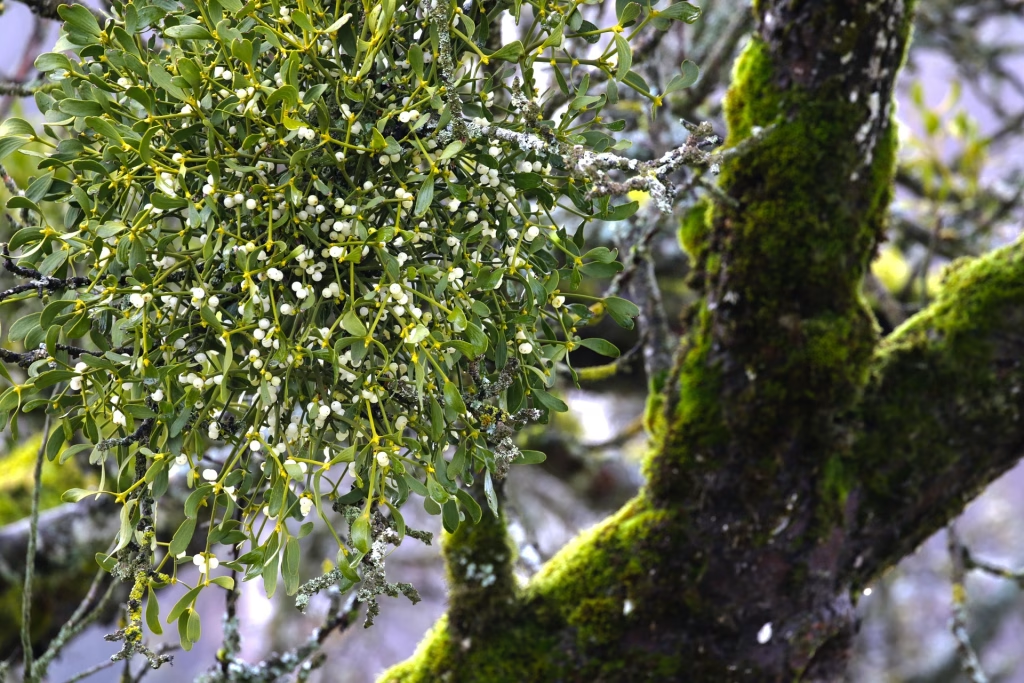
Upon this occasion we must not omit to mention the admiration that is lavished upon this plant by the Gauls. The Druids—for that is the name they give to their magicians2775—held nothing more sacred than the mistletoe and the tree that bears it, supposing always that tree to be the robur.2776 Of itself the robur is selected by them to form whole groves, and they perform none of their religious rites without employing branches of it; so much so, that it is very probable that the priests themselves may have received their name 436from the Greek name2777 for that tree. In fact, it is the notion with them that everything that grows on it has been sent immediately from heaven, and that the mistletoe upon it is a proof that the tree has been selected by God himself as an object of his especial favour.
The mistletoe, however, is but rarely found upon the robur; and when found, is gathered with rites replete with religious awe. This is done more particularly on the fifth day of the moon, the day which is the beginning of their months and years, as also of their ages, which, with them, are but thirty years. This day they select because the moon, though not yet in the middle of her course, has already considerable power and influence; and they call her by a name which signifies, in their language, the all-healing.2778 Having made all due preparation for the sacrifice and a banquet beneath the trees, they bring thither two white bulls, the horns of which are bound then for the first time. Clad in a white robe the priest ascends the tree, and cuts the mistletoe with a golden sickle, which is received by others in a white cloak.2779 They then immolate the victims, offering up their prayers that God will render this gift of his propitious to those to whom he has so granted it. It is the belief with them that the mistletoe, taken in drink, will impart fecundity to all animals that are barren, and that it is an antidote for all poisons.2780 Such are the religious feelings which we find entertained towards trifling objects among nearly all nations.
BULFINCH’S MYTHOLOGY: THE AGE OF FABLE OR STORIES OF GODS AND HEROES by Thomas Bulfinch [1855]
THE DRUIDS.
THE Druids were the priests or ministers of religion among the ancient Celtic nations in Gaul, Britain, and Germany. Our information respecting them is borrowed from notices in the Greek and Roman writers; compared with the remains of Welsh and Gaelic poetry still extant.
The Druids combined the functions of the priest, the magistrate, the scholar, and the physician. They stood to the people of the Celtic tribes in a relation closely analogous to that in which the Brahmans of India, the Magi of Persia, and the priests of the Egyptians stood to the people respectively by whom they were revered.
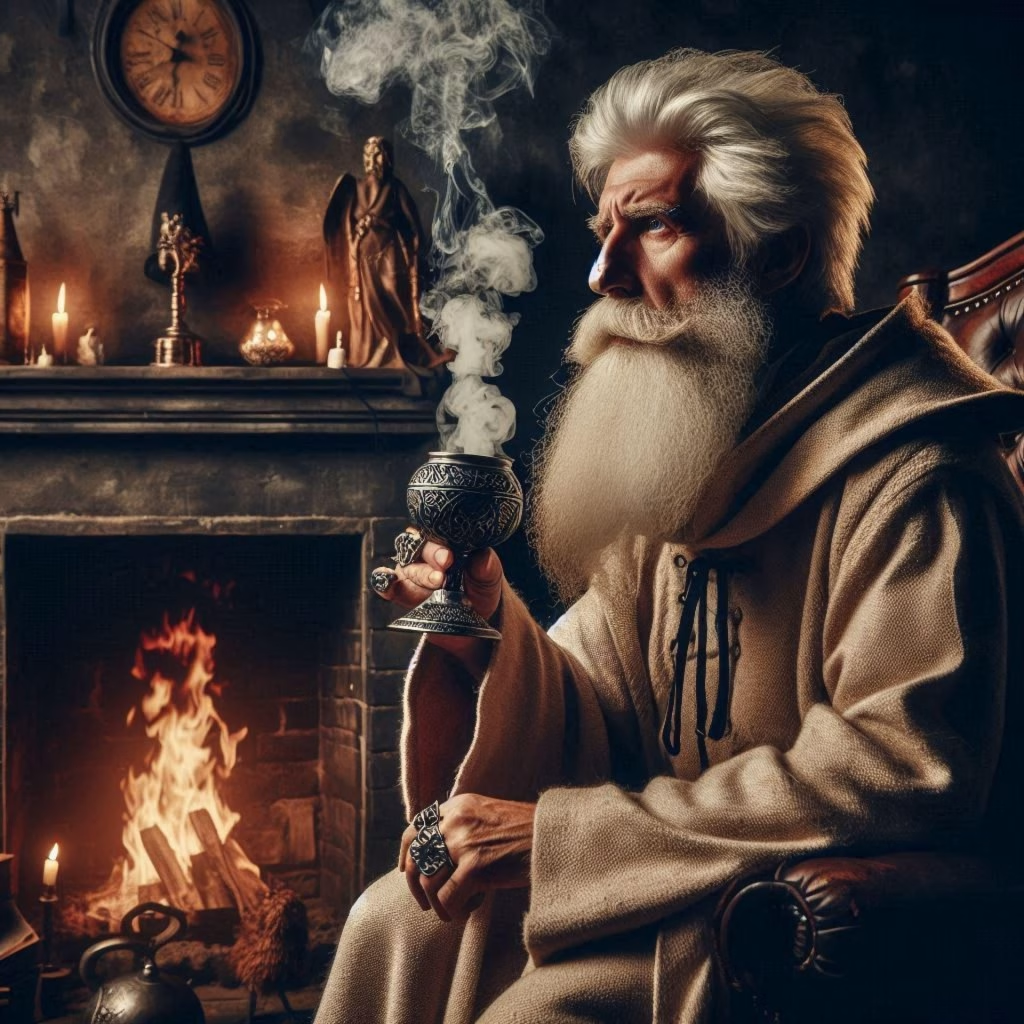
The Druids taught the existence of one god, to whom they gave a name “Be’ al,” which Celtic antiquaries tell us means “the life of everything,” or “the source of all beings,” and which seems to have affinity with the Phoenician Baal. What renders this affinity more striking is that the Druids as well as the Phoenicians identified this, their supreme deity, with the Sun. Fire was regarded as a symbol of the divinity. The Latin writers assert that the Druids also worshipped numerous inferior gods.
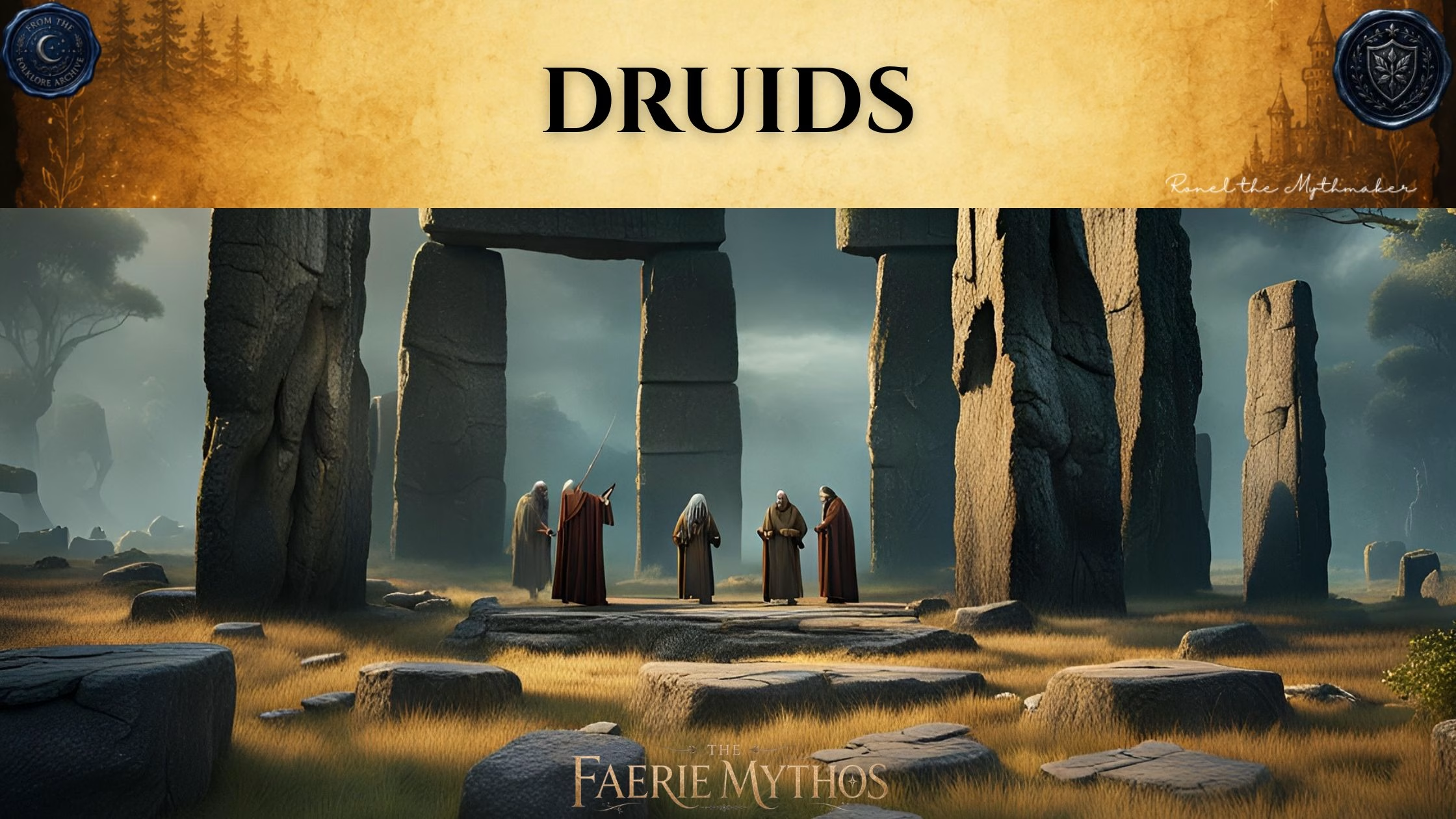
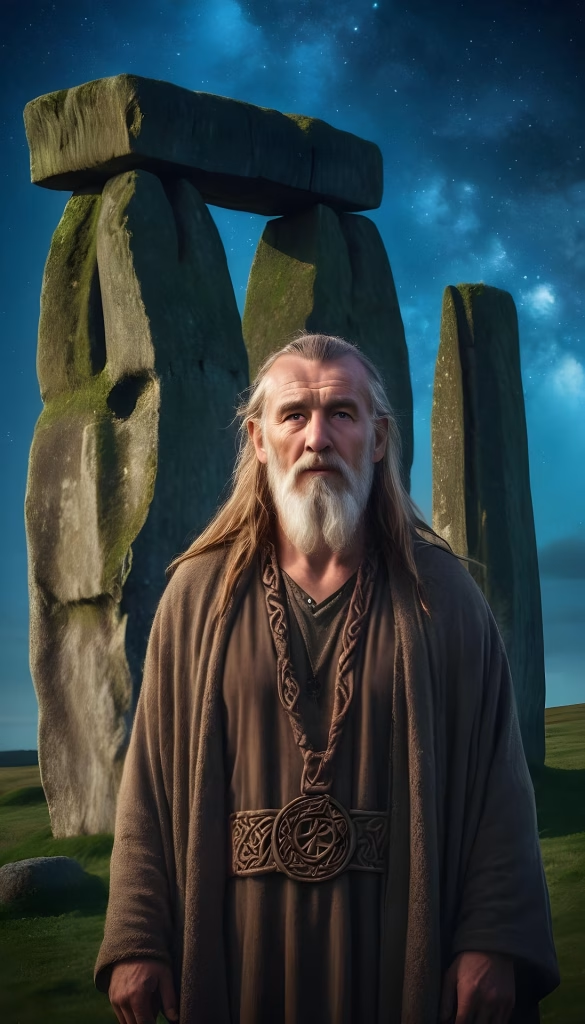
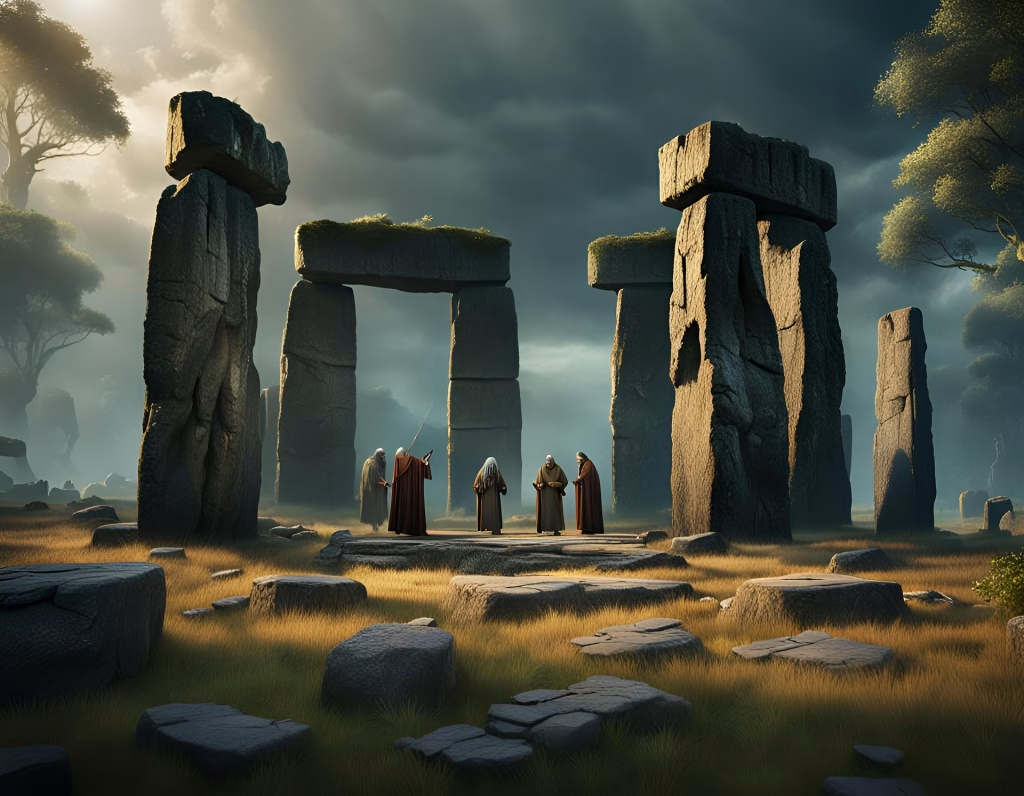
They used no images to represent the object of their worship, nor did they meet in temples or buildings of any kind for the performance of their sacred rites. A circle of stones (each stone generally of vast size), enclosing an area of from twenty feet to thirty yards in diameter, constituted their sacred place. The most celebrated of these now remaining is Stonehenge, on Salisbury Plain, England.
These sacred circles were generally situated near some stream, or under the shadow of a grove or widespreading oak. In the centre of the circle stood the Cromlech or altar, which was a large stone, placed in the manner of a table upon other stones set up on end. The Druids had also their high places, which were large stones or piles of stones on the summits of hills. These were called Cairns, and were used in the worship of the deity under the symbol of the sun.
That the Druids offered sacrifices to their deity there can be no doubt. But there is some uncertainty as to what they offered, and of the ceremonies connected with their religious services we know almost nothing. The classical (Roman) writers affirm that they offered on great occasions human sacrifices; as for success in war or for relief from dangerous diseases. Caesar has given a detailed account of the manner in which this was done. “They have images of immense size, the limbs of which are framed with twisted twigs and filled with living persons. These being set on fire, those within are encompassed by the flames.” Many attempts have been made by Celtic writers to shake the testimony of the Roman historians to this fact, but without success.
The Druids observed two festivals in each year. The former took place in the beginning of May, and was called Beltane or “fire of God.” On this occasion a large fire was kindled on some elevated spot, in honour of the sun, whose returning beneficence they thus welcomed after the gloom and desolation of winter. Of this custom a trace remains in the name given to Whitsunday in parts of Scotland to this day. Sir Walter Scott uses the word in the “Boat Song” in the “Lady of the Lake”:
“Ours is no sapling, chance sown by the fountain,
Blooming at Beltane in winter to fade;” etc.
The other great festival of the Druids was called “Samh’ in,” or “fire of peace,” and was held on Hallow-eve (first of November), which still retains this designation in the Highlands of Scotland. On this occasion the Druids assembled in solemn conclave, in the most central part of the district, to discharge the judicial functions of their order. All questions, whether public or private, all crimes against person or property, were at this time brought before them for adjudication. With these judicial acts were combined certain superstitious usages, especially the kindling of the sacred fire, from which all the fires in the district, which had been beforehand scrupulously extinguished, might be relighted. This usage of kindling fires on Hallow-eve lingered in the British islands long after the establishment of Christianity.
Besides these two great annual festivals, the Druids were in the habit of observing the full moon, and especially the sixth day of the moon. On the latter they sought the Mistletoe, which grew on their favourite oaks, and to which, as well as to the oak itself, they ascribed a peculiar virtue and sacredness. The discovery of it was an occasion of rejoicing and solemn worship. “They call it,” says Pliny, “by a word in their language, which means ‘heal-all,’ and having made solemn preparation for feasting and sacrifice under the tree, they drive thither two milk-white bulls, whose horns are then for the first time bound. The priest then, robed in white, ascends the tree, and cuts off the mistletoe with a golden sickle. It is caught in a white mantle, after which they proceed to slay the victims, at the same time praying that God would render his gift prosperous to those to whom he had given it.” They drink the water in which it has been infused, and think it a remedy for all diseases. The mistletoe is a parasitic plant, and is not always nor often found on the oak, so that when it is found it is the more precious.
The Druids were the teachers of morality as well as of religion. Of their ethical teaching a valuable specimen is preserved in the Triads of the Welsh Bards, and from this we may gather that their views of moral rectitude were on the whole just, and that they held and inculcated many very noble and valuable principles of conduct. They were also the men of science and learning of their age and people. Whether they were acquainted with letters or not has been disputed, though the probability is strong that they were, to some extent. But it is certain that they committed nothing of their doctrine, their history, or their poetry to writing. Their teaching was oral, and their literature (if such a word may be used in such a case) was preserved solely by tradition. But the Roman writers admit that “they paid much attention to the order and laws of nature, and investigated and taught to the youth under their charge many things concerning the stars and their motions, the size of the world and the lands, and concerning the might and power of the immortal gods.”
Their history consisted in traditional tales, in which the heroic deeds of their forefathers were celebrated. These were apparently in verse, and thus constituted part of the poetry as well as the history of the Druids. In the poems of Ossian we have, if not the actual productions of Druidical times, what may be considered faithful representations of the songs of the Bards.
The Bards were an essential part of the Druidical hierarchy. One author, Pennant, says, “The Bards were supposed to be endowed with powers equal to inspiration. They were the oral historians of all past transactions, public and private. They were also accomplished genealogists,” etc.
Pennant gives a minute account of the Eisteddfods or sessions of the Bards and minstrels, which were held in Wales for many centuries, long after the Druidical priesthood in its other departments became extinct. At these meetings none but Bards of merit were suffered to rehearse their pieces, and minstrels of skill to perform. Judges were appointed to decide on their respective abilities, and suitable degrees were conferred. In the earlier period the judges were appointed by the Welsh princes, and after the conquest of Wales, by commission from the kings of England. Yet the tradition is that Edward I, in revenge for the influence of the Bards in animating the resistance of the people to his sway, persecuted them with great cruelty. This tradition has furnished the poet Gray with the subject of his celebrated ode, the “Bard.”
There are still occasional meetings of the lovers of Welsh poetry and music, held under the ancient name. Among Mrs. Hemans’ poems is one written for an Eisteddfod, or meeting of Welsh Bards, held in London, May 22, 1822. It begins with a description of the ancient meeting, of which the following lines are a part: “…midst the eternal cliffs, whose strength defied
The crested Roman in his hour of pride;
And where the Druid’s ancient cromlech frowned,
And the oaks breathed mysterious murmurs round,
There thronged the inspired of yore! on plain or height,
In the sun’s face, beneath the eye of light,
And baring unto heaven each noble head,
Stood in the circle, where none else might tread.”
The Druidical system was at its height at the time of the Roman invasion under Julius Caesar. Against the Druids, as their chief enemies, these conquerors of the world directed their unsparing fury. The Druids, harassed at all points on the mainland, retreated to Anglesey and Iona, where for a season they found shelter and continued their now dishonoured rites.
The Druids retained their predominance in Iona and over the adjacent islands and mainland until they were supplanted and their superstitions overturned by the arrival of St. Columba, the apostle of the Highlands, by whom the inhabitants of that district were first led to profess Christianity.
Brewer’s Dictionary of Phrase and Fable
Derry Down
This chorus, says Sir Walter Scott, is not only as old as the heptarchy, but even as the Druidical times. It was the chorus to the hymns sung by the Druids when they went in grand procession to gather mistletoe.
Druid
A chief priest (Celtic der, superior; wydd, priest or instructor). In Taliesin we read, Bûm gwydd yngwarth an (at length I became a priest or a wydd). It was after this period that the wydds were divided into two classes, the Der-wydds and the Go-wydds (D’ruids and Ovidds). We have the Irish draoi or drui (a magician)… Pliny derives the word from drus (an oak), but how could the Celts borrow from the Greeks?
The Forest in Folklore and Mythology by Alexander Porteous
In Central and Northern Europe dark groves composed of ancient trees, and situated in the midst of gloomy forests, were, as said previously, the only temples, but these had been rendered holy by the awe and reverence with which they had inspired each succeeding generation. An invisible deity dwelt in them who made his power felt in the storms which swept over them, or in the sunshine which flooded the woodland glades… the worship of Druids was carried on for many centuries. It was an article in their creed that it was unlawful to build temples to the gods, or to worship them within walls and under roofs. Consequently all their places of worship were in the open air, and were generally on high ground from whence they could view the heavenly bodies to which much of their adoration was directed. But lest they be incommoded by the winds and rains, distracted by the view of external objects, or disturbed by the intrusion of unhallowed feet when they were instructing their disciples, or performing their religious rites, they made choice of the deepest recesses of groves and woods for their most sacred places, and groves were often planted for that purpose with those trees in which they most delighted. The chief of these was a strong and spreading Oak, for which tree the Druids had a very high and superstitious veneration. These sacred groves were watered by some consecrated fountain or river, and were surrounded by a ditch or mound to prevent the intrusion of strangers. No one was permitted to enter these consecrated groves except through the passages left open for the purpose. These passages were guarded by Druids of an inferior standing to prevent intrusion into the sacred mysteries. In the centre of the grove was a circular area enclosed with one or two rows of large stones set perpendicularly with the earth, which constituted the temple, within which the altar stood on which the sacrifices were offered.
*More can be read in the book.
The Encyclopedia of Celtic Mythology and Folklore by Patricia Monaghan
Druid Celtic social role.
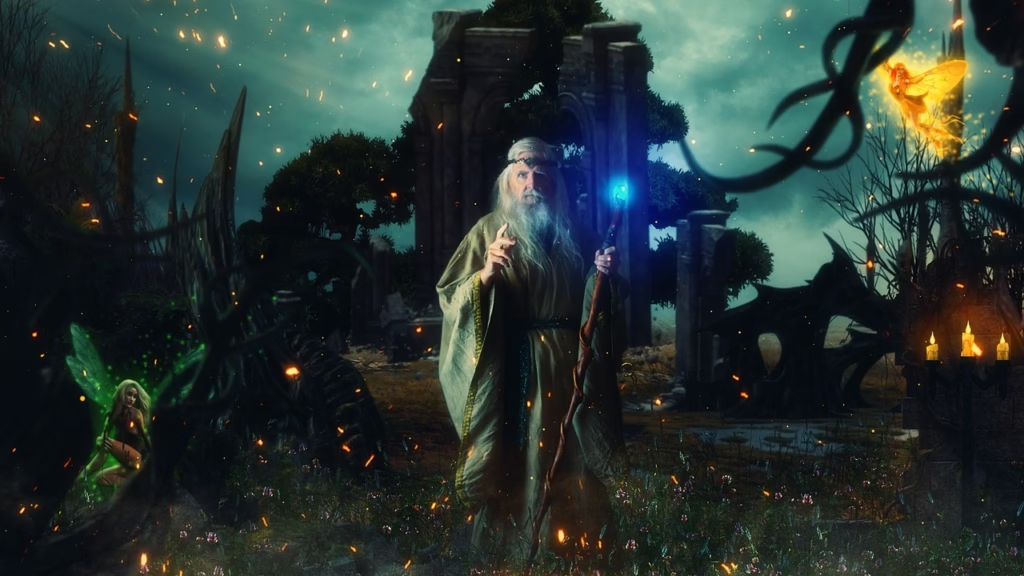
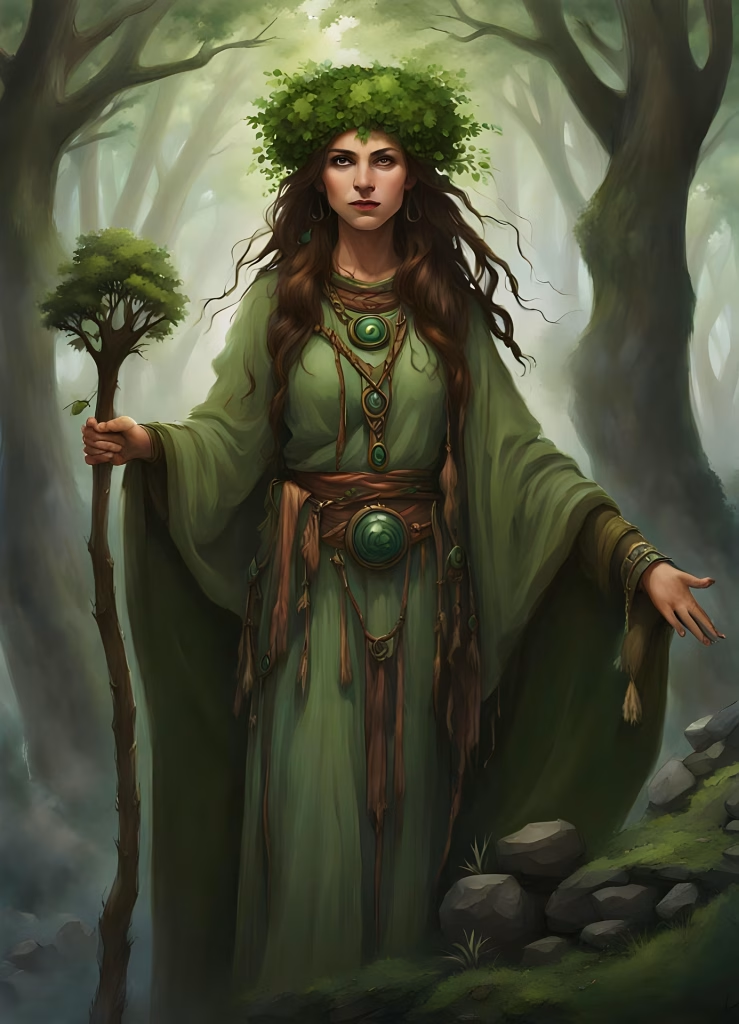
Members of the priestly class among the Celts were called druids, from a word interpreted variously as meaning “oak” or “wise”. Although the druids did not write down their beliefs, which were transmitted orally to the chosen initiates, we have some textual documents from other sources. Early Roman writers including Caesar described a priesthood of magicians and poets, philosophers and lawyers – for the druids played all of these roles in Celtic society. Both men and women served as druids.
Once the period of training had passed, the druid served as a seer who used various means of altering consciousness in order to forecast and advise the people. Oracular traditions including incantation, psychometry, writing, or trance were employed to discern the correct path for an individual or tribe; in this sense, druids served as political advisers as well as counsellors. They also conducted sacrifice, both seasonally and when their divinations showed it necessary.
Finally, druids were educators; many young people studied with them for a time, learning the history of their people, religious concepts, mathematics, astronomy, writing, and other subjects before returning to life in the other classes of society. Since all education was through memorisation, the training that future kings, warriors, and craftsmen received was instantly accessible to them in later life.
Several writers have suggested a connection between druidical practice and shamanism, an arctic religion based in the belief that other worlds above and below the visible world can be accessed through altered consciousness. The druids indeed practiced ways of entrancing themselves; they ate acorns before prophesying, confined themselves to darkened rooms, chanted incantations, and otherwise attempted to strain their senses to see visions.
Druids held their sacrifices in sacred groves called nemetons, the destruction of which by the romans was a brutal blow to the heart of the people, as was the Christian demand that trees no longer be honoured with offerings and prayers.
Druid’s fog (féth fiada) One of the powers that druids were said to possess was the ability to wrap themselves in mist and thus to pass by their enemies (or even their friends) undetected. This invisibility may have actually been a form of shape-shifting – the passing druid might become a veil of mist, just as he or she could become an animal or a bird – rather than a fog conjured by and separate from the druid.
*More can be read in the book.
Further Reading:
- Druid
- Who were the Druids?
- What is a Druid?
- Druid Beliefs
- A day in the life of a Celtic Druid
- Druid
- Druids – The MYSTERIOUS Priests of Celtic Culture
- Who Were The Druids? | BBC Timestamp
- The Real Story of the Druids: Myths, Rituals, and Legends
- What do the modern Druids do?
- Under the Oak Pt 1: The Celts & the Druids
Folklore in a Nutshell by Ronel
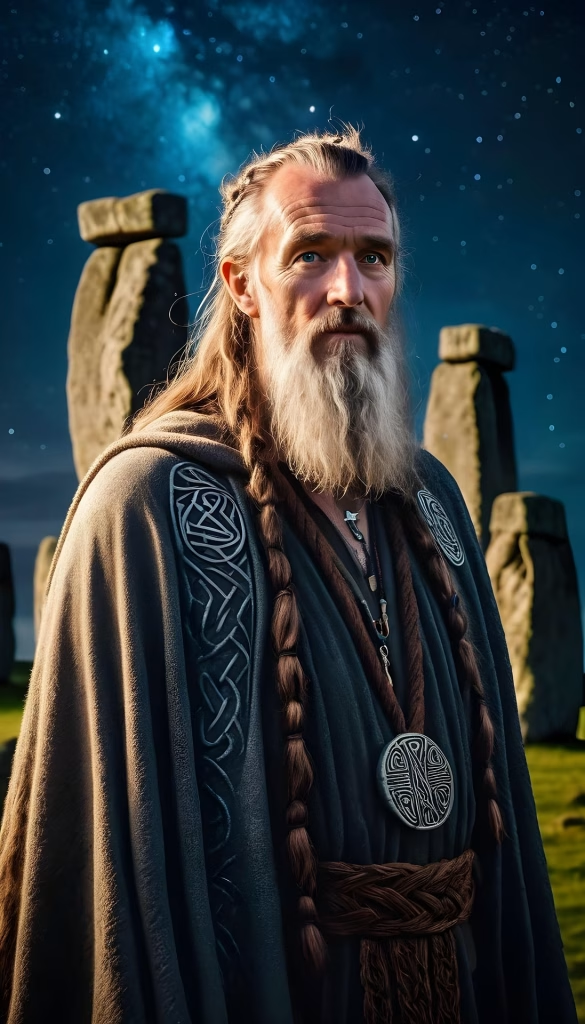
Druids were priests in ancient Celtic nations in Gaul, Britain, and even Germany. They oversaw everything from ceremonies, issues of law, education, and health. Their temples were usually a circle of standing stones, the most famous of these is Stonehenge. They also held ceremonies beneath oak trees, in sacred groves called nemetons.
They revered the oak tree, and mistletoe found on oak trees were sacred. They used golden sickles to harvest mistletoe.
Caesar wrote how they made human sacrifices, specifically huge humanoid bodies made of twisted sticks trapping living persons inside and then set aflame. Pliny the Elder wrote about their obsession with mistletoe.
Druids observed the festivals of Beltane at the start of May and of Samhain at the start of November. Both have bonfires and involve the entire community.
Druids wrote nothing down. It’s probably part of their doctrine to not leave their secrets laying around in the written word, but to share their history and lore through oral storytelling to the worthy. They also taught children how to read, write, about philosophy, history, and mathematics, which shows that they weren’t against reading and writing, but that they preferred having knowledge stored in the mind instead of in books.
Unlike many other priestly orders, both men and women were allowed to be druids.
Whether they were close to nature and merely keeping it in balance with their practices or serial killers actually sacrificing humans on their altars to appease the gods, druids have captured the imagination of people since ancient times.
Druids in Modern Culture
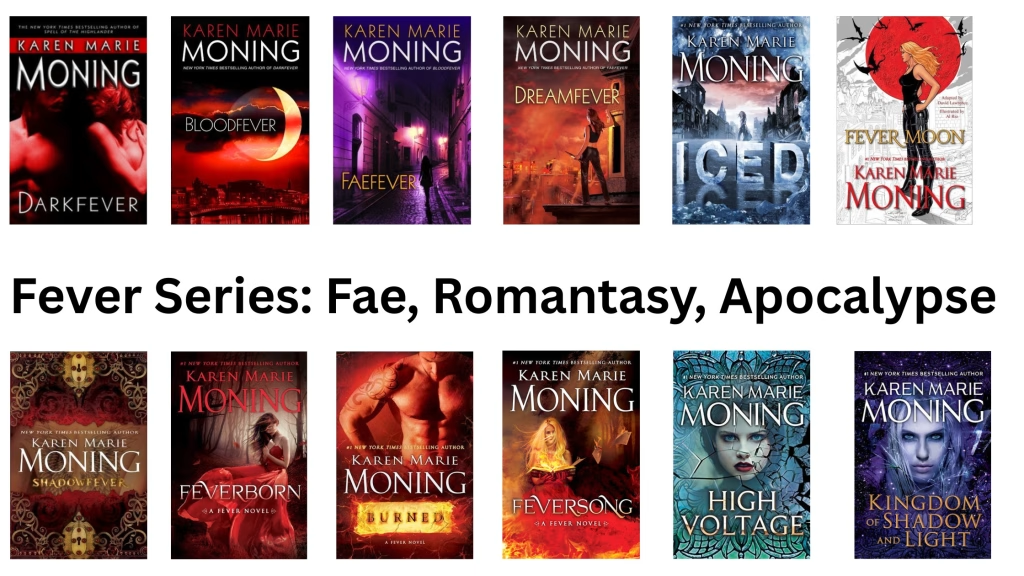
Highlander and Fever series by Karen Marie Moning
[read my reviews for the Fever series here]
Druid: In pre-Christian Celtic society, a Druid presided over divine worship, legislative and judicial matters, philosophy, and the education of elite youth to their order. Druids were believed to be privy to the secrets of the gods, including issues pertaining to the manipulation of physicl matter, space, and even time. The old Irish “Drui” means magician, wizard, diviner.
Learn more here.
Asterix
Although known for his strength-enhancing magic potion, he has many other magical and medicinal potions at his disposal, and acts as the village doctor and occasionally teacher. Asterix (and most other villagers) will consult him whenever anything strange occurs. He does not himself normally engage in combat, whereas most of the villagers enjoy a good punch-up (even with each other).
As the only individual able to produce the “magic potion” upon which the villagers rely for their strength, he is the focus of many stories, and the conscience of the village. On a few occasions, he has refused to make the potion when the villagers become too selfish. He has also occasionally been taken prisoner by hostile forces to get access to the potion – only to be freed again thanks to Asterix and Obelix. Finding ingredients for his potions has also sent Asterix on several adventures. Despite being a druid, he is incapable of conjuring spells.
Learn more here.
The Secret of the Magic Potion is full of various druids. So much fun to watch!
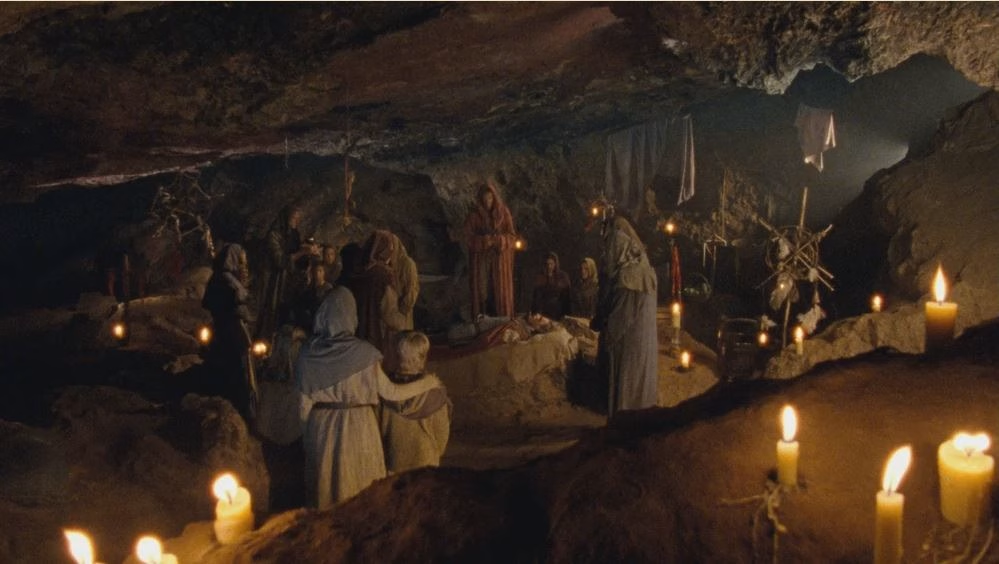
BBC’s Merlin
The Druids are a group of peaceful and secretive people who possess powerful magic. They live throughout Albion in seemingly small settlements and they are very powerful healers. They have been long sought and hunted down by the tyrannical king, Uther Pendragon. They worship nature, practice magic for good means and are generally a peaceful race.
Learn more here.
Teen Wolf
Celtic Druids, also known simply as Druids, are a group of humans in the Teen Wolf series who are dedicated to maintaining the balance of nature by spending a great deal of their lives studying the supernatural world and the mystical arts. Legend has it that many Druids have had a connection to Werewolves dating back thousands of years, and as a result, they are known as Emissaries, or advisers, to Werewolf packs, giving them guidance in their supernatural lives while also keeping them connected to their humanity.
Druids, who in general are meant to remain neutral in their task as the maintainers of the balance of nature, do have a dark counterpart as well. These counterparts are known as Darachs. “Darach,” described by Deaton as a Gaelic word translating to “dark oak,” alludes to the inner darkened nature of a Druid who gains powers through ritual sacrifices. Depending on the types of sacrifices they commit, a Darach can gain one or a number of enhanced powers, including superhuman attributes (e.g. strength and agility), psionic abilities (e.g. telekinesis, astral projection, illusion casting, glamouring), or even elemental powers (e.g. atmokinesis, terrakinesis)
Learn more here.

Druids in My Writing
Origin of the Fae: Druids
Druids have always been the most powerful of all human magic-users. They can access the magic of the world directly, while others need amulets and other talismans to do so.
They have been hunted to extinction by creatures like the Obayifo who wish to rule the world themselves with no opposition.
Oaks are sacred to them, especially old groves (nemeton).
They are so wise not just because of their education, but their access to their ancestors. It isn’t clear how they access the Otherworld, but acorns are thought to have something to do with it.
Human sacrifice is only done by dark druids to make themselves more powerful. Doing so cuts them off from their natural magic.
Mistletoe is used as both poison and cure, depending on its use.
Druids are warriors. They need to defend the world against the darkness that threatens to unbalance Nature. They need to be able to fight not just with magic, but physically, and mentally, too.
Unlike other magic-users, the surviving druids keep to themselves and work in the shadows to accomplish their sacred task of keeping balance between Light and Dark.
Druids translated to Afrikaans: Druïdes.
Wings (Faery Tales #13)

If this tale has lingered with you, I would be glad to hear it.
Where did you first encounter this creature – through story, superstition, memory, or something half-remembered?
If you know other versions of its myth, feel free to leave them in the record below. Folklore survives by being spoken again.
Further fragments and interpretations of this creature can be found in my Pinterest grimoire.
If you wish to support the time and craft behind these folklore posts – researching old tales, gathering fragments, and shaping them into something worth reading – you may do so by buying me a coffee. It can be a single offering, or something you return to whenever the spirit moves you.



Thanks for this, Ronel! I seem to recall that the Romans did what they could to get rid of the Druids because they believed they would make the people restless. A political thing, in other words. And it was a very long study period to become a fully qualified Druid. Years!
I’m glad you included Getafix from the Asterix series. He is a favourite character of mine.
This year’s theme for my A to Z is Women In Speculative Fictuon.
https://suebursztynski.blogspot.com/2026/04/a-to-z-blogging-challenge-2026-women-in_4.html
I’m glad you liked the post. Yeah, he’s my favourite druid.
In Danish the druid in Asterix is called Miraculix. I find this a better name.
It’s a good name.
Some fascinating piece of information on the Druids. It’s interesting how the used acorn to access the other world, and then their love for the mistletoes.
I learnt a whole lot of stuff today. Thank you, Ronel.
So glad you liked the post 🙂
It’s a shame the druids didn’t leave more of their knowledge lying around in writing for historians to find!
https://nydamprintsblackandwhite.blogspot.com/2026/03/d-is-for-dust-up-in-desert.html
It’s weird that they didn’t approve of writing things down. Perhaps I find it weird because I’m a writer 🙂