Fierce Centaurs
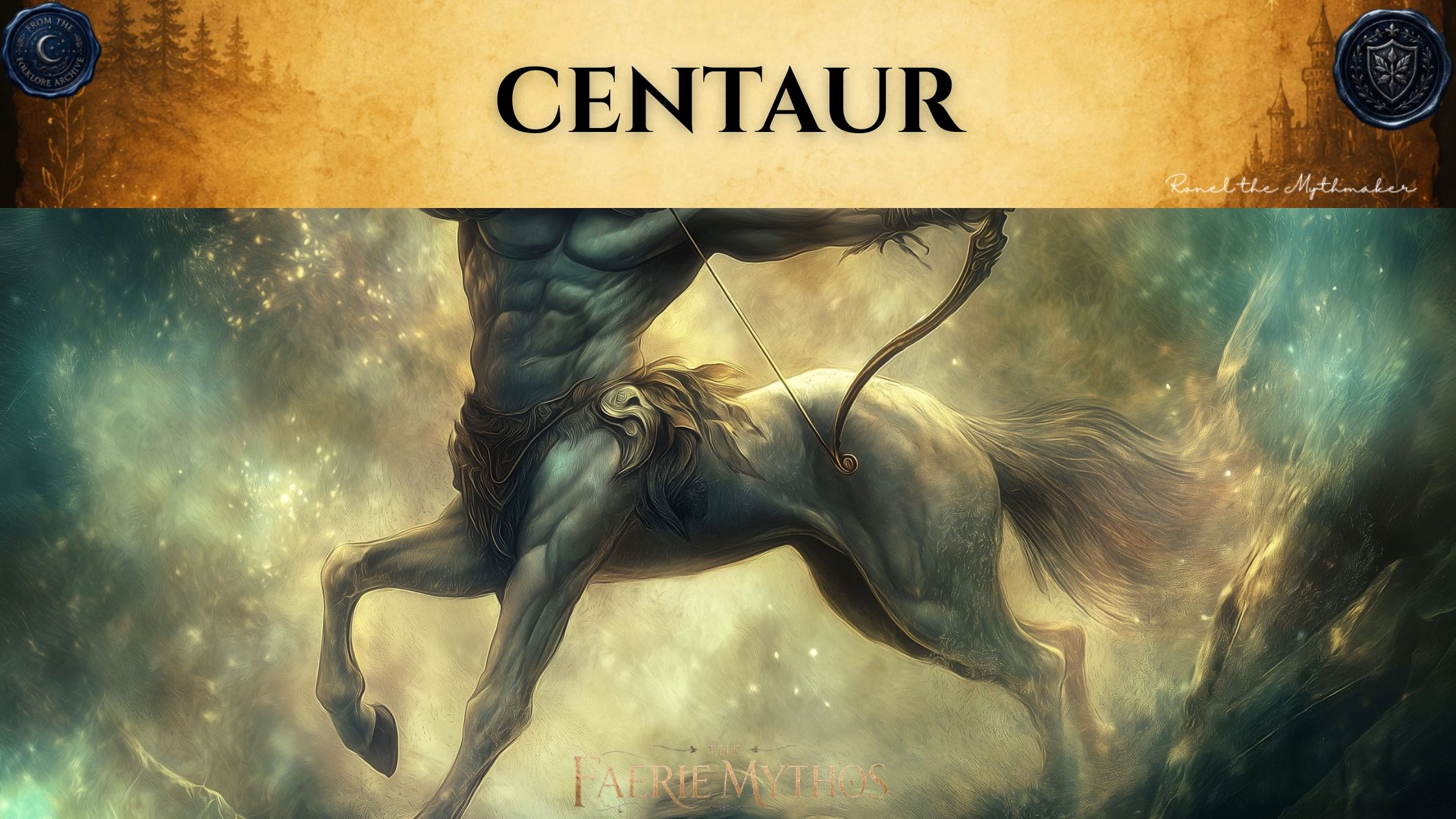
C is for Centaur

I’m weaving folklore and book reviews into a single offering, shaped to reach a wider audience drawn to both. In years past, interest has surfaced in fragments of each; now, I’m gathering those threads into April alone, so the rest of the year remains quiet and deliberate.
If you came only for today’s book review, you may follow the link here.
I first saw a centaur in the Hercules movie in the 90s. They are a bit different, though.
Folklore
Dictionary of Greek and Roman Biography and Mythology by William Smith [1844]
CENTAURI (Kentauroi), that is, the bullkillers, are according to the earliest accounts a race of men who inhabited the mountains and forests of Thessaly. They are described as leading a rude and savage life, occasionally carrying off the women of their neighbours, as covered with hair and ranging over their mountains like animals. But they were not altogether unacquainted with the useful arts, as in the case of Cheiron. (Hom. Il. i. 268, ii. 743, in which passages they are called phêres, that is, thêres, Od. xxi. 295, &c.; Hesiod. Scut. Herc. 104, &c.) Now, in these earliest accounts, the centaurs appear merely as a sort of gigantic, savage, or animal-like beings; whereas, in later writers, they are described as monsters (hippocentaurs), whose bodies were partly human and partly those of horses. This strange mixture of the human form with that of a horse is accounted for, in the later traditions, by the history of their origin. Ixion, it is said, begot by a cloud Centaurus, a being hated by gods and men, who begot the hippocentaurs on mount Pelion, by mixing with Magnesian mares. (Pind. Pyth. ii. 80, &c.) According to Diodorus (iv. 69; comp. Hygin. Fab. 33), the centaurs were the sons of Ixion himself by a cloud; they were brought up by the nymphs of Pelion, and begot the Hippocentaurs by mares. Others again relate, that the centaurs were the offspring of Ixion and his mares; or that Zeus, metamorphosed into a horse, begot them by Dia, the wife of Ixion. (Serv. ad Aen. viii. 293; Nonn. Dionys. xvi. 240, xiv. 193.) From these accounts it appears, that the ancient centaurs and the later hippocentaurs were two distinct classes of beings, although the name of centaurs is applied to both by ancient as well as modern writers.
The Centaurs are particularly celebrated in ancient story for their fight with the Lapithae, which arose at the marriage-feast of Peirithous, and the subject of which was extensively used by ancient poets and artists. This fight is sometimes put in connexion with a combat of Heracles with the centaurs. (Apollod. ii. 5. § 4; Diod. iv. 12; Eurip. Herc. fur. 181, &c.; Soph. Trachin. 1095; Nonn. Dionys. xiv. 367; Ov. Met. xii. 210, &c.; Virg. Georg. ii. 455.) The scene of the contest is placed by some in Thessaly, and by others in Arcadia. It ended by the centaurs being expelled from their country, and taking refuge on mount Pindus, on the frontiers of Epeirus. Cheiron is the most celebrated among the centaurs.
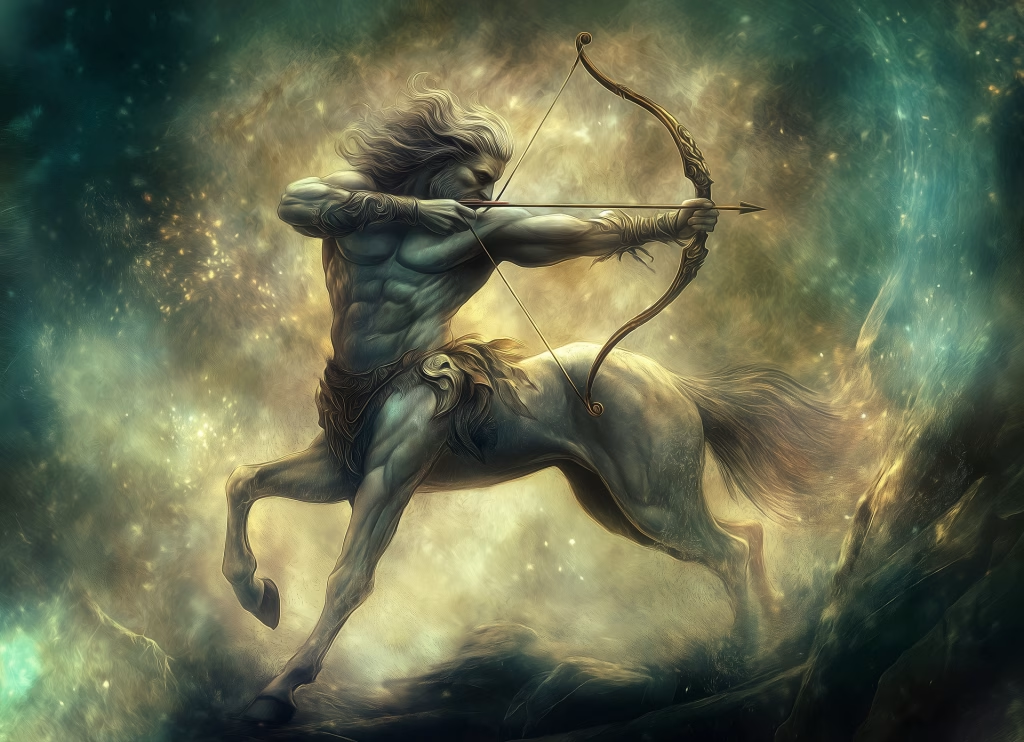
As regards the origin of the notion respecting the centaurs, we must remember, in the first place, that bull-hunting on horseback was a national custom in Thessaly (Schol. ad Pind. p. 31.9, ed. Boeckh), and, secondly, that the Thessalians in early times spent the greater part of their lives on horseback. It is therefore not improbable that the Thessalian mountaineers may at some early period have made upon their neighbouring tribes the same impression as the Spaniards did upon the Mexicans, namely, that horse and man were one being. The centaurs were frequently represented in ancient works of art, and it is here that the idea of then is most fully developed. There are two forms in which the centaurs were represented in works of art. In the first they appear as men down to their legs and feet, but the hind part consists of the body, tail, and hind legs of a horse (Paus. v. 19. § 2); the second form, which was probably not used before the time of Phidias and Alcamenes, represents the centaurs as men from the head to the loins, and the remainder is the body of a horse with its four feet and tail. (Paus. v. 10. § 2; Plin. H. N. xxxvi. 4.) It is probably owing to the resemblance between the nature of the centaurs and that of the satyrs, that the former were in later times drawn into the sphere of Dionysiac beings; but here they appear no longer as savage monsters, but as tamed by the power of the god. They either draw the chariot of the god, and play the horn or lyre, or they appear in the train of Dionysus, among the Satyrs, Fauns, Nymphs, Erotes, and Bacchantes. It is remarkable that there were also female centaurs, who are said to have been of great beauty. (Philostr. Icon. ii. 3.)
Brewer’s Dictionary of Phrase and Fable
Centaur
A huntsman. The Thessalian centaurs were half-horses, half men.
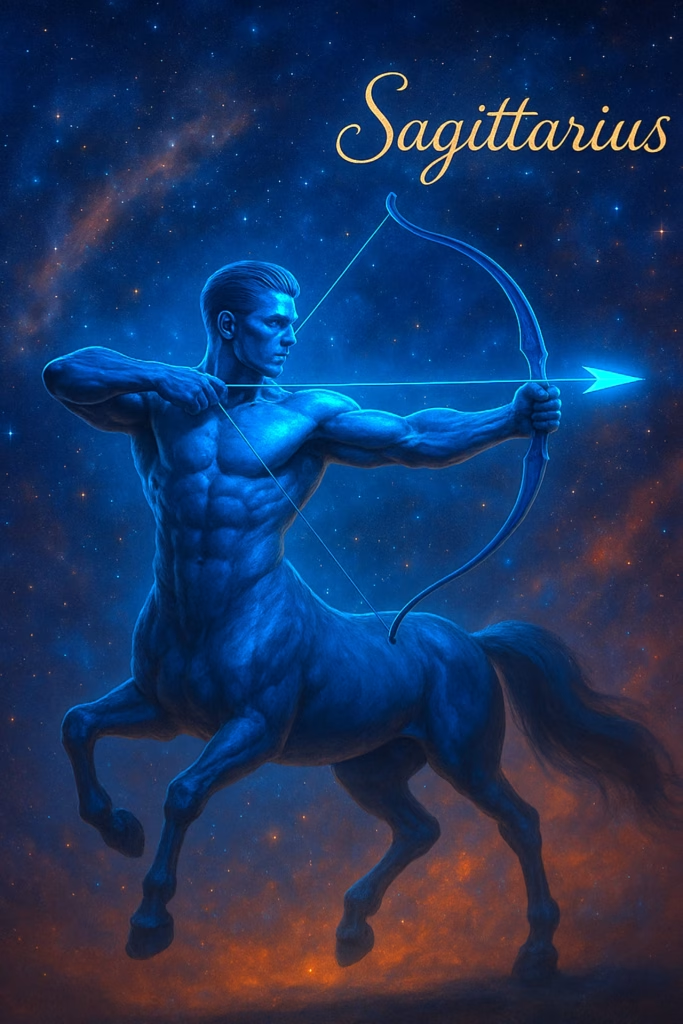
The Element Encyclopedia of Magical Creatures by John and Caitlín Matthews
CENTAUR
The centaurs had the upper body of a man and the lower body of a horse. They were the offspring of Centaurus, a son of Apollo and Stilbe, one of the Mares of Magnesium. The cento part of their name means ‘to prick’, ‘to goad’ or ‘to wound’, and they were certainly known as wild, brutal and untameable creatures, all except the wise and gentle Cheiron; tauro refers to the ‘bull’, although centaurs were really half equine in nature and appearance. Centauros was the offspring of Ixion who visited Juno in the form of a cloud. But instead of giving birth to something divine, she bore ‘the most unblest of the Graces’. Centaurs frequented the mountains of Thessaly, where they retained an orgiastic, sensuous and unruly reputation, especially when they descended upon the wedding party of Lapiths, Greeks from the north of Thessaly, who had gathered to celebrate the marriage of Pirithous. ‘The Rape of the Lapiths’ showing centaurs killing, raping and overcoming the Lapiths was a famous subject depicted in many tapestries and paintings in later Renaissance times. Their passionate and untamed nature made them suitable associates for the Bacchic or Dionysian revels, and centaurs were depicted on tombs and funerary monuments as underworld guardians.
The magical powers of centaurs enable human beings to unlock repressed desires and thoughts. They unchain instinctual forces that have been imprisoned or denied, but you must never offer them wine unless you are prepared to take the consequences!
*More can be read in the book.
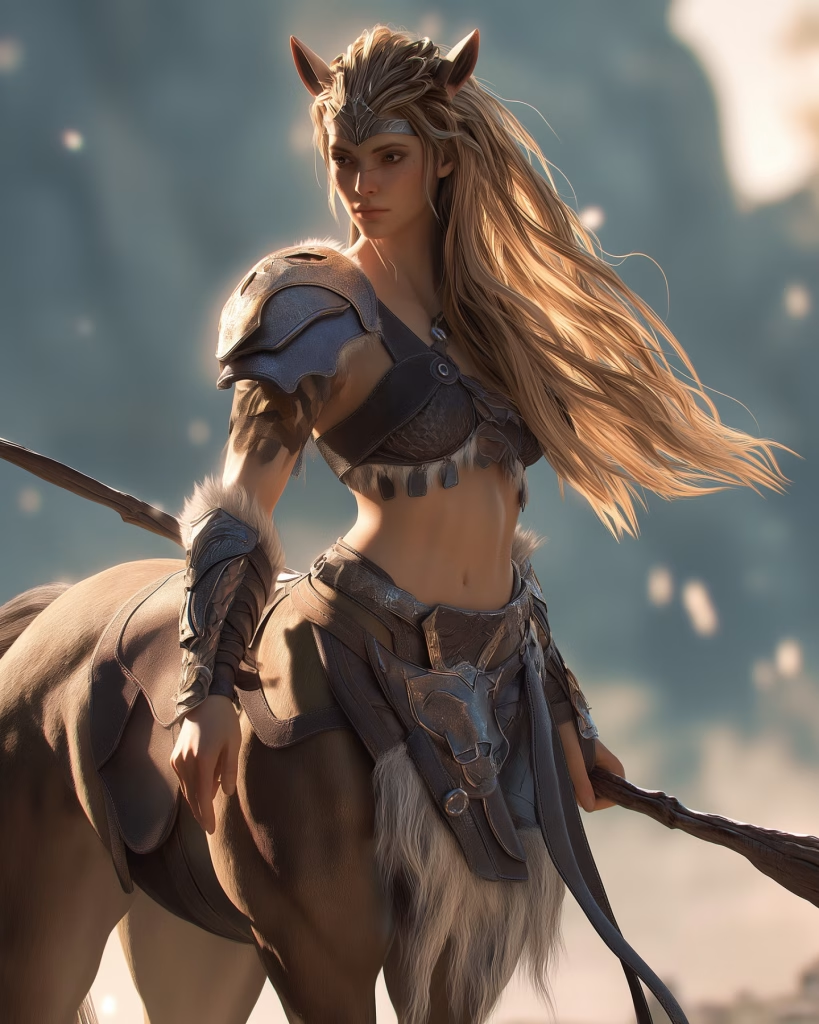
Encyclopedia of Beasts and Monsters in Myth, Legend and Folklore by Theresa Bane
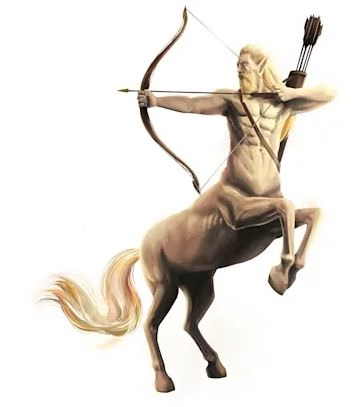
In the classical Greek and Roman myths the centaurs were entangled with issues of sexual boundaries and promiscuity; a creature half-animal and half-human, they were a conflict of cultural and social boundaries. Centaurs, originally called hippocentaurs (“horse centaur”) or simply “wild beasts,” first appeared as guardians of limits on Kassite boundary stones and were more man than animal, having a full male form grafted to the hind quarters of a horse.
Throughout Greek myths the centaurs were against the sanctity of marriage, often disrupting ceremonies and carrying off brides; they were also unable to enjoy wine without becoming aggressively and riotously drunk and raping women. When not being disruptive or sexually harassing women, centaurs were generally depicted as being generous, hospitable, kind, sporting, and wise.
In Slovenian folklore the centaur is known as polkonji (“to whip water”) and is considered to be the personification of churning and frothing water as it is an untamable force of nature. They are described as having a human body joined at the waist to the body of a horse where its neck would begin; they were said to live in groups near water or in hills which were frequently flooded.
*More can be read in the book.
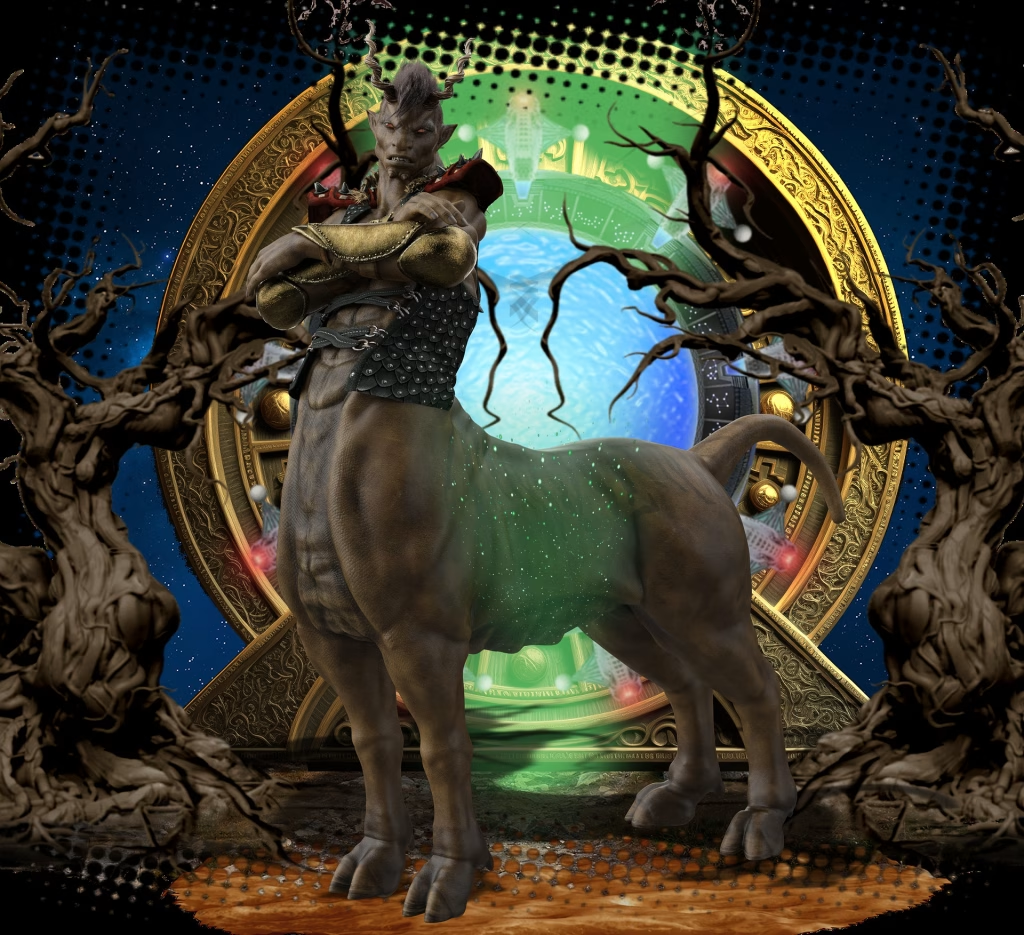
A Wizard’s Bestiary: A Menagerie of Myth, Magic and Mystery by Oberon Zell-Ravenheart
Centaur (also Ixionidae, in reference to their supposed human progenitor, Ixion)—Mythological half-man and half-horse, originally envisioned as a full man with the hindquarters and rear legs of a horse growing from his back. Later it came to be depicted with the man’s torso grafted onto the horse’s shoulders (properly, a Hippocentaur). They originally dwelt on Mount Pelion in Thessaly, northern Greece. Most were savage and lascivious, often carrying off human women. After a particularly noxious episode at the wedding of Hippodameia and Pirithous, king of the Lapiths, where they got drunk and attempted to abduct the bride, they were driven from Thessaly in a famous battle. But the Centaur Cheiron was a kind and wise teacher who tutored Aesclepius, Jason, and Achilles, and freed Prometheus by relinquishing his own immortality in trade. Zeus placed him in the heavens as the constellation Sagittarius. The myth of the Centaur is believed to be derived from garbled descriptions of early horsemen by people who had never before seen horses being ridden.
*More can be read in the book.
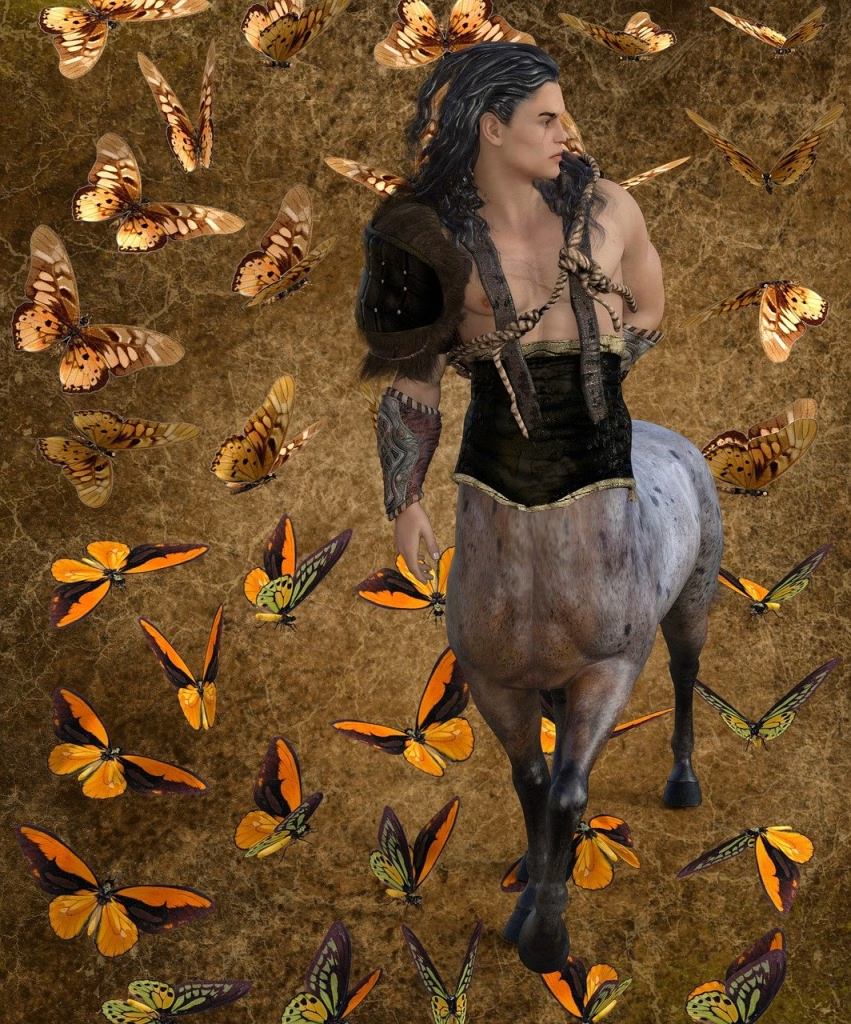
Further Reading:
Folklore in a Nutshell by Ronel
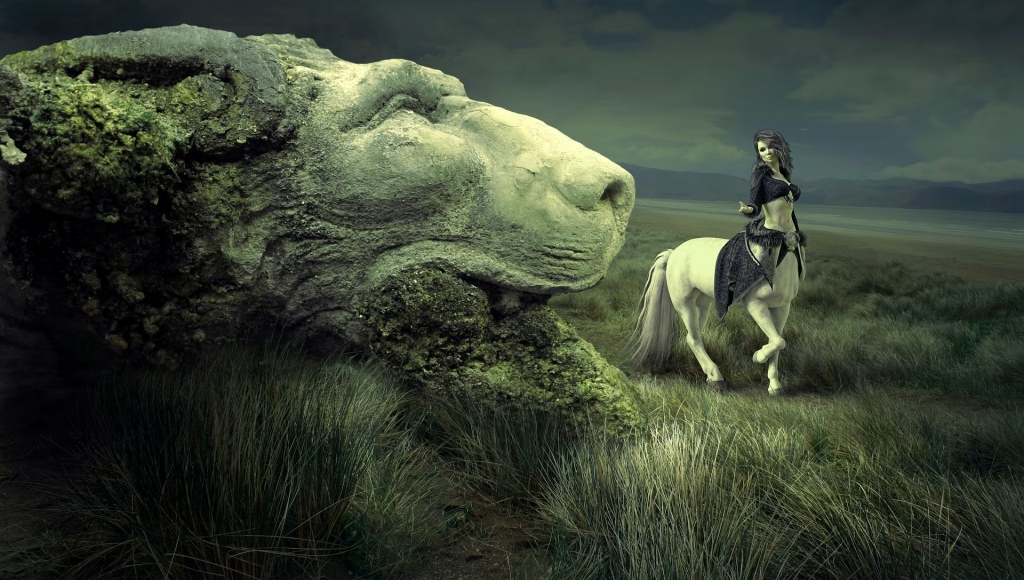
Ixion, whether the progeny of the cloud Centaurus or the father of centaurs by a cloud, is always mentioned in the origin story of the centaurs. These original centaurs mated with Magnesian mares on mount Pelion and the hippocentaurs (bodies of horses and torsos and heads of men) were born.
They were mostly seen as savage creatures who enjoyed parties and brawls. They were known to carry off brides as they were against marriage (for reasons unknown). They loved imbibing in wine, which unfortunately, turned them into lecherous brutes who harassed women.
They became followers of Dionysus, even drawing his chariot, and stopped being savage beasts despite enjoying parties and wine. By this time, there were also female centaurs who were said to be quite beautiful.
They are known for being masters of the hunt, especially as archers.
Chiron, the son of Kronos, was also a centaur. He was kind and wise. He was also the teacher of Jason, Achilles and others. He freed Prometheus from the rock he was tethered to and tortured by giving up his own immortality. When he died, Zeus placed him in the heavens as the constellation Sagittarius.
Whether they were merely horsemen who hunted in Thessaly or the progeny of Ixion and a cloud, centaurs are fascinating creatures.
Centaurs in Modern Culture
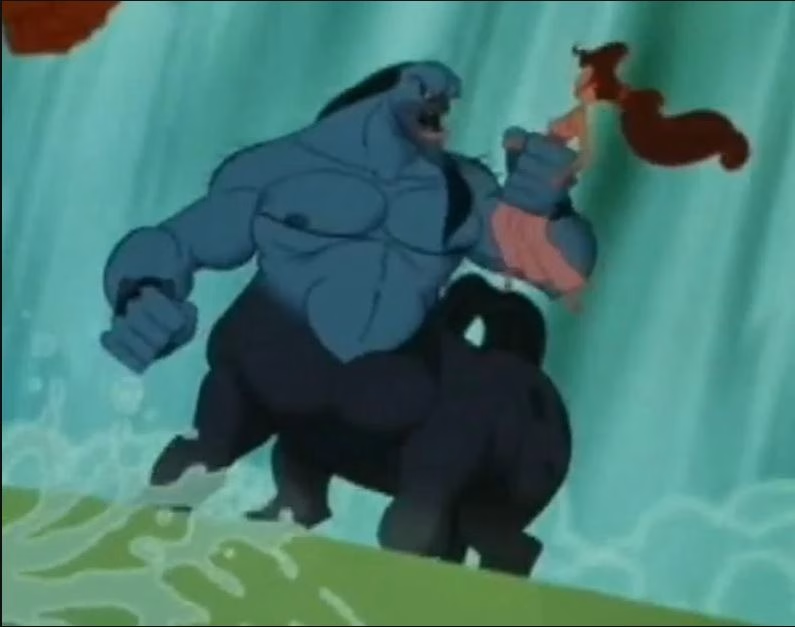
Disney’s Hercules
Nessus (known as the “River Guardian“) is a large centaur with the head and upper body of a man and the body of a horse.
Learn more here.
Artemis Fowl by Eoin Colfer
Centaurs are part of The People and are a species of fairy, half horse, half humanoid. There are fewer of them than other fairy species. They are known to be the most intellectual of the fairy races, but they lack magic. It is also said in the first book that centaurs do not make many friends. With such gifted brilliance, most centaurs also have a bit of paranoia (Foaly being one). It can get to the point were they wear tin foil hats to ward off “brain probing” magic that could steal their ideas or read their thoughts.
Learn more here.
Harry Potter
A half-man, half-horse, Centaurs were mystical beings who were able to read the movements of the night sky in order to divine the future, making them talented Seers. Also skilled in archery, healing magic, Divination and Astronomy, Centaurs were highly intelligent and proud beings who saw themselves as superior to dull witted humans. Territorial creatures, Centaurs lived in herds and could be violent towards both outsiders and to members of their own group, if that individual betrayed or threatened the clan.
Learn more here.
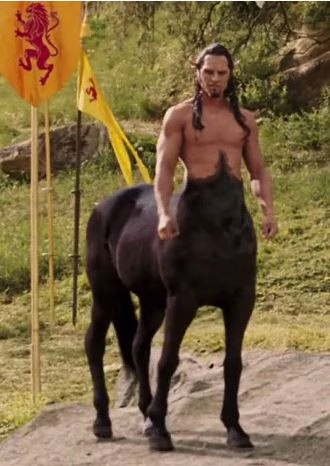
The Chronicles of Narnia
Centaurs were highly intelligent, loyal and honourable creatures that existed in World of Narnia.
They appeared human from the abdomen up to the head, while the rest of their body was that of a horse. The horse part of them was described as resembling that of a huge English farm horse, and the human part like stern but beautiful giants.
Centaurs were often prophets and stargazers, like Glenstorm, or healers like Cloudbirth. All of them were warriors, who fought for Narnia and Aslan in every major battle and war.
Learn more here.
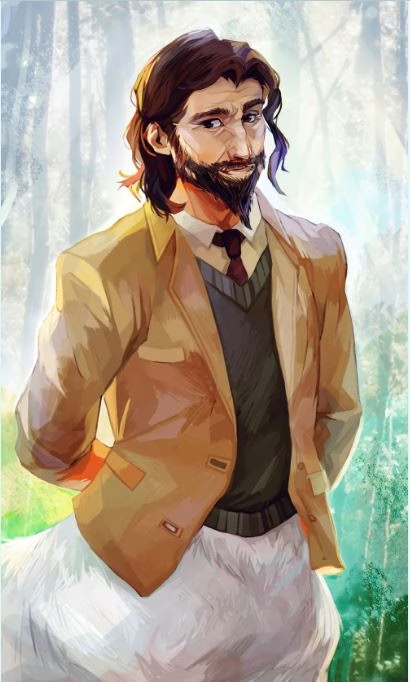
Percy Jackson
Centaurs have the torso and head of a man, and body of a horse. They are also great healers and archers, like the children of Apollo.
Learn more here.
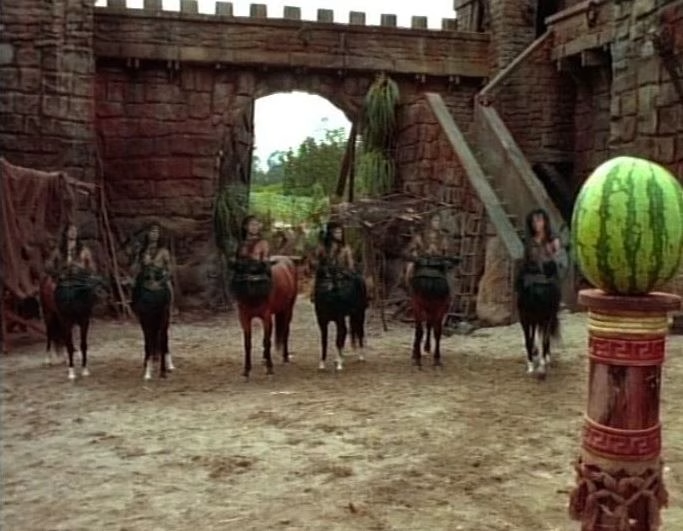
The Legendary Journeys TV series
A Centaur is a mythological creature, that is made up of the upper torso of a man and the body of a horse. They possess the strength of a horse and are an all-male race, making them a traditional enemy of the Amazons. The fact that centaurs must procreate with human women is made socially difficult by the fact that such relationships are heavily frowned upon in most parts of the known world. Though pregnancy with a centaur is not particularly difficult, the actual birth often is, leading to many centaurs being delivered via Caesarian Section.
Learn more here.
Centaurs in My Writing
Origin of the Fae: Centaurs
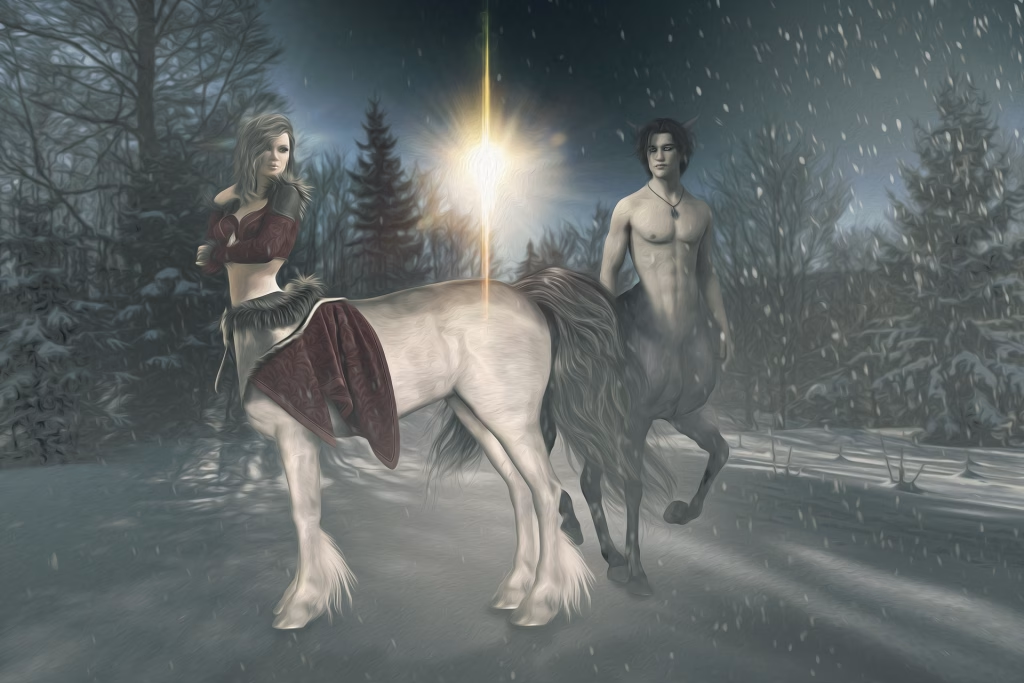
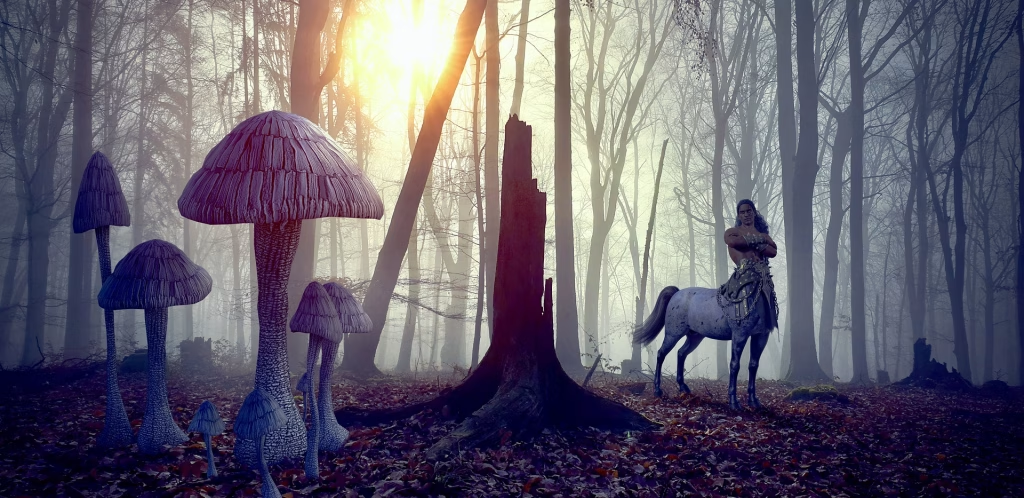
Centaurs live in herds, though they act more like ferocious wolf packs than horses. Just like horses, they are matriarchal despite what mythology says about them. They have pointed ears, much like horses, though their heads, arms and torsos are that of humans, while they have the bodies of horses. They are territorial and prefer living in mountain areas with lots of trees. They are excellent archers as this is the best weapon if you’re on horseback, too, though they can wield most weapons. They prefer staying apart from all other races.
Translated to Afrikaans: sentour/sentoure.
Love Bites (Faery Tales #)
If this tale has lingered with you, I would be glad to hear it.
Where did you first encounter this creature – through story, superstition, memory, or something half-remembered?
If you know other versions of its myth, feel free to leave them in the record below. Folklore survives by being spoken again.
Further fragments and interpretations of this creature can be found in my Pinterest grimoire.
If you wish to support the time and craft behind these folklore posts – researching old tales, gathering fragments, and shaping them into something worth reading – you may do so by buying me a coffee. It can be a single offering, or something you return to whenever the spirit moves you.


Pierce Brosnan made one heck of a centaur in Percy Jackson movies!
Absolutely!
Loved the way Rick Riordan used centaurs in his Percy Jackson books. The new series is SO MUCH better than the movie (especially for fans of the books). @samanthabwriter from
Balancing Act
Yeah, the movies and the books aren’t really the same story, are they? Loved it all, though 🙂
The real question is… how many RIBS do they have?? Ribs, sternums, rib cages… The people want to know!
“Good Luck, Have Fun, Don’t Die,” listen, the movie is messed up, okay, it’s like The Matrix but on drugggs… BUT… there’s a 😸🐎kind of centaur. Not like any from above. No, realllllly not like any above. And yes, I had to meow comment on this because it made me think of that crazy freaking movie, don’t judge me I didn’t pick it out, I was just there and it was on and honestly 🍺🍺 people should serve better drinks if they’re gonna put that on, I’m just saying.
And you’re gonna read this comment and wonder if I’m okay. Listen, I may have eaten one too many chocolate bunnies tonight. 🐇
Sounds like you have quite a sugar rush! Border collie energy… LOL. But yeah, the ribs question is an interesting one. Now I’m wondering if they have two hearts, two sets of lungs…