F is for Fae


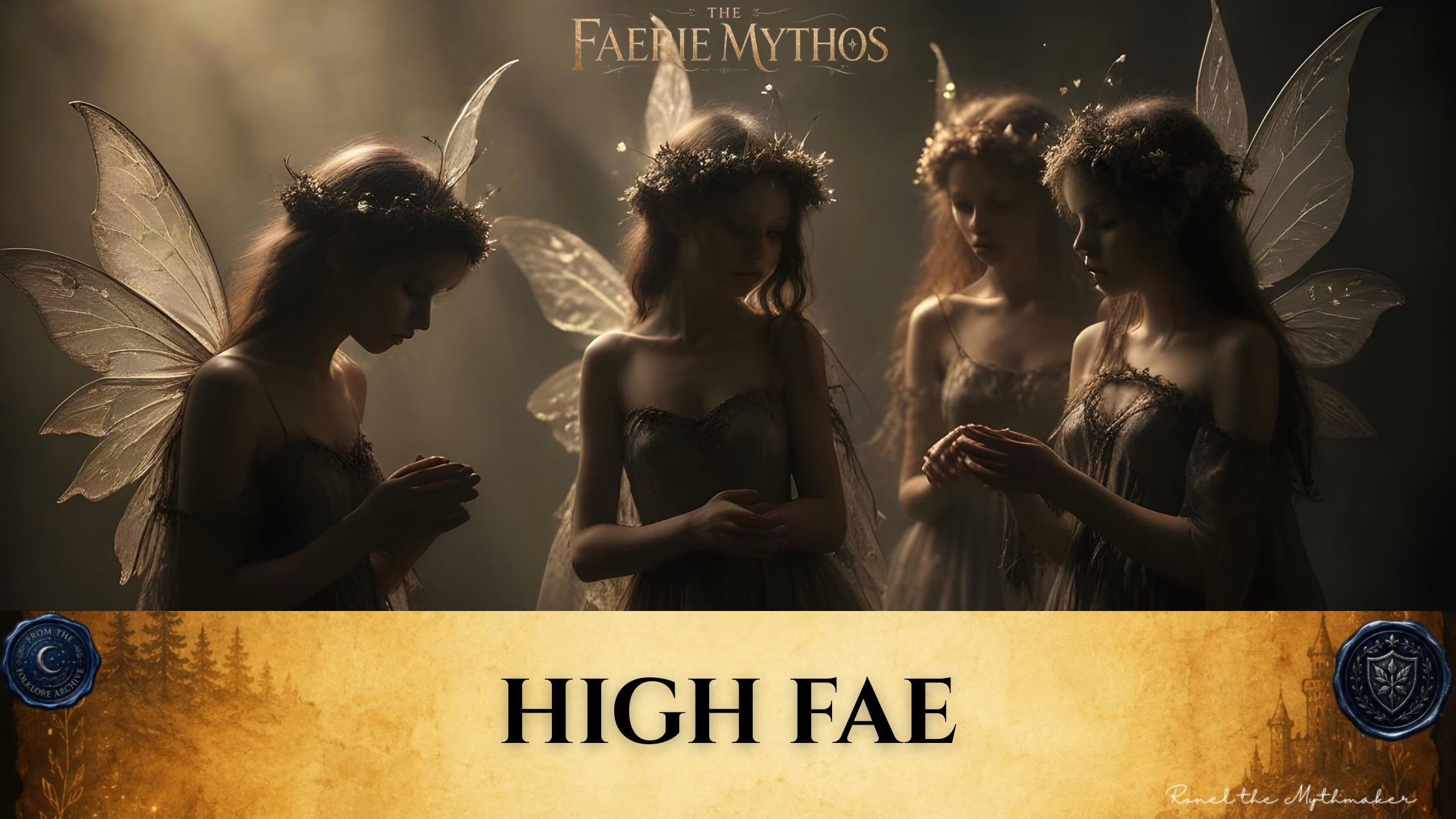
The High Fae rule Faerie as they are usually the most powerful of their kind. Some also wish to rule the mortal realm and stir up trouble in their wake.
Folklore
Fairy and Folk Tales of the Irish Peasantry Edited and Selected by W. B. Yeats, [1888]
THE TROOPING FAIRIES.
The Irish word for fairy is sheehogue [sidheóg], a diminutive of “shee” in banshee. Fairies are deenee shee [daoine sidhe] (fairy people).
Who are they? “Fallen angels who were not good enough to be saved, nor bad enough to be lost,” say the peasantry. “The gods of the earth,” says the Book of Armagh. “The gods of pagan Ireland,” say the Irish antiquarians, “the Tuatha De Danān, who, when no longer worshipped and fed with offerings, dwindled away in the popular imagination, and now are only a few spans high.”
And they will tell you, in proof, that the names of fairy chiefs are the names of old Danān heroes, and the places where they especially gather together, Danān burying-places, and that the Tuath De Danān used also to be called the slooa-shee [sheagh sidhe] (the fairy host), or Marcra shee (the fairy cavalcade).
On the other hand, there is much evidence to prove them fallen angels. Witness the nature of the creatures, their caprice, their way of being good to the good and evil to the evil, having every charm but conscience–consistency. Beings so quickly offended that you must not speak much about them at all, and never call them anything but the “gentry”, or else daoine maithe, which in English means good people, yet so easily pleased, they will do their best to keep misfortune away from you, if you leave a little milk for them on the window-sill over night. On the whole, the popular belief tells us most about them, telling us how they fell, and yet were not lost, because their evil was wholly without malice.
Are they “the gods of the earth”? Perhaps! Many poets, and all mystic and occult writers, in all ages and countries, have declared that behind the visible are chains on chains of conscious beings, who are not of heaven but of the earth, who have no inherent form but change according to their whim, or the mind that sees them. You cannot lift your hand without influencing and being influenced by hoards. The visible world is merely their skin. In dreams we go amongst them, and play with them, and combat with them. They are, perhaps, human souls in the crucible–these creatures of whim.
Do not think the fairies are always little. Everything is capricious about them, even their size. They seem to take what size or shape pleases them. Their chief occupations are feasting, fighting, and making love, and playing the most beautiful music. They have only one industrious person amongst them, the lepra-caun–the shoemaker. Perhaps they wear their shoes out with dancing. Near the village of Ballisodare is a little woman who lived amongst them seven years. When she came home she had no toes–she had danced them off.
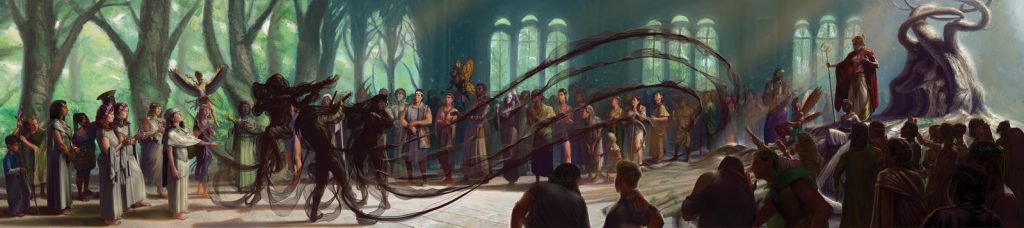
They have three great festivals in the year–May Eve, Midsummer Eve, November Eve. On May Eve, every seventh year, they fight all round, but mostly on the “Plain-a-Bawn” (wherever that is), for the harvest, for the best ears of grain belong to them. An old man told me he saw them fight once; they tore the thatch off a house in the midst of it all. Had anyone else been near they would merely have seen a great wind whirling everything into the air as it passed. When the wind makes the straws and leaves whirl as it passes, that is the fairies, and the peasantry take off their hats and say, “God bless them”.
On Midsummer Eve, when the bonfires are lighted on every hill in honour of St. John, the fairies are at their gayest, and sometimes steal away beautiful mortals to be their brides.
On November Eve they are at their gloomiest, for according to the old Gaelic reckoning, this is the first night of winter. This night they dance with the ghosts, and the pooka is abroad, and witches make their spells, and girls set a table with food in the name of the devil, that the fetch of their future lover may come through the window and eat of the food. After November Eve the blackberries are no longer wholesome, for the pooka has spoiled them.
When they are angry they paralyse men and cattle with their fairy darts.
When they are gay they sing. Many a poor girl has heard them, and pined away and died, for love of that singing. Plenty of the old beautiful tunes of Ireland are only their music, caught up by eavesdroppers. No wise peasant would hum “The Pretty Girl milking the Cow” near a fairy rath, for they are jealous, and do not like to hear their songs on clumsy mortal lips. Carolan, the last of the Irish bards, slept on a rath, and ever after the fairy tunes ran in his head, and made him the great man he was.
Do they die? Blake saw a fairy’s funeral; but in Ireland we say they are immortal.
The Element Encyclopedia of Fairies by Lucy Cooper
Tuatha De Danann
The legendary fairy race of Ireland, descended from ancient royalty and the conquerors of the resident Firbolgs. After fierce battles, they were in turn vanquished by the Milesians and reduced to dwelling in an underground realm.
*More can be read in the book.
Encyclopedia of Fairies in World Folklore and Mythology by Theresa Bane
Sídhe
Sídhe is the word used in Ireland and the Highlands of Scotland to name the very tall, shining race of fairy people who are believed to belong to both the earthly and heavenly realms. Their name is derived from the ancient barrows or fairy forts where they are believed to reside.
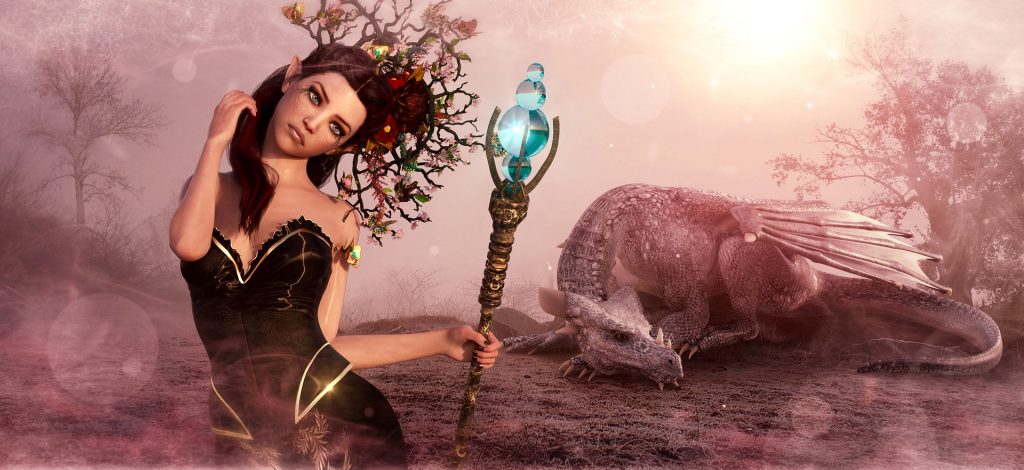
The sídhe are said to be extremely beautiful and although youthful in appearance five the impression of being aristocratic, mature, and powerful, not just in body but in ability and mind as well.
Many animals, both domestic and wild, are associated with sidhe and there are numerous stories of their great love of horses.
Tündér
In Hungarian lore the Tündér are a type of beautiful nature spirit; exclusively female these fairies are immensely wealthy and live atop mountains in luxurious castles surrounded by exquisite gardens. They spend their nights dancing beneath the moon. In lore the Tündér look after the destitute and orphans, gifting them with priceless pearls they use as adornment in their hair. Additionally, the breast milk, saliva, and tears contain magical properties that are used in spell casting. The Tündér themselves are skilled magic users and have many magical herbs and jewels.
Fairy
The fée of French fairy lore are almost always female dressed in either the finest fashion or in common peasant clothing but are fearfully unpredictable. These fairies have the ability to shape-shift into any form, from the most beautiful to something utterly horrifying; they can even become invisible.
The fairies of Ireland… Daoine Sidhe… when they are visible, these small fairies are said to be beautiful and very slender, although they are expert shape-shifters. Their clothing is either of the most resplendent silk or of the corset rags, but always green. Living in ancient barrows, mounds, and stone circles throughout the land, these fairies live in organized communities and are under the rulership of kings and queens.
The female fairies of Scottish lore are dazzlingly beautiful but especially malicious with an unpredictable nature. Having both a Seelie and an Unseelie Court they are both generally aloof and tend to avoid human contact.
Seelie Court
Variations: Blessed Ones, Kindlt Fairy Host, Seely Court, the Sluagh
In Scottish fairy lore the Seelie Court (“blessed court”) are the aristocratic and benign Trooping Fairies; they are believed to be made up of the last of the Tuatha De Danann and the most heroic and beautiful fairies in Scotland. They act as arbiters and judges of fairy disputes. Fond of riding upon their fairy horses in long processions known as Rades during twilight.
Although the Seelie fairies once interacted with humans they are now indifferent to mortals and their affairs, although the fairies of the Seelie Court are quick to avenge an insult or injury delivered to them.
Fairy Rade
A fairy rade is a grand procession of the fay and such an event occurring is considered to be of great importance. Typically these rades consist of fairies wearing their finest clothes and riding upon their favorite mounts that are equally adorned with resplendent trapping.
Trooping Fairies
Variations: Aristocratic Fairies, Heroic Fairies, Trooping Faery
Large and small, benign and malignant, the trooping fay tends to wear a green jacket and live in social communities overseen by a monarch, although popular consensus seems to rule.
Unseelie Court
Variations: The Hoard, the Host, Sluagh
In Scottish fairy lore the Unseelie Court (“unblessed court”) are the injurious and malicious fairies consisting most of Solitary Fairies, especially those associated with ancestral spirits and the dead. According to legend, the members of the Unseelie Court are those fairies who fell out of favour or were cast out of the Seelie Court.
*More can be read in the book.
The Encyclopedia of Celtic Mythology and Folklore by Patricia Monaghan
Fairies
Most fairies lived in great cities, where they danced and feasted constantly; when they travelled to another fairy court, they did so in a great throng that caused a huge wind (see fairy blast). When such trooping fairies encountered people on these expeditions, they snatched up and took away those they favoured; for this reason rural people warned against walking near fairy mounds and other liminal places at night, when the fairies were most likely to be about… although they thought nothing of stealing from our world, they would not endure anyone stealing from theirs, and they punished such theft ruthlessly.
The people of the otherworld were rarely referred to by speakers as fairies… fearing their power, their human neighbors called them… The Good People… People of the Fairy Mounds… The Gentry.
*More can be read in the book.
The Forest in Folklore and Mythology by Alexander Porteous
In the Scandinavian countries groves and trees were appointed as the residence of the Elves after they had been worsted in a conflict with superior beings. In other countries groves were much frequented by fairies and other beings of popular superstition.
*More can be read in the book.
Herbal Magick: A Witch’s Guide to Herbal Folklore and Enchantments by Gerina Dunwich
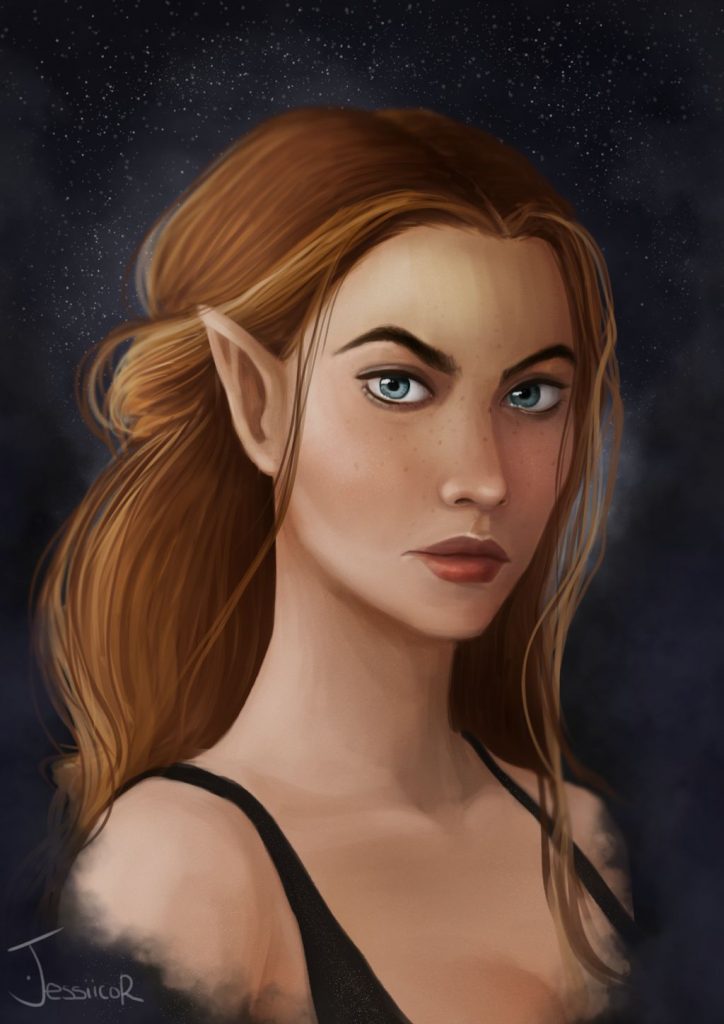
Fairies are said to dance in rings around certain trees when a full moon illuminates the night sky. Some fairies also like to make their homes within or underneath trees. The following trees are fairy favorites, and planting one or more in or near your garden is sure to attract the wee folk: alder, apple, ash, aspen, blackthorn, bramble, broom, elder, hawthorn, holly, juniper, lilac, oak, osier, pine, and silver birch.
*More can be read in the book.
Further Reading:
- Tündér Faerie in Hungarian Folklore
- 7 Things You Need to Know About Hungarian Fairies
- Elves in Hungarian Fairy Tales and Mythology
- The Faerie Courts
- Daoine Sidhe
- The Seelie and Unseelie Courts
- Seelie and Unseelie Faeries
- Seelie court and Unseelie court
- Trooping, Solitary, Household
- Trouping Faeries
- Two tribes- good and bad fairy folk
Folklore in a Nutshell by Ronel
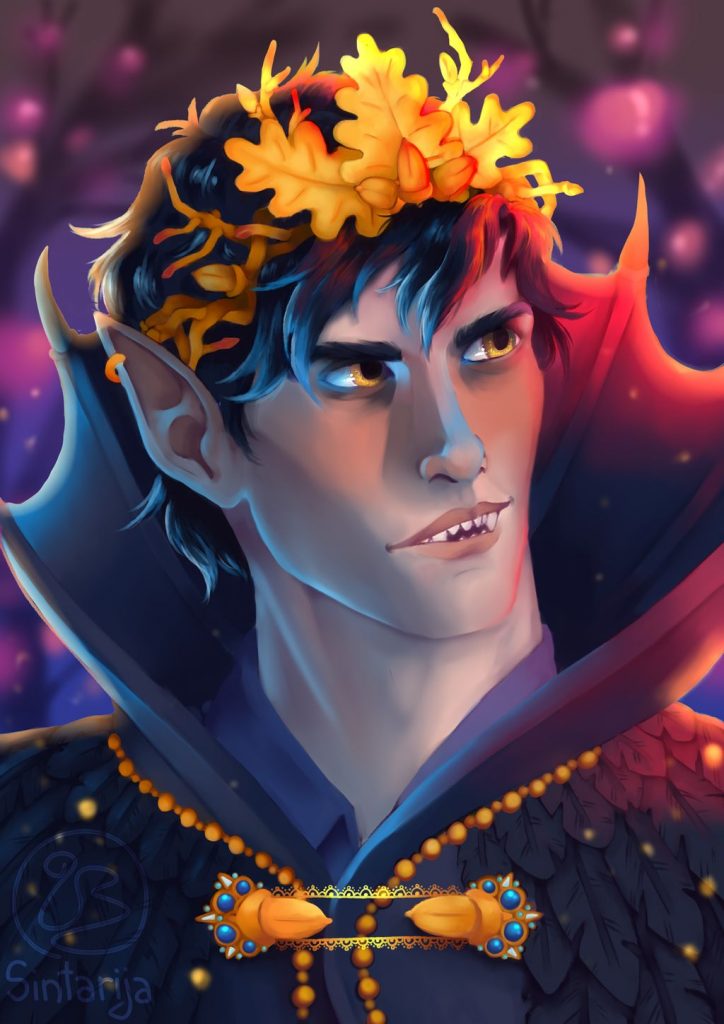
The High Fae are the faeries who most closely resemble humans.
The Tündér of Hungary live in castles high upon the mountains, surrounded by lush gardens and beauty. These fae are beautiful women who are fabulously wealthy and like to take care of the abandoned: orphans, the homeless and the lost.
In Irish folklore there is the Seelie Court and the Unseelie Court, or the Light Court and the Dark Court. But it isn’t as simple as saying one court is good and the other bad. Both courts have their nobility, the fae who look like humans but are charming and gorgeous beyond measure – mortals tend to immediately fall in love with them, some become playthings but all end up in madness, despair and death. Much like eating faery food. The Seelie Court values youth, beauty and bravery in mortals, while the Unseelie Court prefers hurting mortals for sport no matter their age or physical attributes. Both courts have a tendency to kidnap pretty mortals to be their playthings or even spouses – though there is never a happy ending to that faery tale.
The aristocracy of the faery world is also known as trooping faeries as they tend to travel in long processions on certain feast days through the mortal realm – like the one Tam Lin was rescued from. And though lesser fae are allowed to be part of these processions, they are not known as trooping fae. We can only guess why William Butler Yeats decided to classify them thusly.

High Fae in Modern Culture
The faeries in TV shows and in movies tend to be more on the side of Solitary fae than High fae. Books, though, have both kinds.
Books
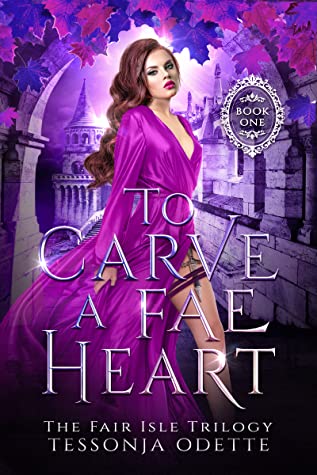
Every young woman dreams of marrying a king.
Everyone except for me.
Because the king I am to wed has razor sharp fangs and a thirst for blood.
All my life I knew I’d come of age during the Hundred Year Reaping. According to the ridiculous treaty, two human girls are sent to the faelands as brides for the fearsome fae king and his devilish younger brother.
Not me. I was supposed to be safe. Two girls were chosen from my village already. But when they are executed for offending the king, my sister and I are sent in their place.
What a mess. Then again, maybe it’s not so bad. The younger brother I’m paired with doesn’t seem as monstrous as I’d expected. He’s delightfully handsome too. But nothing compares to the chilling, dangerous beauty of the fae king. And when my sister flees the castle and her terrifying husband-to-be, I’m left to marry him instead.
If I go through with this, I might not survive my wedding night. If I don’t, no one is safe, neither human nor fae. An ancient war will return, bringing devastation we haven’t seen in a thousand years. Can I sacrifice myself for the good of my people? Or will a dangerous desire be the death of me first?
If I don’t lose my heart, the king will certainly lose his. I’ll carve it out with an iron blade if I have to.
To Carve a Fae Heart is an enemies-to-lovers fantasy, perfect for fans of The Cruel Prince, ACOTAR, and The Iron King. If you like snarky fae, brooding fae royals, sizzling romance, and fierce heroines, you’ll love this breathtaking fae fantasy.
Read my review here.

Rule #3: Don’t stare at invisible faeries.
Aislinn has always seen faeries. Powerful and dangerous, they walk hidden in the mortal world. Aislinn fears their cruelty – especially if they learn of her Sight – and wishes she were as blind to their presence as other teens.
Rule #2: Don’t speak to invisible faeries.
Now faeries are stalking her. One of them, Keenan, who is equal parts terrifying and alluring, is trying to talk to her, asking questions Aislinn is afraid to answer.
Rule #1: Don’t ever attract their attention.
But it’s too late. Keenan is the Summer King, who has sought his queen for nine centuries. Without her, summer itself will perish. He is determined that Aislinn will become the Summer Queen at any cost — regardless of her plans or desires.
Suddenly none of the rules that have kept Aislinn safe are working anymore, and everything is on the line: her freedom; her best friend, Seth; her life; everything.
Faery intrigue, mortal love, and the clash of ancient rules and modern expectations swirl together in Melissa Marr’s stunning twenty-first-century faery tale.
Read my review here.

Sixteen-year-old Kaye is a modern nomad. Fierce and independent, she travels from city to city with her mother’s rock band until an ominous attack forces Kaye back to her childhood home. There, amid the industrial, blue-collar New Jersey backdrop, Kaye soon finds herself an unwilling pawn in an ancient power struggle between two rival faerie kingdoms – a struggle that could very well mean her death.
Read my review here.

Meghan Chase has a secret destiny; one she could never have imagined.
Something has always felt slightly off in Meghan’s life, ever since her father disappeared before her eyes when she was six. She has never quite fit in at school or at home.
When a dark stranger begins watching her from afar, and her prankster best friend becomes strangely protective of her, Meghan senses that everything she’s known is about to change.
But she could never have guessed the truth – that she is the daughter of a mythical faery king and is a pawn in a deadly war. Now Meghan will learn just how far she’ll go to save someone she cares about, to stop a mysterious evil, no faery creature dare face; and to find love with a young prince who might rather see her dead than let her touch his icy heart.
Check it out on Goodreads.
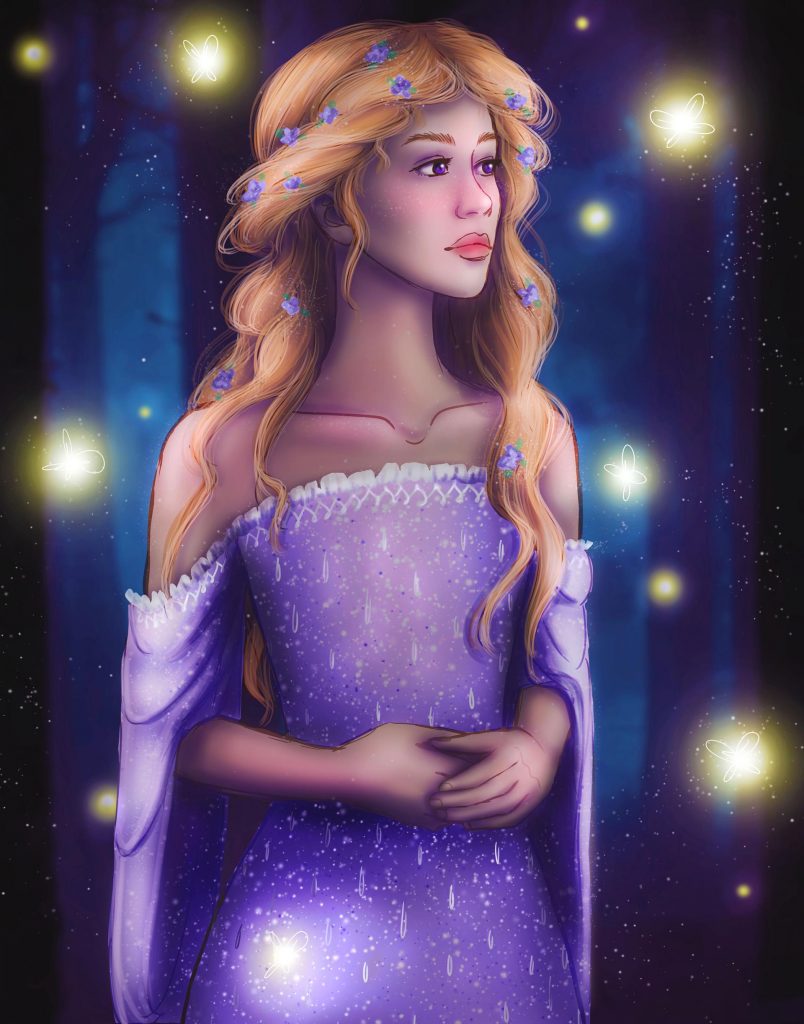
A Sidhe (aka Fey) is a creature in the Iron Fey series. They are the faery nobality, and resemble mortals, except for pointed ears and larger eyes. Sidhe can use Glamour to change their appearance or use “magic”.
Learn more here.
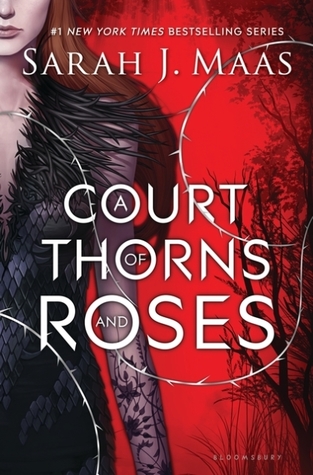
Feyre’s survival rests upon her ability to hunt and kill – the forest where she lives is a cold, bleak place in the long winter months. So when she spots a deer in the forest being pursued by a wolf, she cannot resist fighting it for the flesh. But to do so, she must kill the predator and killing something so precious comes at a price …
Dragged to a magical kingdom for the murder of a faerie, Feyre discovers that her captor, his face obscured by a jewelled mask, is hiding far more than his piercing green eyes would suggest. Feyre’s presence at the court is closely guarded, and as she begins to learn why, her feelings for him turn from hostility to passion and the faerie lands become an even more dangerous place. Feyre must fight to break an ancient curse, or she will lose him forever.
Read my review here.
High Fae in My Writing
Origin of the Fae: High Fae
They look eerily like humans. They hold a perfectness of appearance that no human can ever obtain.
They are the ruling class of the Courts. All Fae that do not as closely resemble humans are of the serving class of the Courts.
Though not all of them can boast of titles or lands, they still outclass all the lower Fae and will always be in charge of them. (Even in the Mortal Realm.)
All Faery Knights are High Fae.
The High Fae are also known to be the cruellest of their kind.
High Fae translated to Afrikaans: Hoë Feë
See them in action:
Stories on Scrolls

She wished she was back in the mountains of Hungary. She missed the other Tündér. She missed the fairytale gardens, the dance parties under the full moon, the fabulous castles.
Cigar Girl, Stories on Scrolls, Ronel Janse van Vuuren
If this tale has lingered with you, I would be glad to hear it.
Where did you first encounter this creature – through story, superstition, memory, or something half-remembered?
If you know other versions of its myth, feel free to leave them in the record below. Folklore survives by being spoken again.
Further fragments and interpretations of this creature can be found in my Pinterest grimoire.
If you wish to support the time and craft behind these folklore posts – researching old tales, gathering fragments, and shaping them into something worth reading – you may do so by buying me a coffee. It can be a single offering, or something you return to whenever the spirit moves you.


I loved the stories of the Tuatha de Danaan and other Celtic mythology. In fact, I made regular trips to a library not my local library just to read their extensive collection. You have some really interesting observations here, like the idea of perhaps a kind of Celtic/European slant to the stories over time and whether the Tuatha were fallen angels. I’m fairly certain there is some basis for them in early invaders of the British Isles, possibly Norse invaders, who would have been seen as invaders from another world. There is so much interesting overlap between the Norse and Celtic mythologies at times. I find it all so fascinating. I love their otherworldly portal fantasy especially much. Hope you have a great day!