Tales of Spinners

J is for Jackanapes
I’m weaving folklore and book reviews into a single offering, shaped to reach a wider audience drawn to both. In years past, interest has surfaced in fragments of each; now, I’m gathering those threads into April alone, so the rest of the year remains quiet and deliberate.
If you came only for today’s book review, you may follow the link here.
[intro about subject]
Folklore
[sources]
The Encyclopedia of Celtic Mythology and Folklore by Patricia Monaghan
Habetrot
A spinner goddess, Habetrot was a healing spirit. Those who could induce her to weave them a garment never suffered from illness. She appeared in some areas of Britain as a fairy queen (Gyre-Carling) who stole any flax left unspun at the end of the year.
*More can be read in the book.
The Element Encyclopedia of Magical Creatures by John and Caitlín Matthews
In the legends of Greece, the origin of the spider is said to have been the human woman Arachne whose weaving skills were so legendary that she entered into a contest with the goddess Athene. The goddess was annoyed with Arachne’s skills and so she turned her into a spider forever.
*More can be read in the book.
Encyclopedia of Beasts and Monsters in Myth, Legend and Folklore by Theresa Bane
Arachne (a-rak-ne)
In Ovid’s Metamorphose, Arachne was born the daughter of Idmon of Colophone; a beautiful young woman who was a highly skilled weaver. Arachne was proud and boastful of her skill, claiming she was more talented than Athena (Minerva), the goddess of weaving. One day the goddess assumed the form of an old woman and visited Arachne, advising her to act and speak more modestly. When Arachne replied with a rude quip the virgin goddess revealed herself and challenged the mortal to a weaving contest. Athena’s tapestry depicted a scene of the twelve Olympian gods punishing those who challenged their authority; Arachne’s depicted the exploitative and unjust behavior the gods showed the mortals. Arachne’s tapestry was flawlessly constructed but in her anger, Athena (Minerva) ripped it apart and struck the young woman with her shuttle. When Arachne later tried to hang herself, the goddess decided to make an example of her and transformed her into a spider so she may artlessly and eternally spin.
*More can be read in the book.
Element Encyclopedia of Fairies by Lucy Cooper
Habetrot
Scottish patron fairy of spinning. An account in Henderson’s Notes on the Folklore of the Northern Counties of England and the Borders (1866) relates a story that has similarities with Rumpelstiltskin, Terrytop and Whuppity Stoorie. The main difference is that Habetrot is a kind and helpful fairy, unlike the devilish characters in the other tales.
*More can be read in the book.
Encyclopedia of Fairies in World Folklore and Mythology by Theresa Bane
Habetrot
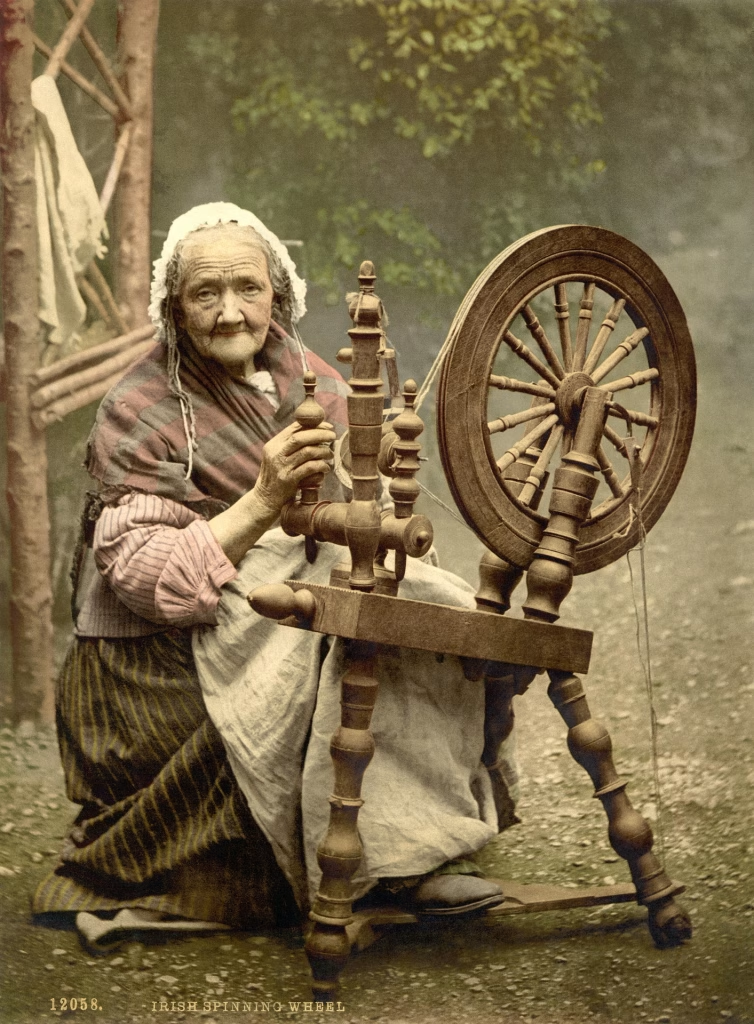
In Scottish fairy lore Habetrot and her fellow spinners live under the root of a tree and can only be seen by a mortal when looking through a stone with a hole in it. As kindly as she is, Habetrot is ugly, as all her spinning has deformed her lip, flattened her thumb and given her a flipper for a foot.
*More can be read in the book.
Further Reading:
Folklore in a Nutshell by Ronel
[piece]
Spinners in Modern Culture
[sources]
Fate/Grand Order Mobile Game
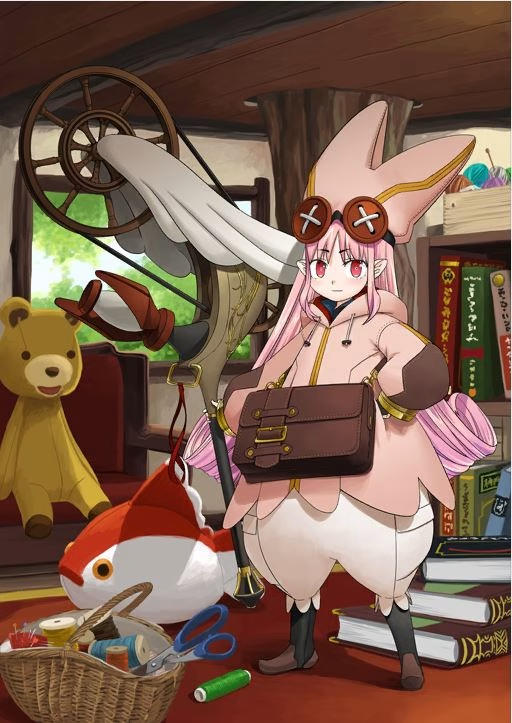
Habetrot of Faerie Britain.
She makes her first appearance as the spinster faerie during a Fragment section of the story. She traveled alongside Aesc the Savior and helped to put an end to the many calamities plaguing Britain. When Mash Rayshifted to Fae Era 400 and met her, Habetrot’s fate took a drastic turn…or rather, she did everything in her power to overcome her own destiny.
Learn more here.
When Aesc and the rest of the first Tam Lin disappeared from history, Habetrot wandered across Britain alone, spreading wedding culture and attending to numerous brides. Once the Era of the High Queen began, she turned herself into stone inside the Twisted Hole in northern Britain, where she fell into a deep slumber until her fateful encounter in 2019. After casually saving Mash at Sheffield, she guided Chaldea’s Master to Orkney where she finally accepted the consequences of her choices.
Spinners in My Writing
Origin of the Fae: Spinners
[origin of fae]
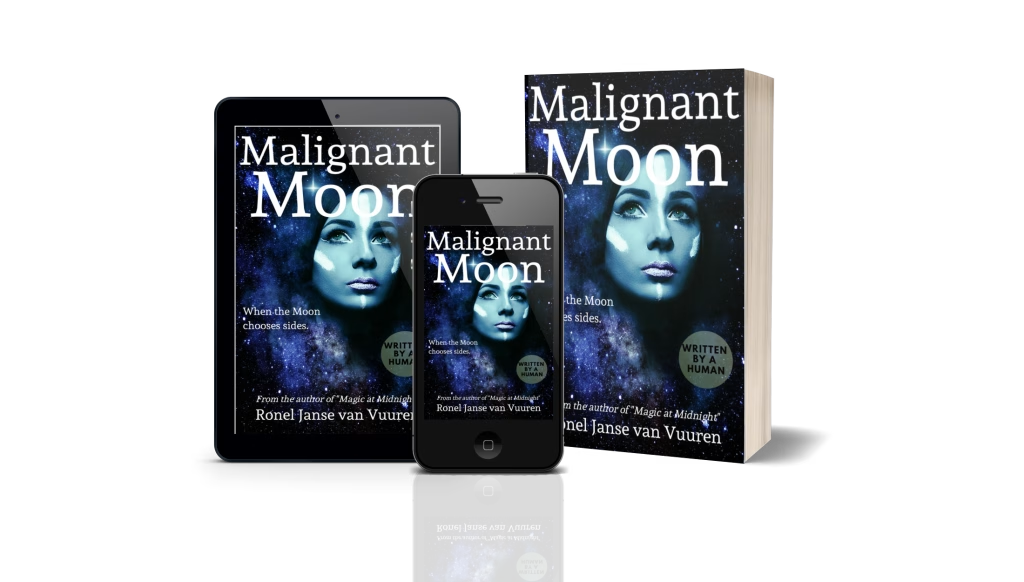
Malignant Moon (Faery Tales #13)
If this tale has lingered with you, I would be glad to hear it.
Where did you first encounter this creature – through story, superstition, memory, or something half-remembered?
If you know other versions of its myth, feel free to leave them in the record below. Folklore survives by being spoken again.
Further fragments and interpretations of this creature can be found in my Pinterest grimoire.
If you wish to support the time and craft behind these folklore posts – researching old tales, gathering fragments, and shaping them into something worth reading – you may do so by buying me a coffee. It can be a single offering, or something you return to whenever the spirit moves you.


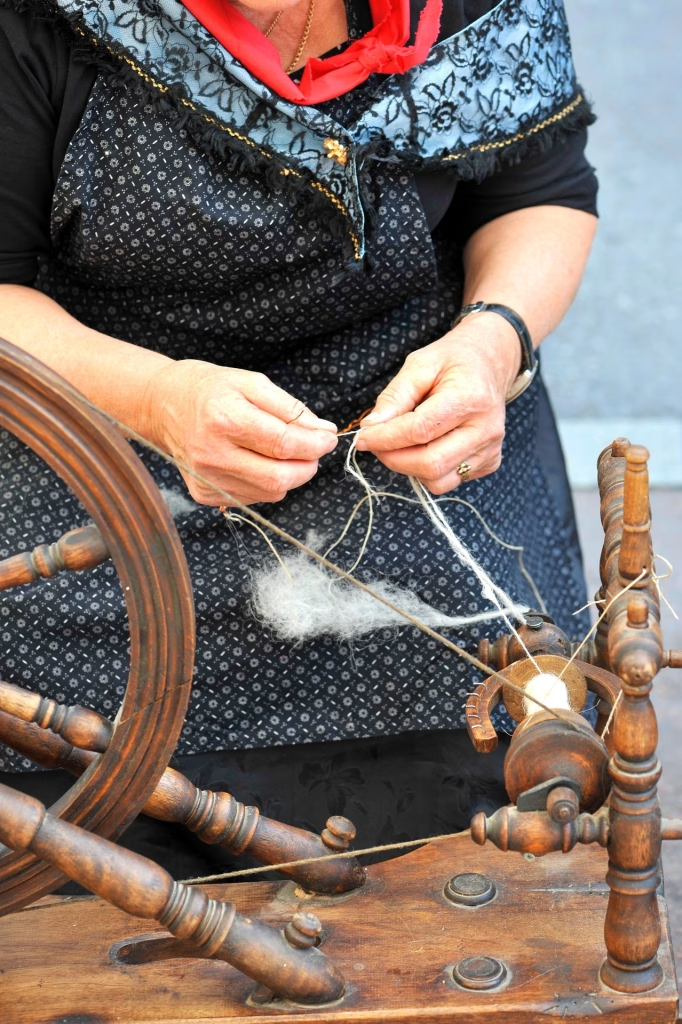
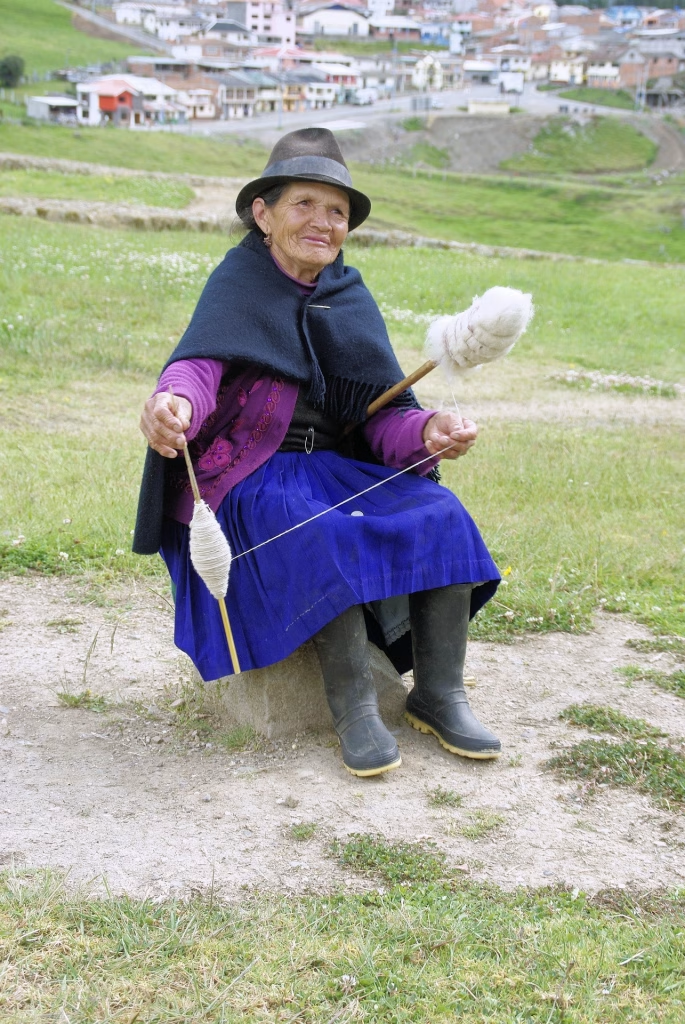
Do people still use a spinning wheel? I mean, beyond the Amish types who are opposed anything post-industrial era. I’m guessing machines do that stuff now. Still. The post makes me think of the movie Maleficent (Angelina Jolie). I like that she had to use her actual child for the young person part, because all the other kids ran screaming, but her daughter was just like “hi, mom!” and didn’t even notice the Hollywood scare of mom’s wardrobe.
I think the slow-living types probably still have this skill. I know my great-aunt had a loom…