What happens when the god who remembers the dead is confronted with something he’d rather forget?
Anubis has guided the dead for millennia. He knows the weight of memory, the inevitability of death, and the peculiarities of mortals better than most gods ever could. But even an immortal can be caught off guard when the past refuses to stay buried.
How You Remind Me is a darkly playful fantasy set in the Faerie Mythos, blending Egyptian mythology, immortal mischief and supernatural intrigue with a story about memory, duty and the things that follow us long after we think we’ve left them behind.
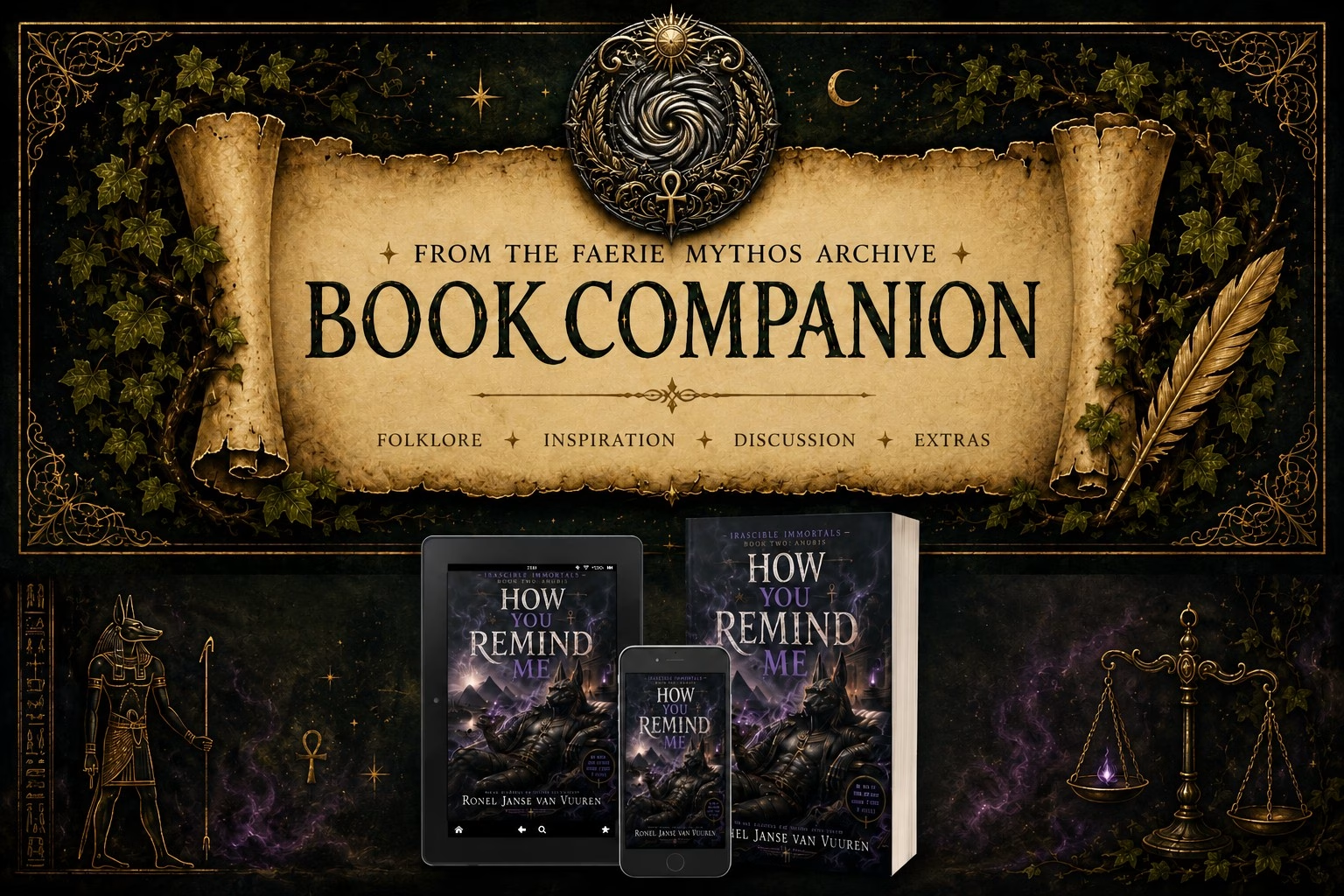
Scroll down for book club questions, an excerpt, behind-the-scenes insights, and everything you need to step into Anubis’s world.
📚 Series: Irascible Immortals
⚖️ Genre: Mythic Dark Fantasy
🐺 Features: Egyptian Mythology, Immortals, Gods, Death & the Afterlife
👥 Recommended for readers who enjoy: mythology retellings, dark fantasy, immortal characters and stories that put a mischievous twist on ancient legends
About How You Remind Me
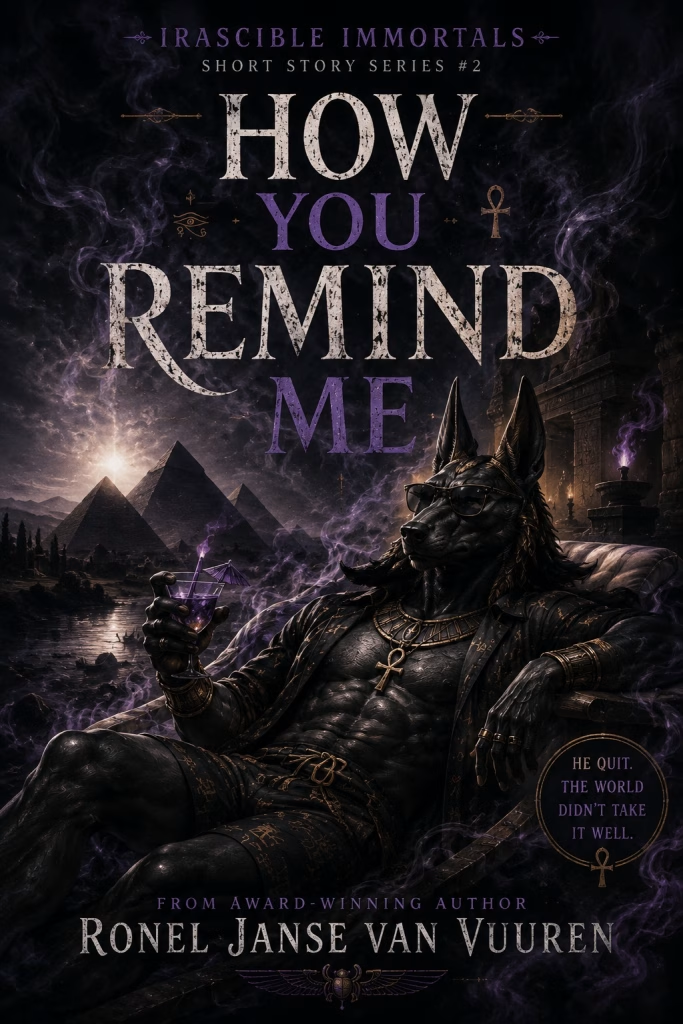
Anubis is tired.
After thousands of years guiding the dead, maintaining cosmic order, and dealing with the endless complaints of other gods, he’s had enough.
Especially when someone decides his job can be outsourced.
So Anubis does the unthinkable:
He quits.
For the first time in millennia, Anubis is free to do whatever he wants — and he intends to spend his hard-earned holiday on a sun-drenched beach, partying with mortals and making up for all the fun he’s been denied.
For once, everything is perfect.
Until he looks out to sea.
Something ancient is moving beneath the water.
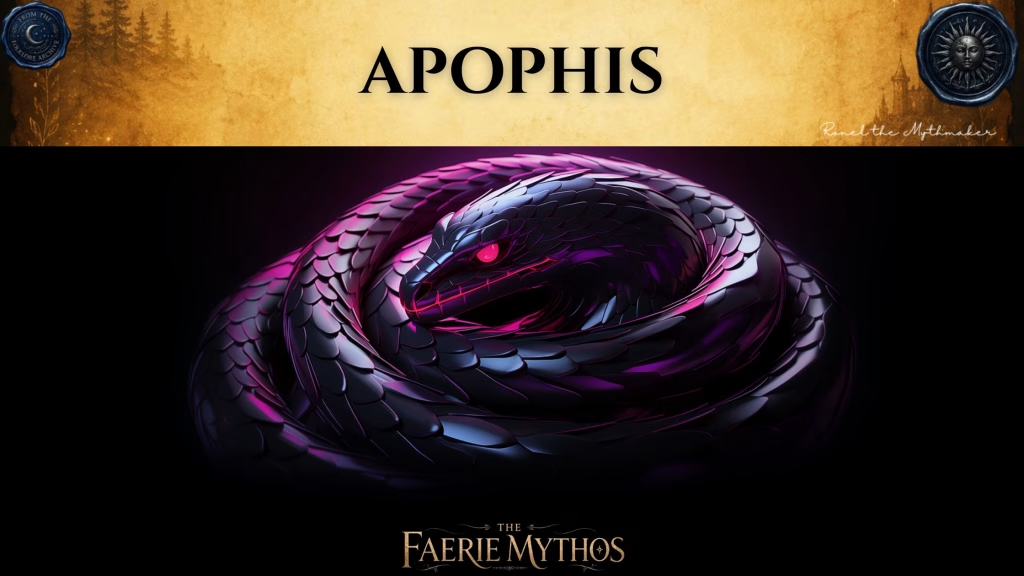
Apep has awakened.
And while the apocalypse unfolds around him, Anubis discovers the one thing he can’t escape from: being the god of the dead.
Now he has to choose between saving the world and getting back to the party.
A humorous mythological fantasy about ancient gods, mortal mischief, apocalyptic chaos, and one very reluctant god of the dead.
Watch the Book Trailer
Read an Excerpt
Anubis tuned out the incessant whining of the other gods of the Egyptian pantheon. He didn’t need to hear how they were forgotten, or worse, misremembered by mortals. He still had an important job to do: escorting the dead, tending to funeral rites, and other excellent things concerning death. He especially liked attending funerals in New Orleans – those mortals knew how to celebrate death!
‘Oh, my back won’t stop aching!’
‘My headaches are worse than ever.’
Anubis stopped walking. The unlikely pair of Horus and Set were standing with the king of the dead – and, sometimes, the gods – in the Hall of Judgement.
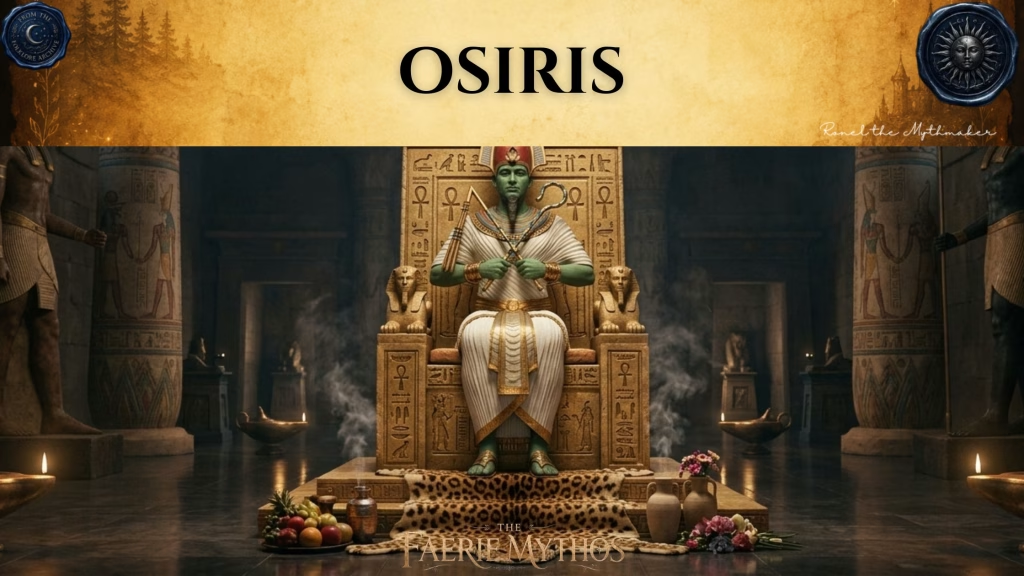
‘Try having both,’ the blue-skinned Osiris said to his companions.
Anubis rolled his eyes. The lot of them had taken to complaining about everything lately.
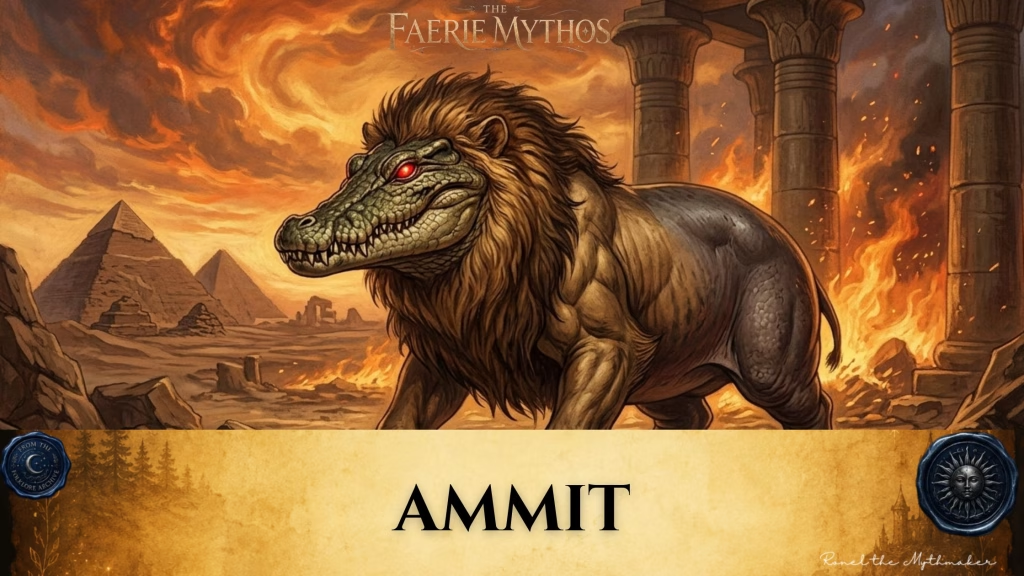
‘Pain is a sign that you’re still alive,’ he said, throwing a steak at Ammit, her crocodile jaws snapping it from the air before she turned around, showing her hippopotamus hindquarters as she lay down to enjoy her snack.
‘What would a death deity know about being alive?’ Set asked and stood straight, pain forgotten, as he sneered at Anubis.
‘At least I’m not wearing pink.’ He looked pointedly at Set’s suit. The god of disorder became as red as the colour he was usually known by. Clearly, the mortals were rebranding him. Again.
‘Smug. That’s unbecoming,’ Horus said. ‘I –’
He was cut off by a ghost appearing before them on the back of a harpy, of all things. She snapped her beak in the direction of the eagle-headed Horus.
‘Anubis,’ the ghost said, looking up from an electronic tablet to the black-clad god before him. ‘And other gods,’ he added when he saw the other occupants of the room. ‘You are no longer needed to fill the role of funeral god, death escort, et cetera.’ He squinted at the other gods. ‘And you lot aren’t required to do whatever it is you do.’ He looked back at Anubis. ‘Your job has been outsourced to a no-name brand. It’s cheaper. And no-one really cares about your brand anymore – just price.’
‘And if I refuse?’ Anubis asked.
‘We can’t stop you, of course, but competition will be stiff. No pun intended. There are many others who will do the job without the,’ he gestured to the Hall of Judgement, the Scales of Ma’at and Ammit, ‘theatrics. Sign here that you’ve received this message.’ He held out the tablet. ‘With your finger.’ Anubis shrugged and signed the line. ‘Good day.’
With a flash and the acrid smell of burning feathers, the ghost and harpy disappeared.
‘The nerve! Doesn’t he know how important we are?’ Horus yelled and slammed his fist into a pillar.
‘He didn’t even recognise us…’ Set said with a hitch in his voice.
‘I’m in charge here and he only spoke to the dog,’ Osiris added, seething.
‘Jackal,’ Anubis corrected automatically.
‘Impudence!’
Anubis looked at the three gods waning in power year-after-year, yet clinging to their titles. He looked around the Hall of Judgement, noting the empty seats of forgotten gods.
‘I’m out of here.’
‘What?’ All three stopped hurling various insults at him.
‘Seeing as I’m no longer needed – and you lot don’t want me around anyway – I’m going on a well-deserved break.’
‘You can’t!’
‘We have an obligation to protect the Duat!’
‘What about duty and honour?’
Anubis held up a hand. ‘You’ve told me since the Middle-Kingdom that I’m nothing more than a tour guide. You lot can keep doing whatever it is you do.’
With that, Anubis turned his back on them and walked away into the darkness of the Duat, changing his jackal-head into something more acceptable for the human realm.
How You Remind Me, Ronel Janse van Vuuren
How You Remind Me Book club questions
- How did you like Anubis’ life in the Egyptian underworld?
- Did you see the similarities between actual retrenchment practices and the story?
- What do you think of Anubis?
- What do you think of the people on the beach?
- What do you think of the other Egyptian gods?
- How do you think the story continues?
The Inspiration Behind How You Remind Me
I finally remembered where this one came from.
I was listening to Nickelback’s How You Remind Me while writing it.
That’s it. That’s the origin story.
🎵 The song that was playing while Anubis was being written:
Well… probably not quite the whole story. How You Remind Me originally appeared in Grumpy Old Gods 2, an anthology of stories about gods who have been around rather longer than they perhaps expected to be. Somewhere between the song, an ancient Egyptian god and whatever was happening inside my writer brain at the time, Anubis acquired a story of his own.
And honestly, I rather like that I can’t remember every detail of the process. Stories don’t always arrive as carefully planned concepts. Sometimes there’s a song playing in the background, a character who refuses to leave you alone, and a vague sense that something interesting is happening.
Then suddenly you have a book.
In this case, it was an immortal Egyptian god with a story called How You Remind Me.
Apparently Anubis had been waiting for someone to remind him.
Meet Anubis, the hero of How You Remind Me
Archive Note: Anubis is one of the ancient gods who moves between the worlds of the living and the dead. He has spent millennia doing what is expected of him: guiding souls, weighing hearts and keeping the boundary between life and death where it belongs. But even a god who knows the dead has things he would rather leave buried. His story begins with duty, memory and an unexpected reminder that the past has a way of finding you.
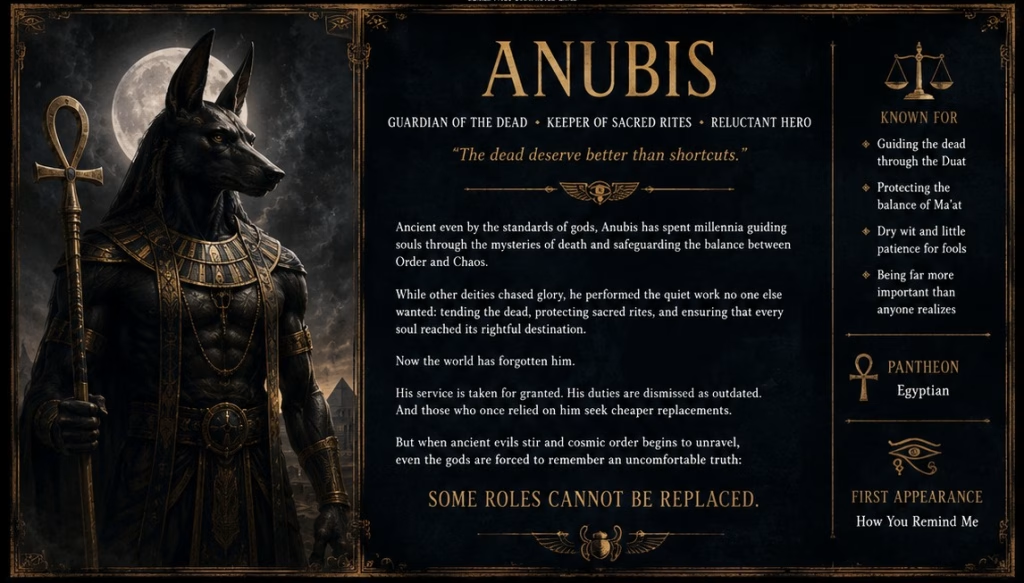
Anubis has spent millennia as the god of the dead: ancient, powerful, respected and very much accustomed to knowing exactly where he stands in the divine order. He has watched civilisations rise and fall, guided the dead beyond the mortal world, and understood something many immortals seem to forget — being remembered matters.
As Anubis navigates the peculiarities of immortality, divine expectations and the occasional need to step away from it all, he discovers that even an ancient god cannot always leave the world behind simply by taking a holiday. Some responsibilities have a way of following you, and some things have a tendency to go rather badly when you’re not there to keep an eye on them.
Although Anubis is at the heart of the story, it is the world around him that reveals what makes him different from the gods who came after him. His age, experience and connection with mortals have given him a perspective that is difficult for younger immortals to understand. And sometimes, being the one who remembers isn’t quite the same thing as being the one everyone else remembers.
Explore the Folklore
The myths behind the mischief.
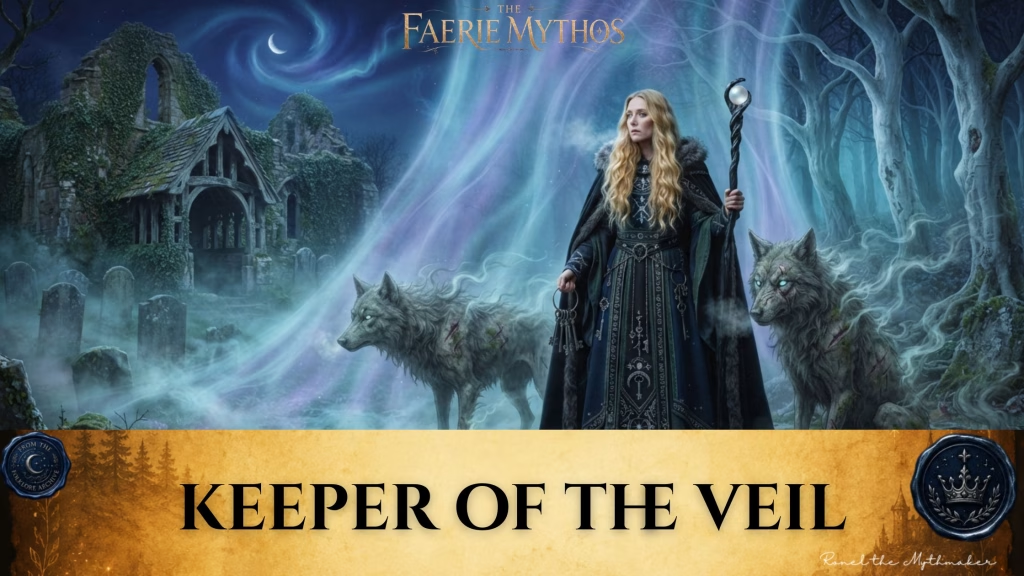
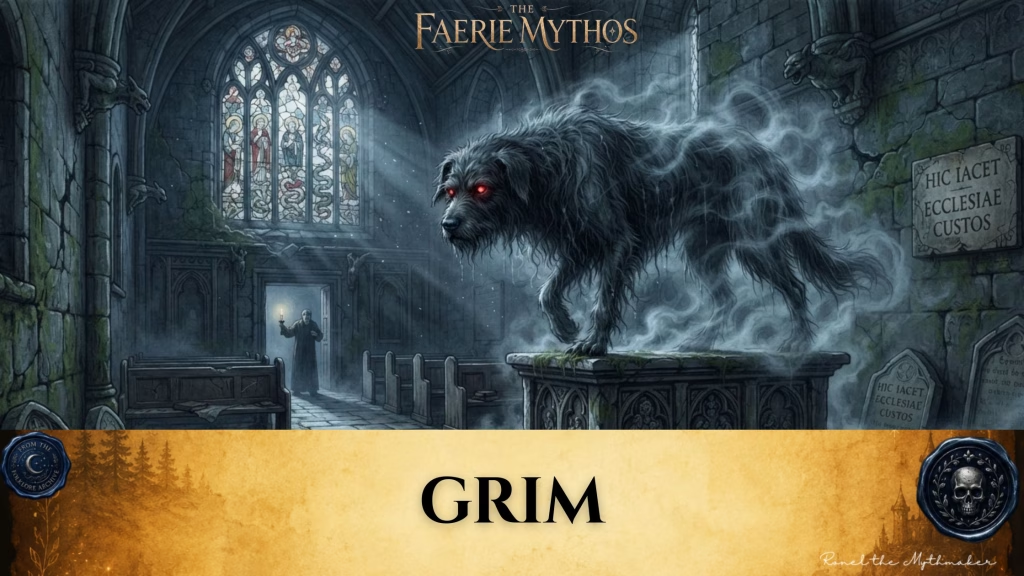
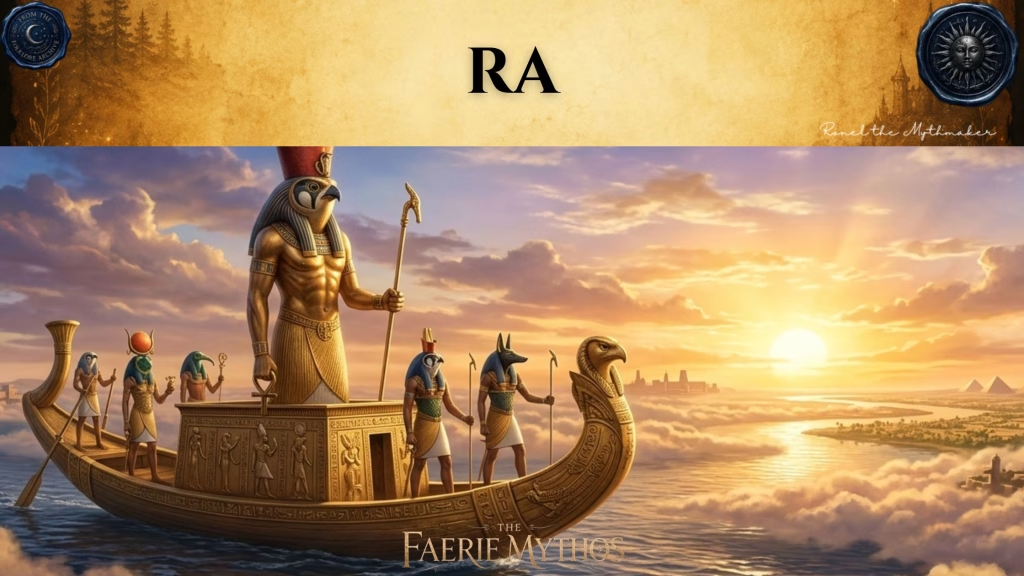
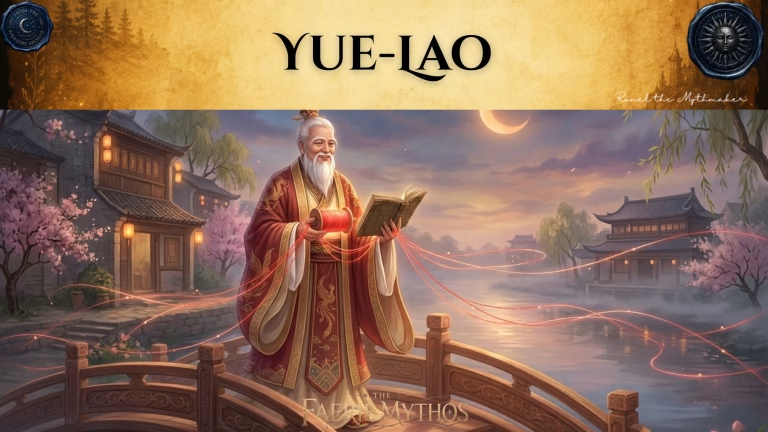
Anubis may be at the centre of How You Remind Me, but he isn’t the only figure stepping out of mythology and into the story. Egyptian gods, Greek mythology and creatures from the Faerie Mythos all cross paths here — including a few who have rather different ideas about what happens to the dead. Meet the gods, legendary figures and creatures who make Anubis’s corner of the afterlife considerably more complicated.



Voices from Readers
How You Remind Me originally appeared in the Grumpy Old Gods 2 anthology. Here’s what readers had to say about Anubis, ancient gods, immortal chaos — and the occasional holiday interrupted by the smell of bacon:
How You Remind Me by Ronel Janse van Vuuren was an exciting mashup of various pantheons with a great choice for a main character. — J Lenni Dorner
★★★★★ A story of gods that’re branded useless and out of date banding together to save the world. And a timely reminder too that bullying isn’t justified! A great story that was really enjoyable reading, and I loved that even a god on vacation found the scent of cooking bacon impossible to resist!! — Donna
Buy How You Remind Me
Beyond the Archive

Explore the Audiobook Library ✦ Browse the Lore Archive ✦ Discover the Faerie Mythos Books ✦ Join the Mythmaker’s Circle
Your Turn
Have you already explored the various pantheons, or are you planning your first visit? I’d love to hear from you! Which character, creature or discussion question caught your imagination? Share your thoughts in the comments below. If you’d like to discover more artwork, folklore and inspiration from How You Remind Me, continue your journey on the Irascible Immortals Pinterest board.
Part of the Faerie Mythos
Also available in Afrikaans ✦ Christi & Saphira universe (coming soon) ✦ All stories archive



One Comment
Comments are closed.