Things That Go Bump In The Night
A is for Abhor
I’m weaving folklore and book reviews into a single offering, shaped to reach a wider audience drawn to both. In years past, interest has surfaced in fragments of each; now, I’m gathering those threads into April alone, so the rest of the year remains quiet and deliberate.
If you came only for today’s book review, you may follow the link here.
You can be quite rational and believe that the strange noises at night are trees scraping against windows, wildlife moving around in the dark, and even the house settling. You can rationalise that sounds are louder at night and are nothing to fear. Or you can remember that more than the natural world is awake and that those noises you hear aren’t your pets hunting rats… It’s alright to be afraid.
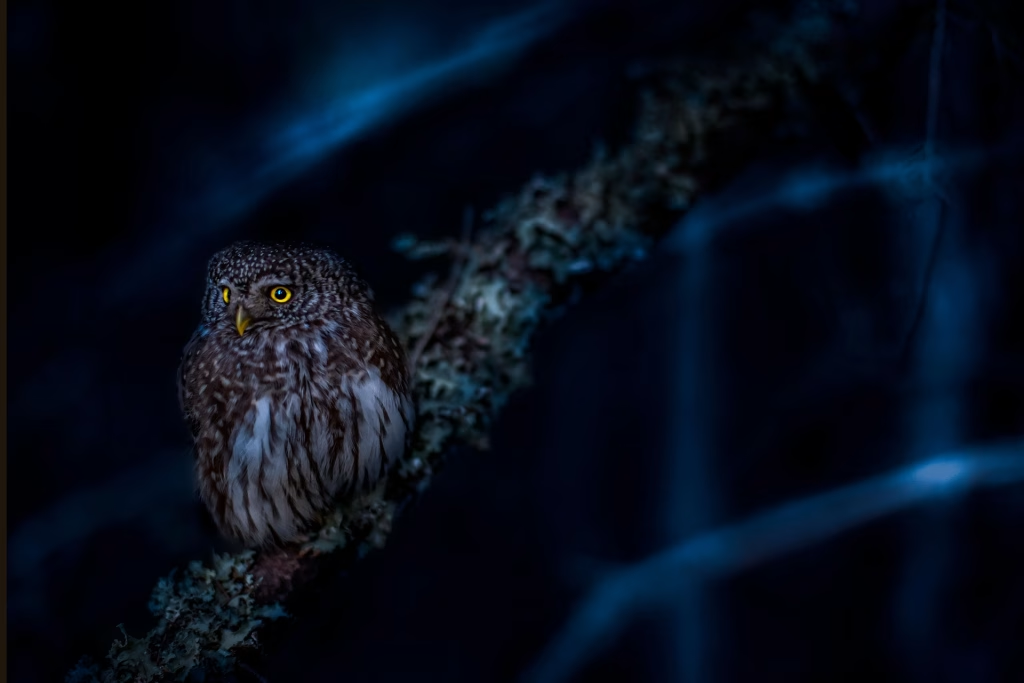
They haunt the places of the dark, where there are were-wolves and goblins and “things that go bump in the night.”
— W. M. Letts, The Living Age, July – September 1914
Folklore
Shetland Traditional Lore by Jessie Saxby [1932]
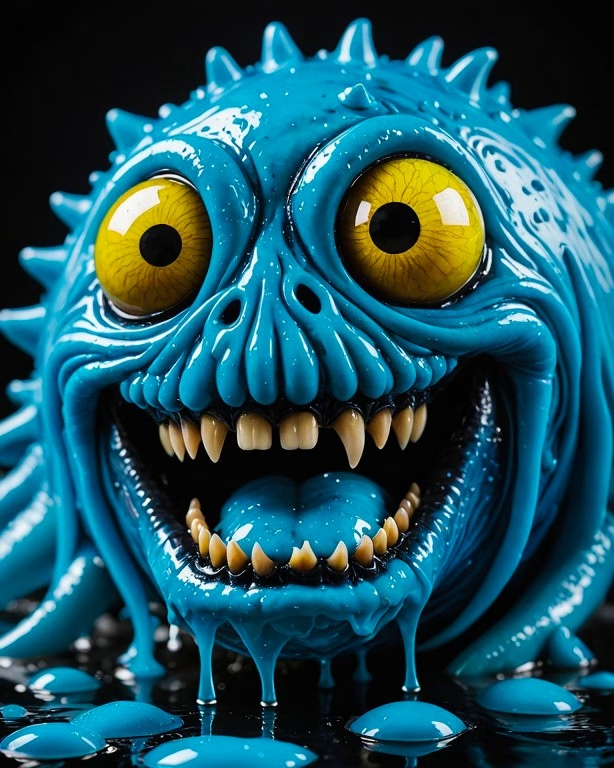
Without legs or wings, It could run faster than a dog, and fly faster than an eagle. It made no sound of any sort, yet folk could understand what It meant to say, and repeated what It told one without a word being uttered.
Celtic Folklore: Welsh and Manx (Volume 1 of 2) by Sir John Rhys [1901]
On Allhallows’ Eve
A bogie on every stile.
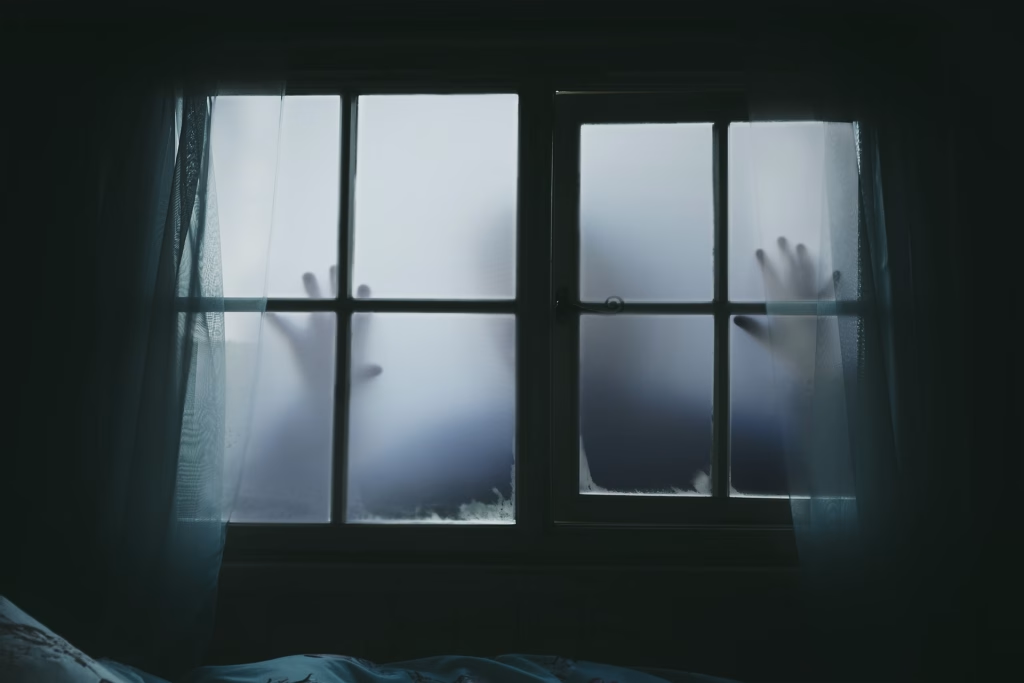
Welsh people speak of only three Calends—Calan-mai, or the first of May; Calan-gaeaf, the Calends of Winter, or Allhallows… it is one of their peculiarities that all uncanny spirits and bogies are at liberty the night preceding each of them. The Hwch đu gwta is at large on Allhallows’ Eve, and the Scottish Gaels have the name ‘Samhanach’ for any Allhallows’ demon, formed from the word Samhain, Allhallows.
The Fairy Mythology by Thomas Keightley [1892]
Gervase also describes the Kobold, or House-spirit, the Esprit Follet, or Goblin of the North of France.
“There are,” says he, “other demons, commonly called Follets, who inhabit the houses of simple country people, and can be kept away neither by water nor exorcisms; and as they are not seen, they pelt people as they are going in at the door with stones, sticks, and domestic utensils. Their words are heard like those of men, but their form does not appear. I remember to have met several wonderful stories of them in the Vita Abbreviata, et Miraculis beatissimi Antonii.”
Legends & Romances of Brittany by Lewis Spence [1917]
Crions, Courils, and Gorics
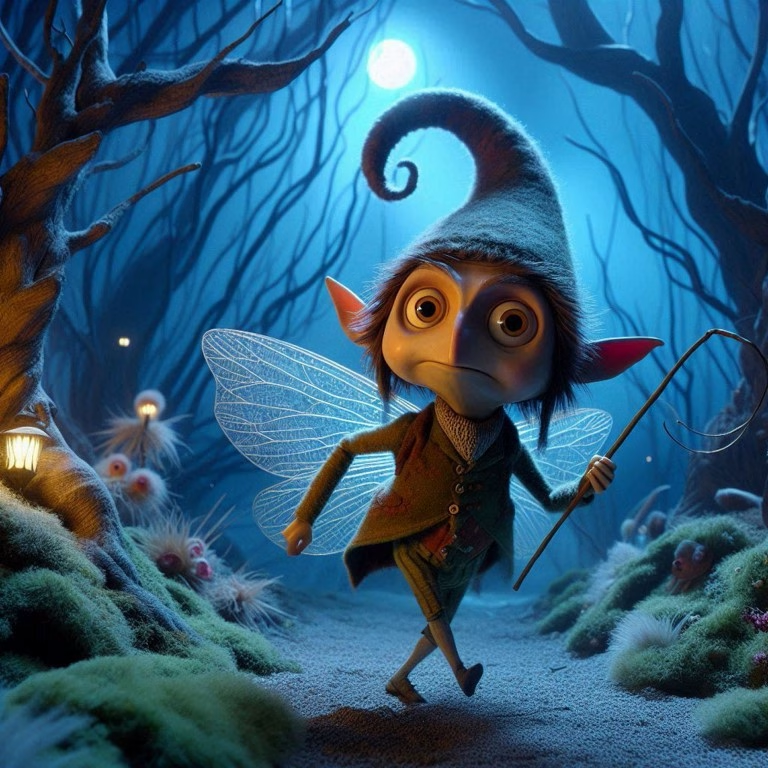
Brittany has a species of dwarfs or gnomes peculiar to itself which in various parts of the country are known as crions, courils, or gorics. It will at once be seen how greatly the last word resembles Korrigan, and as all of them perhaps proceed from a root meaning ‘spirit’ the nominal resemblance is not surprising. Like the nains, these smaller beings inhabit abandoned Druidical monuments or dwell beneath the foundations of ancient castles. Carnac is sometimes alluded to in Breton as ‘Ty C’harriquet,’ ‘the House of the Gorics,’ the country-folk in this district holding the belief that its megalithic monuments were reared by these manikins, whom they describe as between two and three feet high, but exceedingly strong, just as the Scottish peasantry speak of the Picts of folk-lore—‘wee fouk but unco’ strang.’ Every night the gorics dance in circles round the stones of Carnac, and should a mortal interrupt their frolic he is forced to join in the dance, until, breathless and exhausted, he falls prone to the earth amid peals of mocking laughter. Like the nains, the gorics are the guardians of hidden treasure, for the tale goes that beneath one of the menhirs of Carnac lies a golden hoard, and that all the other stones have been set up the better to conceal it, and so mystify those who would discover its resting-place. A calculation, the key to which is to be found in the Tower of London, will alone indicate the spot where the treasure lies. And here it may be of interest to state that the ancient national fortalice of England occurs frequently in Breton and in Celtic romance. Some of the immigrant Britons into Armorica probably came from the settlement which was later to grow into London, and may have carried tales of its ancient British fortress into their new home.
The courils are peculiar to the ruins of Tresmalouen. Like the gorics, they are fond of dancing, and they are quite as malignantly inclined toward the unhappy stranger who may stumble into their ring. The castle of Morlaix, too, is haunted by gorics not more than a foot high, who dwell beneath it in holes in the ground. They possess treasures as great as those of the gnomes of Norway or Germany, and these they will sometimes bestow on lucky mortals, who are permitted, however, to take but one handful. If a person should attempt to seize more the whole of the money vanishes, and the offender’s ears are soundly boxed by invisible hands.
The night-washers (eur tunnerez noz) are evil spirits who appear at night on the banks of streams and call on the passers-by to assist them to wash the linen of the dead. If they are refused, they seize upon the person who denies them, drag him into the water, and break his arms. These beings are obviously the same as the Bean Nighe, ‘the Washing Woman’ of the Scottish Highlands, who is seen in lonely places beside a pool or stream, washing the linen of those who will shortly die. In Skye she is said to be short of stature. If any one catches her she tells all that will befall him in after life. In Perthshire she is represented as “small and round and dressed in pretty green.”
Fairy Legends and Traditions of the South of Ireland by Thomas Crofton Croker [1834]
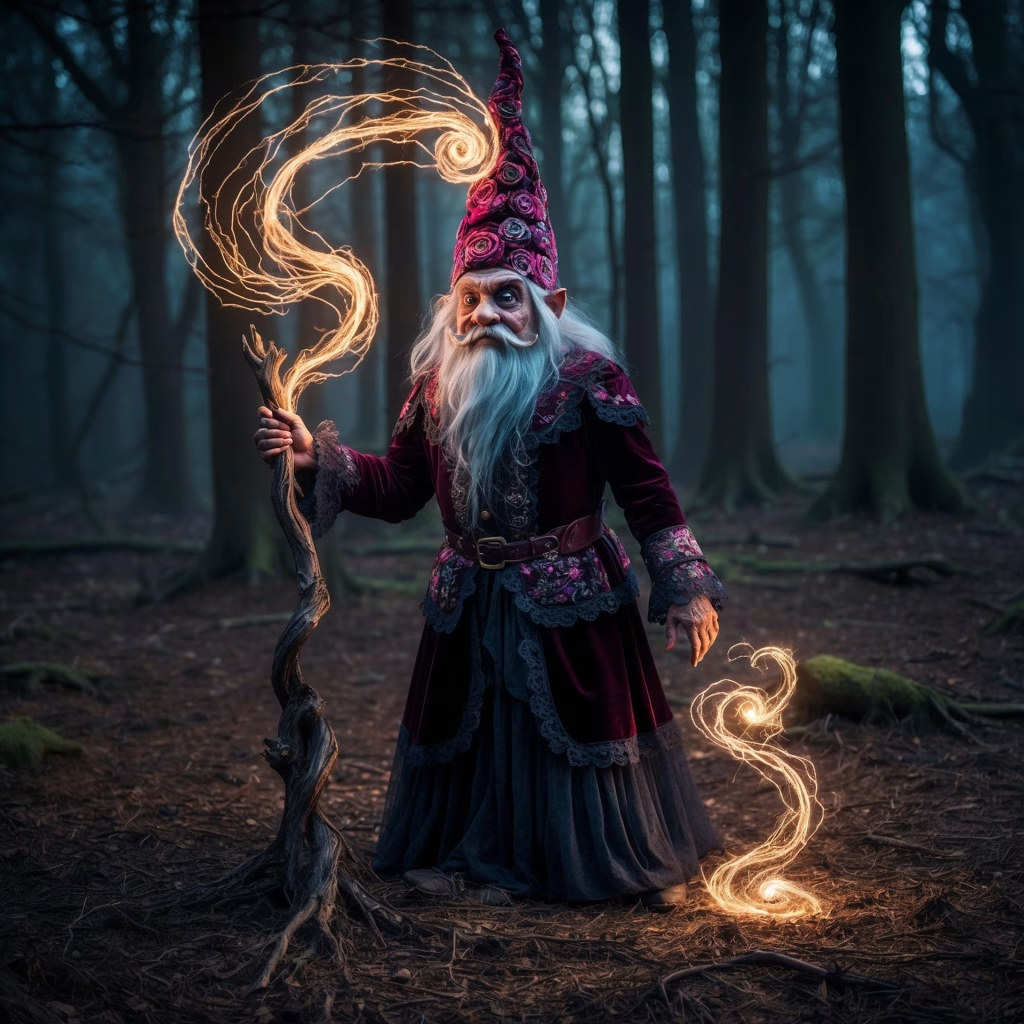
The name Shefro, by which the foregoing section is distinguished, literally signifies a fairy house or mansion, and is adopted as a general name for the Elves who are supposed to live in troops or communities, and were popularly supposed to have castles or mansions of their own.
*The tales in the book about the Shefro are quite entertaining!
Element Encyclopedia of Fairies by Lucy Cooper
It
An amorphous creature in Shetland folklore. No two people looking at it ever saw the same thing and no one was ever able to describe it satisfactorily. To some it appeared as a “slub”, or jellyfish, to others like a bag of white wool, a beast without legs, or a headless human, and it never appeared in the same form twice.
Jack in Irons
Yorkshire bogie. Travellers, beware when walking lonely Yorkshire roads at night, for this giant figure clad in clanking chains is said to lie in wait to pounce on unsuspecting victims. Some say he wears the heads of his victims and wields a big spiked club.
Feeorin
Merry little fairies clothed in green and wearing red caps, with a love of dancing and music.
Flibbertigibbet
The “foul fiend Flibbertigibbet… who squints the eye and makes the harelip… and hurts the poor creature of earth,” appears in Shakespeare’s King Lear and in The Folklore of Warwickshire (1976) by Roy Palmer. He is described as a night demon who “mopped and mowed” between the ringing of the curfew bell and the crowing of the first cock in order to terrify young women.
Follets
House spirits in the north of France, described in Thomas Keightley’s The Fairy Mythology (1828) as demons who attacked with sticks, stones, pots, and pans, were impervious to all forms of exorcism, and could clearly be heard speaking although they themselves were invisible.
Shefro
Small trooping fairies of Ireland. According to Crofton Coker’s Fairy Legends of the South of Ireland (1825), they dwell in the hills, wear foxglove caps on their heads, and are fond of mischief-making.
“The Legend of Knocksheogowna” tells of the pranks and activities of a clan of fairies inhabiting one particular hill and of the shapeshifting escapades of their queen. Knocksheogowna means “the Hill of the Fairy Calf”.
*More can be read in the book.
The Forest in Folklore and Mythology by Alexander Porteous
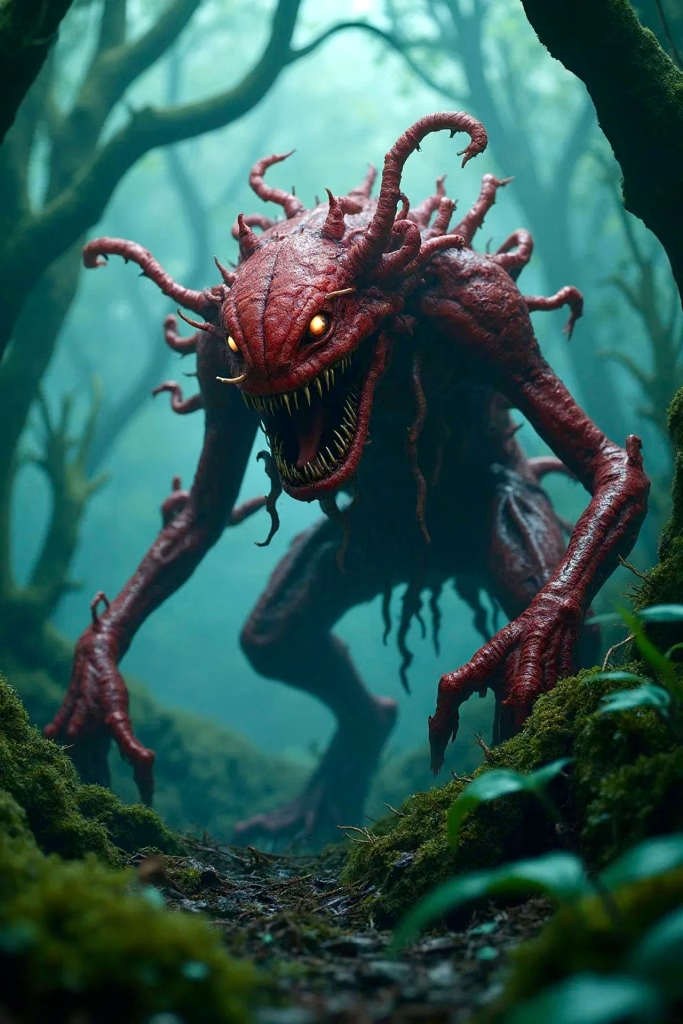
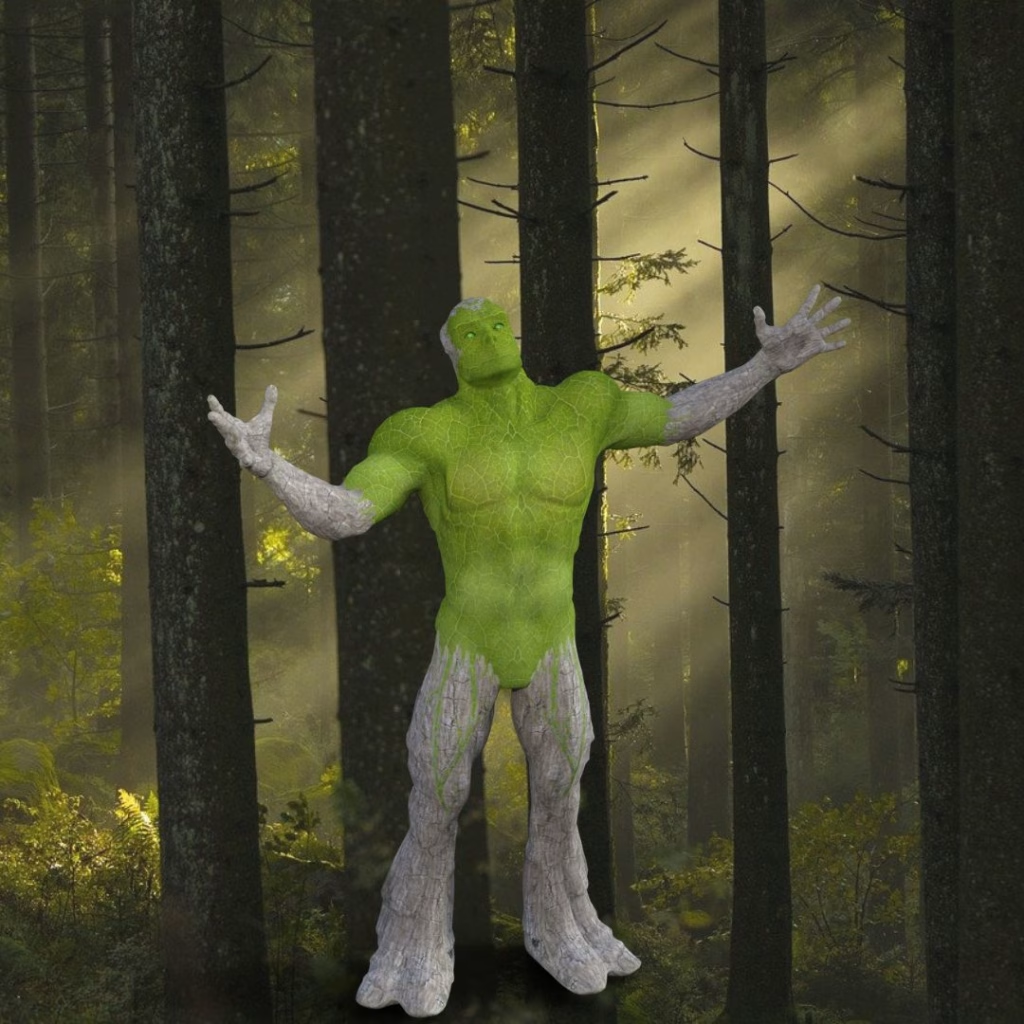
Another kind of Forest Demon, or rather Hobgoblin, is called the Caypór. He, however, is neither an object of worship nor of fear, except perhaps to children. He is said to be a bulky, misshapen monster, his skin is red, and he has long shaggy red hair which hangs half-way down his back.
*More can be read in the book.
The Encyclopedia of Celtic Mythology and Folklore by Patricia Monaghan
In Scotland hobgoblins caused distress and mischief just for their own sake. They took on ominous forms to terrify people waking at night; even a haystack could become a threatening apparition, coming alive in the night and frightening the traveller into an exhausting run or a useless fight against an invisible foe.
Couril Breton folkloric figure. The courils were evil, or at least mischievous, fairies who congregated around ancient stone circles, especially those of Tresmalonen, where they enjoyed dancing all night. Should a human wander near them in the darkness, they captured him and kept him dancing until he died of exhaustion. Or, if the hapless wanderer was a young woman, they enjoyed her favors and left her pregnant with a half-fairy child.
*More can be read in the book.
The Element Encyclopedia of Magical Creatures by John and Caitlín Matthews
BUCCA
The bucca is a form of Cornish spirit or hobgoblin from the south-west of England. Buccas kept very much to themselves and need to be respected properly since they are spirits of the land and sea. Fishermen would always leave a fish for the bucca after they had a catch, and at harvest it was essential to leave a piece of bread and some beer when the harvesters had their lunch. From such respect, the bucca rapidly descended in people’s opinions to a mere bucca-boo (from which we get the term bugga-boo or bogeyman). No one now remembers him as being any different than a being with which to scare naughty children. The name bucca shares its linguistic root with creatures as diverse as Puck, Pukis, Pwca, Bwca and Buggane.
*More can be read in the book.
Encyclopedia of Fairies in World Folklore and Mythology by Theresa Bane
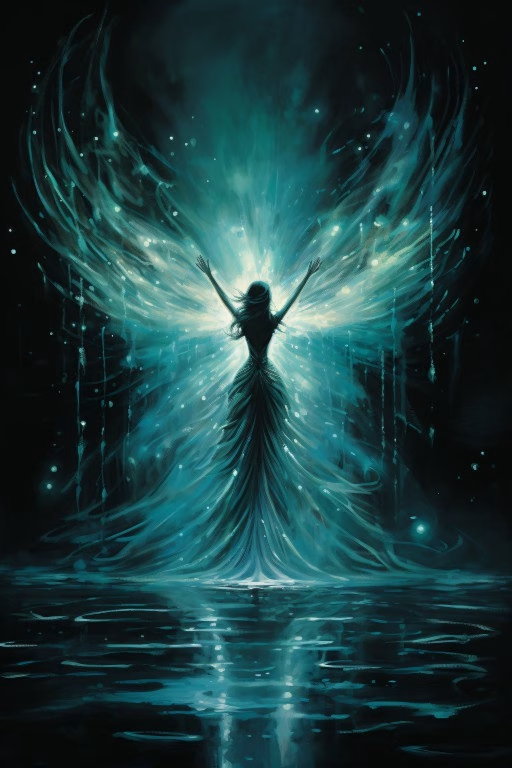
Silvani
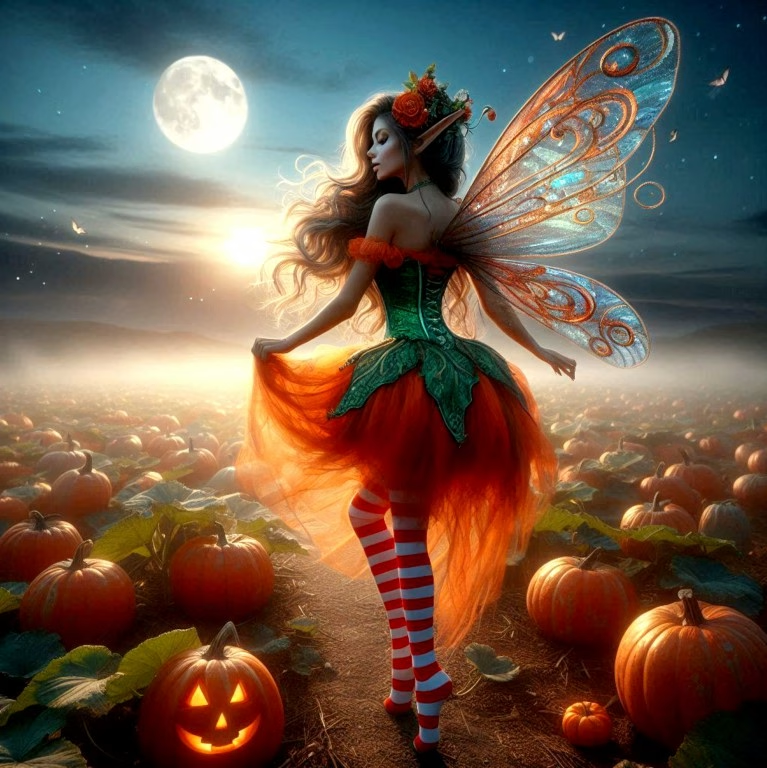
The nature spirits of the mountains of northern Italy known as the Aguane were said to successfully mate with the silvani (“wooded”) thereby producing offspring known as salvanelli. Described as looking like winged wood-nymphs, they had a ghost-like appearance and dressed in animal furs and red clothing.
Salvanelli
Born of the union between the Aguane and the Silvani, the Salvanelli were half-fay beings from the folklore of northern Italy. The name of these hybrids refers to the glint of light which gleams off the surface of a mirror or sparkling surface of water. It was not unusual for a salvanelli to take a Strega (“witch”) as its mate, as Italian fay and witches were said to share a common bloodline.
Samhanach
A bogie or goblin from Scottish lore the samhanach (“a savage”) is most active on the feast of Samhain (October 31), from which its name is derived. These malignant fairies are believed to steal children and cause general mischief.
Couril
In the folklore of northwest Brittany, France, the couril are a type of dwarf or fairy; they are said to live in the stone circles that are plentiful in the region. They are said to look like tiny humans but have webbed feet and a malignant disposition. The couril have a great love of dancing and at night, should a man approach too close during their festivities they will be compelled to join in until dawn; sadly, sometimes he may die of exhaustion before sunrise. On the other hand, if a woman is forced to dance with the couril, nine months later she will give birth to a child the wicked minded fairies have made to look like someone in the village.
Cacy Taperere
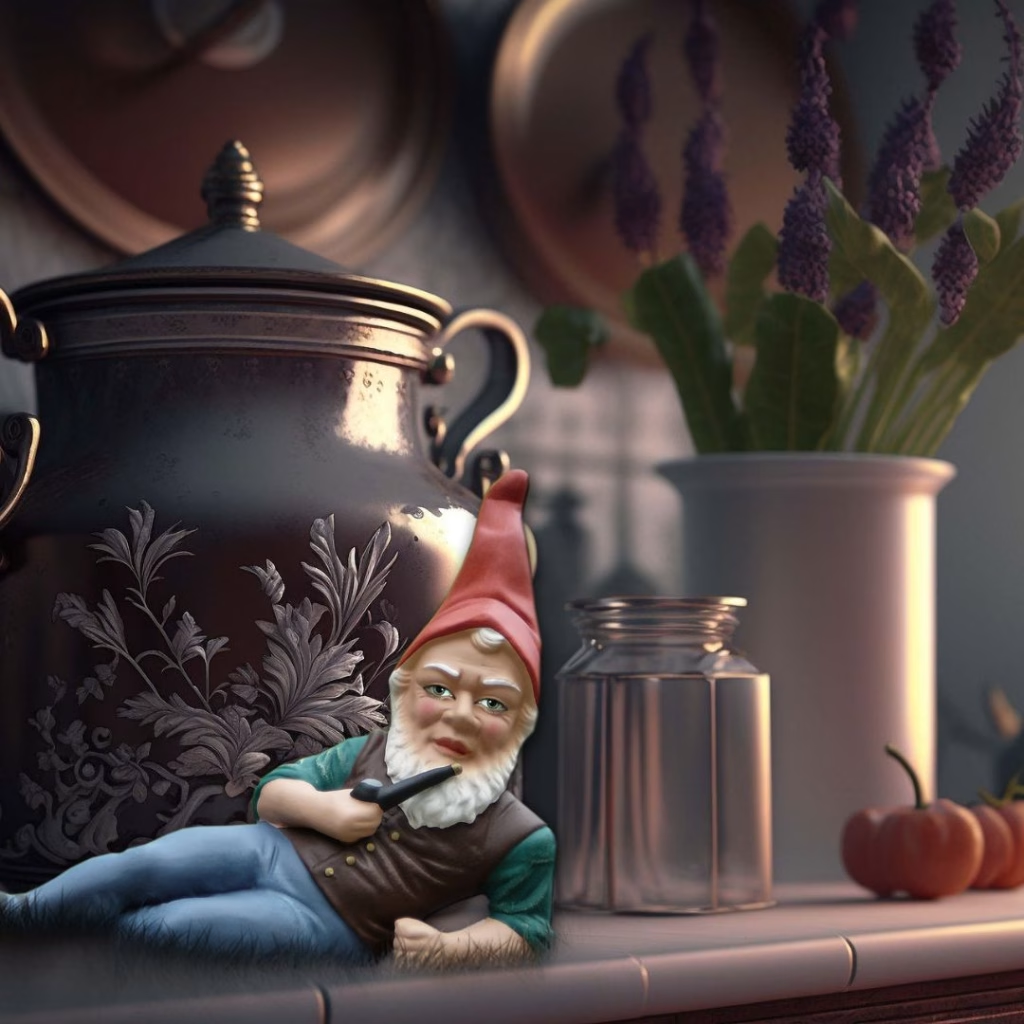
In southern Brazilian fairy lore, Cacy Taperere is a dwarf-like spirit; he is described as having fiery eyes, one leg, smoking a pipe, and wearing a red cap. A household fairy similar to the brownie, when not being helpful the cacy taperere enjoys playing little pranks such as hiding objects or moving belongings.
Olsen
In Danish folklore, Olsen is an invisible household spirit who is the cause for any slight annoyance or inconvenience which happens in the home, such as cake missing, door being found ajar, items missing or misplaced, or toys found broken.
*More can be read in the book.
Further Reading:
- Herbal Folklore: Stories of the Silvani with Guido Masé
- couril
- Jack-in-Irons
- shefro
- Bucca
- The Strangeness of ‘Going Bump In The Night’
Folklore in a Nutshell by Ronel
It’s late at night. You’re alone and awake. Something makes a strange noise somewhere in the house. You try to believe it’s the cat hopefully catching a mouse… Only, the cat is sleeping on your favourite chair. So, it’s not the cat. Maybe it’s a branch scratching against a window. Or it’s something sinister, like a ghost or monster. That’s how the expression “things that go bump in the night” came to be.
The Welsh knew that spirits and the like roamed the earth on the nights preceding the first day of winter and of summer. They called the ones that roamed at night on Samhain the Samhanach.
In France, they have Follets who stay invisible, yet speak loud enough for people to hear them, and attack humans with stones, sticks and utensils if they dare enter the home. Follets are impossible to get rid of.
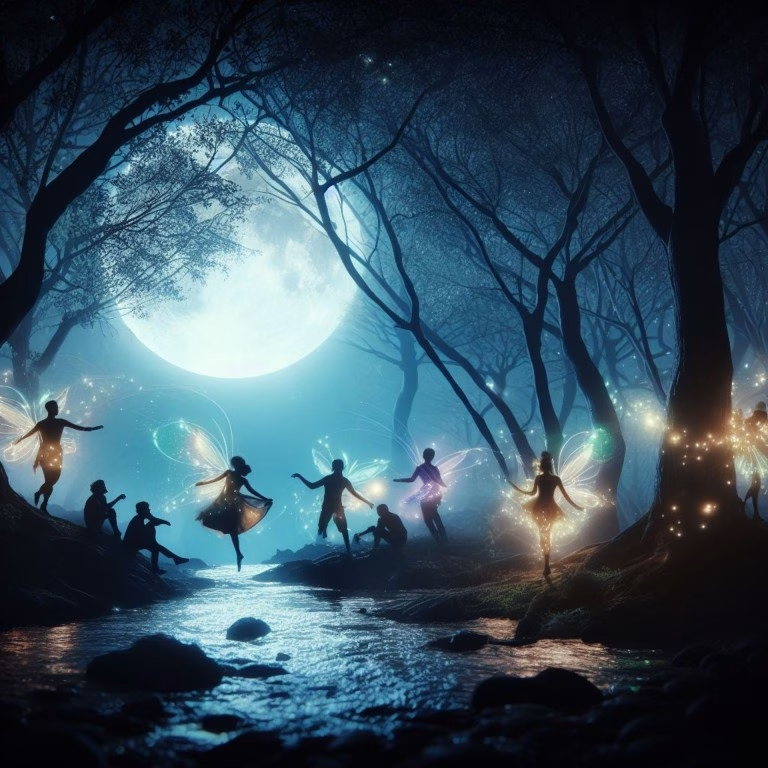
In Brittany, courils inhabit the ruins of castles and druidical monuments. The enjoy dancing in circles around these ruins. If a human were to interfere, they would be forced to dance with the courils until exhaustion or death. If the human is female, they would partake in her favours and most likely leave her pregnant with a half-fay child.
Ireland has many interesting fae. The Shefro are a kind of trooping fae who live in castles hidden in hills. They sing and dance, as many fae do. They enjoy mischief-making, especially tormenting humans foolish enough to invade their hills.
Many faeries who do not live in Faerie, but in the mortal realm, stay invisible as they haunt humans who have invaded their space. Most don’t harm humans, they only toy with them, though the line between causing mischief and bringing grievous harm is sometimes invisible. It’s best to not investigate the strange noises and pull the covers over your head while snuggling with your dog. And don’t walk around in the forests, hills and other outdoorsy places at night: just go to bed!
Things That Go Bump in the Night in Modern Culture
Music
There’s a song from the early 2000’s titled “Things That Go Bump In The Night”. You can read the lyrics here.
TV and Movies
Scooby-Doo and the gang usually encounters something scary that goes bump in the night…
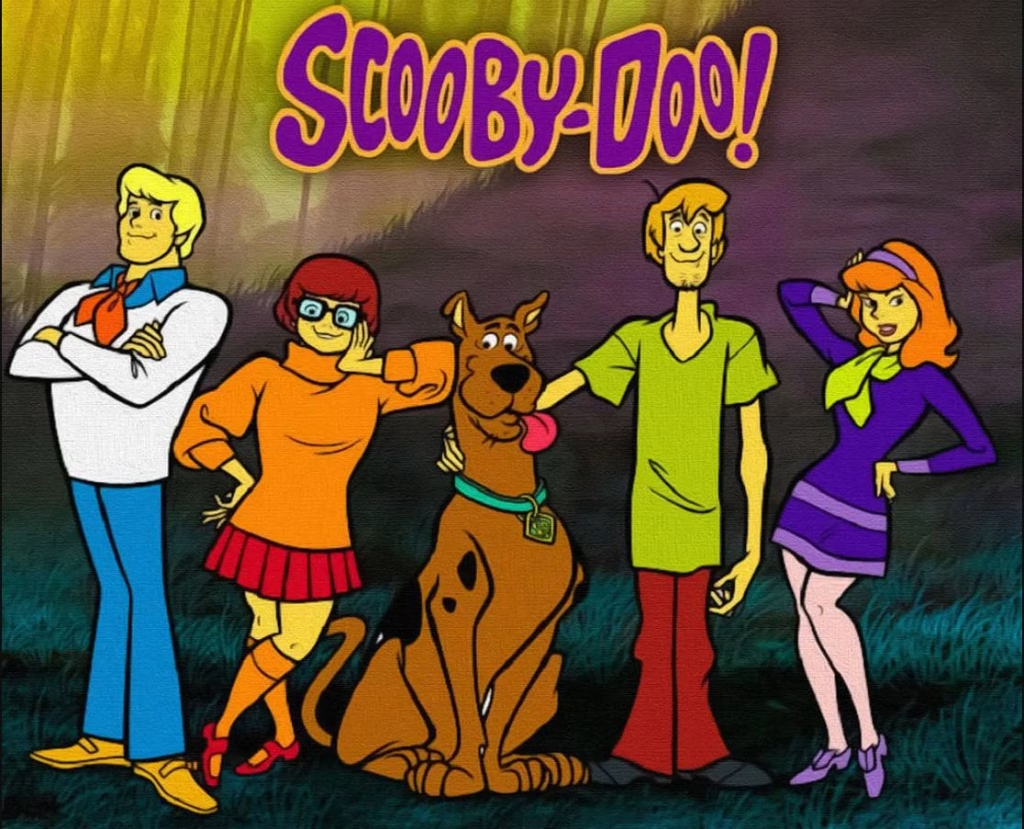
At its core, the series features four teenagers – Fred Jones, Daphne Blake, Velma Dinkley, and Norville “Shaggy” Rogers – along with their talking dog Scooby-Doo, road-tripping in a van called the Mystery Machine. The basic plot, especially in the original incarnation of the show, usually involved the gang encountering a mystery involving some form of spooky monster which, more often than not, turned out to be a hoax meant to frighten the locals away from the villain’s real operation, and would be resolved at the end by unmasking the villain, who would inevitably utter a variant of “I would have gotten away with it if it hadn’t been for You Meddling Kids, and that dog too.”
Learn more here.
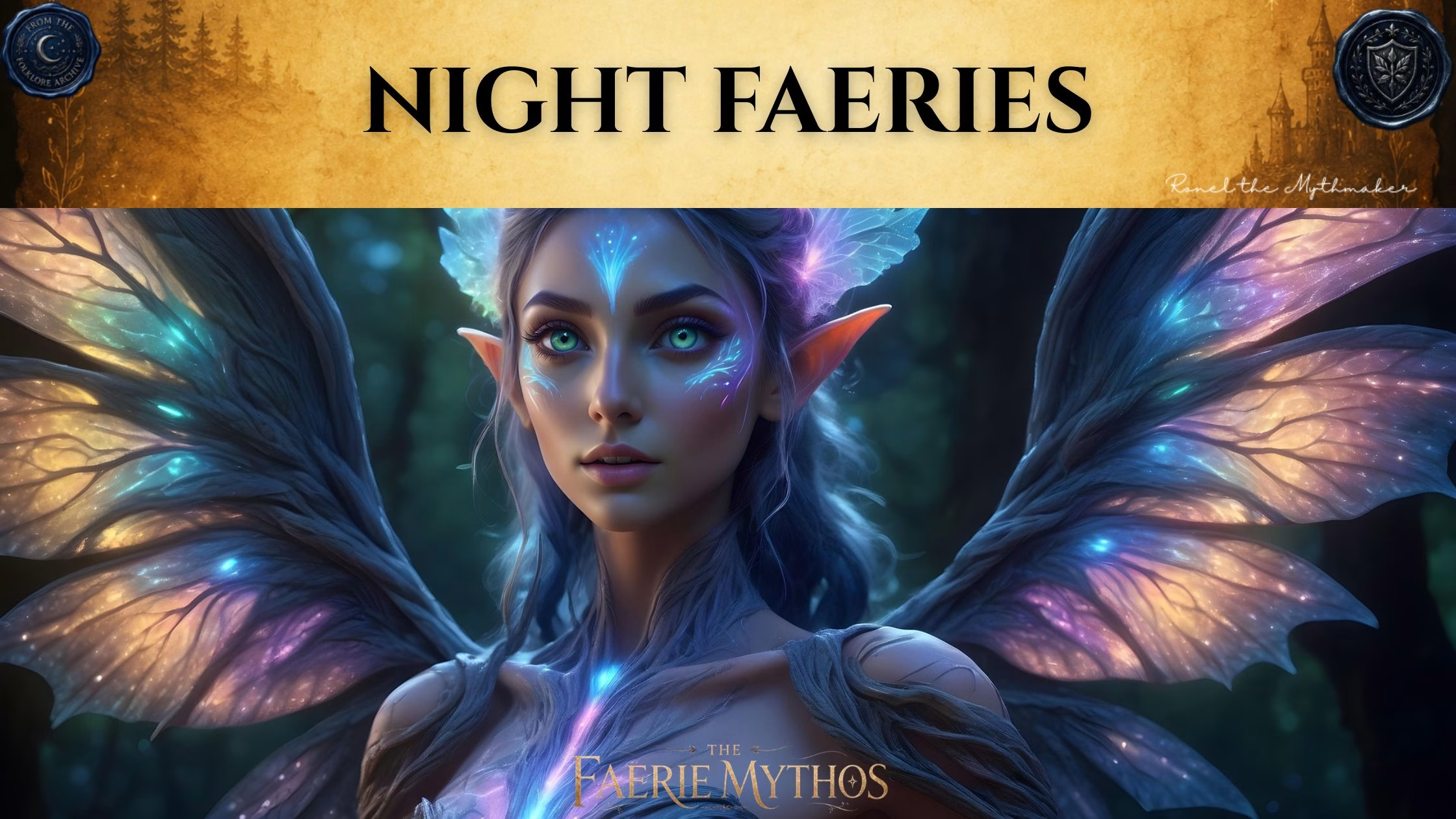
Night Faeries in My Writing
Origin of the Fae: Night Faeries
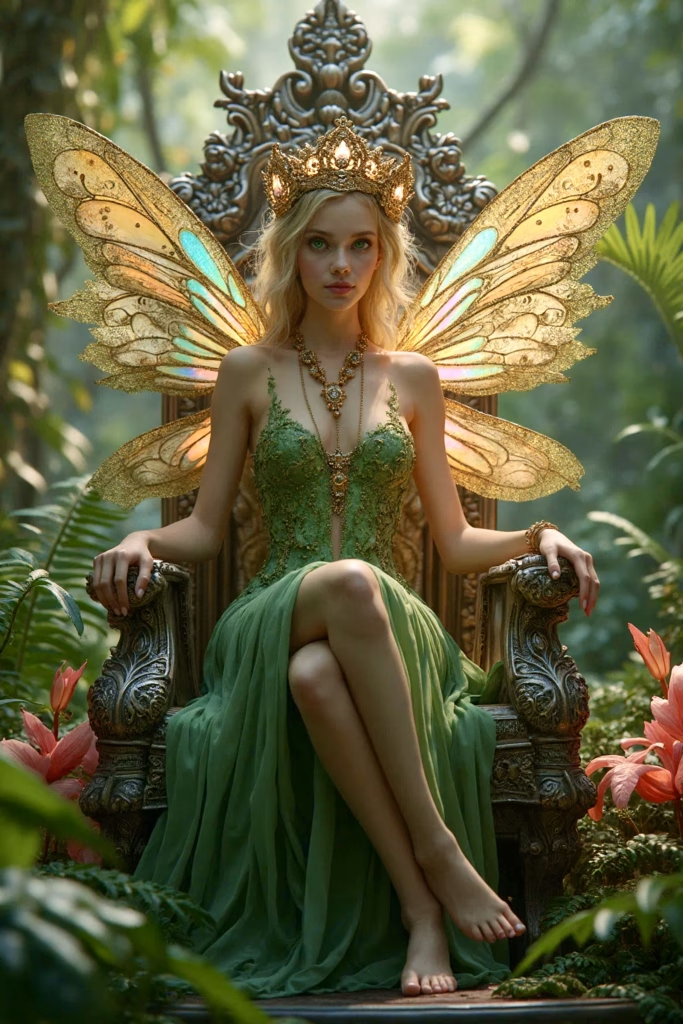
Night faeries are a grouping of fae that live in the mortal realm, not part of either Court. They sometimes show allegiance to a stronger fae, but usually just do as they will as Solitary Fae. Though some can easily be classified as dark fae by their behaviour and natural inclinations, not all night faeries are inherently bad.
Many night faeries are also part of the nightmares who serve the queen of nightmares, Mab. Those who are loyal to her are the samhanach, Jack in Irons, It, and Flibbertigibbet. These four night faeries enjoy causing havoc in certain parts of the world, scaring people for the fun of it.
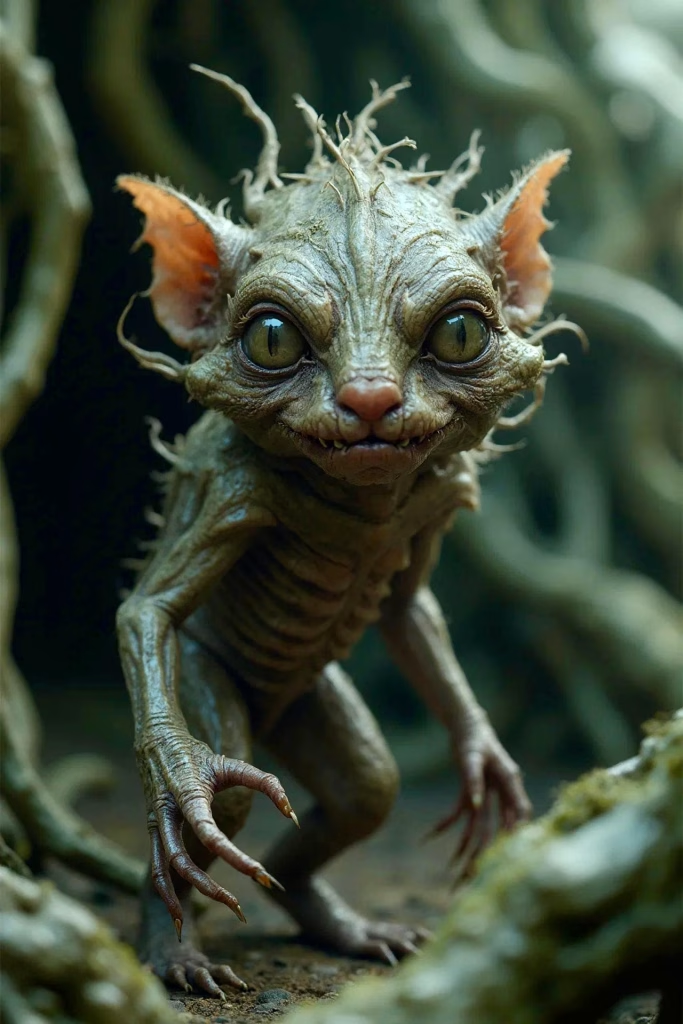
Other night faeries usually found in and around human dwellings such as the follet, bucca, cacy taperere, and olsen are much like boggarts in regard to how they view humans. They believe that human dwellings are actually built for them and that they own the house, making the humans their pets to torture as they wish.
Night faeries found in forests and the like – silvani, couril, Caypór, shefro, and feeorin – prefer to be left alone, but when humans bother them, they will cause as much mischief as they possibly can, even if it crosses the line between mischief and harm.
Night Faeries translated to Afrikaans: Nagfeë.
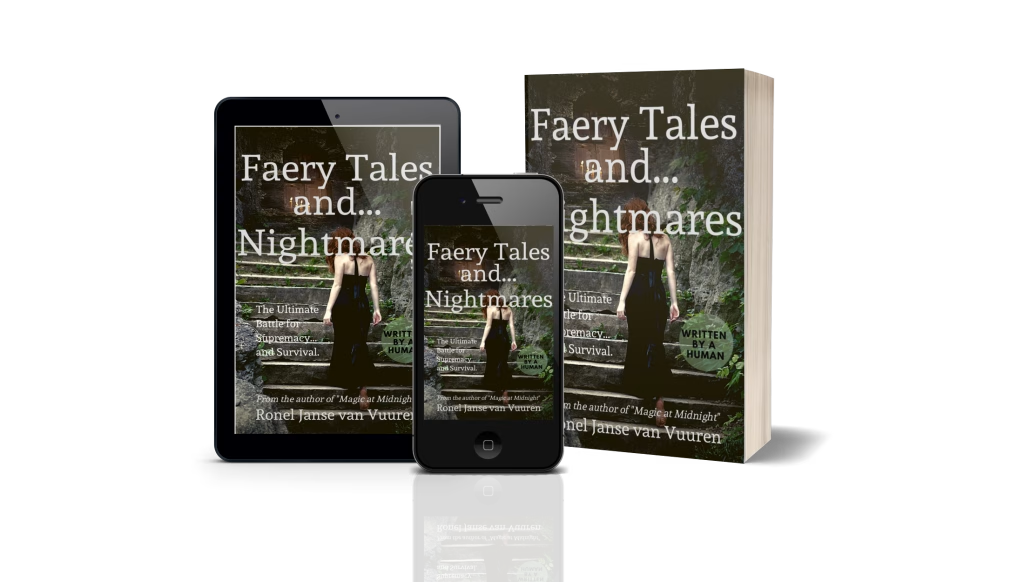
Faery Tales and… Nightmares (Faery Tales #15)
If this tale has lingered with you, I would be glad to hear it.
Where did you first encounter this creature – through story, superstition, memory, or something half-remembered?
If you know other versions of its myth, feel free to leave them in the record below. Folklore survives by being spoken again.
Further fragments and interpretations of this creature can be found in my Pinterest grimoire.
If you wish to support the time and craft behind these folklore posts – researching old tales, gathering fragments, and shaping them into something worth reading – you may do so by buying me a coffee. It can be a single offering, or something you return to whenever the spirit moves you.




How many children blamed “Olsen” for their own misdeeds, I wonder?
Excellent post, as always. Very informative. And we’re only at A!!!
April is the ideal time to refresh goals and turn small daily actions into major wins, utilizing the season’s new energy for growth.
“Every day is a chance to begin again. Don’t focus on the failures of yesterday, start today with positive thoughts and expectations.” ― Catherine Pulsifer
J (he/him 👨🏽 or 🧑🏽 they/them) @JLenniDorner ~ Speculative Fiction & Reference Author and Co-host of the April Blogging #AtoZChallenge international blog hop
Thanks, J. I’m sure “Olsen” was blamed for eating homework, too. LOL
As always, I’m fascinated by the amount of research that goes into your posts. Love the images, too. Well done. Great start to the challenge. That first paragraph made me shiver!
Thanks, Susanne 🙂 I’m glad my writing had the desired effect!
Wow, there’s a lot here to look at, read, and consider! Though I’m one of the extra-rationalist kinds who is content with the scientific explanations of things that go bump in the dark. Going down the other road might make it hard to keep living solo. 😀
Thanks, Rebecca. That’s why my Rottweilers sleep in my room…
So many things to worry about!
https://nydamprintsblackandwhite.blogspot.com/2026/03/a-is-for-apotropaic.html
Indeed! Thanks for visiting, Anne.