Strega: Immortal Witch
X is for X-Factor

I’m weaving folklore and book reviews into a single offering, shaped to reach a wider audience drawn to both. In years past, interest has surfaced in fragments of each; now, I’m gathering those threads into April alone, so the rest of the year remains quiet and deliberate.
If you came only for today’s book review, you may follow the link here.
[intro about subject]
Folklore
[sources]
Encyclopedia of Vampire Mythology by Theresa Bane
Strega (STRAY- gah)
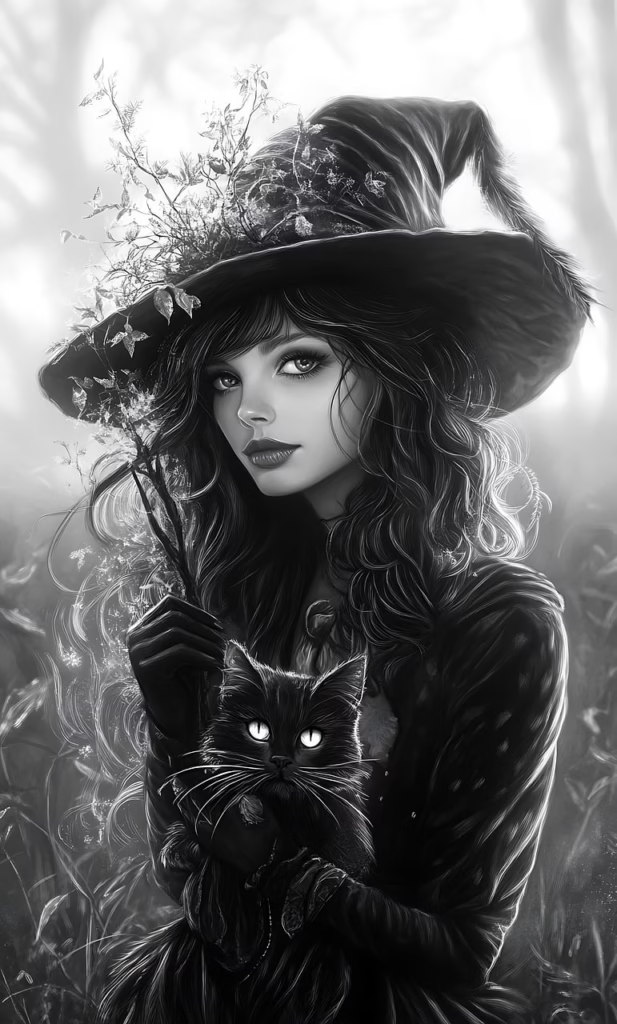
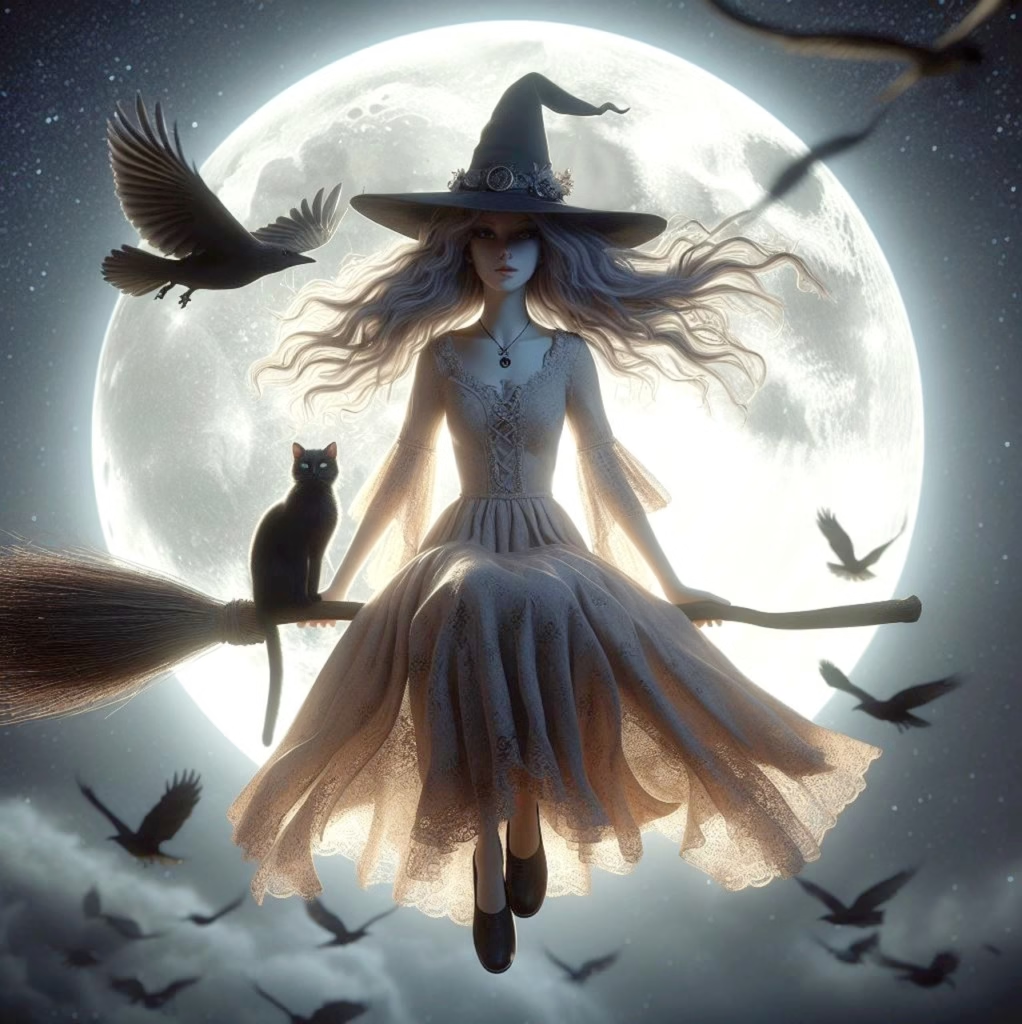
In ancient Rome there was a type of VAMPIRIC WITCH called a strega (“female witch”), or stregone (“male witch”) if the witch was a man (see LIVING VAMPIRE). At night, the strega would shape- shift into a bird or ride upon her flying goat, looking for children to drain dry of their blood. Like many vampires who can be warded off with a common object, the strega is no different, as placing a broom in the child’s room is enough to keep this type of vampire out.
Striga (STREE- gah)
Variations: Strigen
In ancient Rome there was a type of VAMPIRIC WITCH called a striga (“witch”), but it is now uncertain as to whether it was a LIVING WITCH or the returned spirit of a deceased witch. In either case, the witch was consistently described as looking like an old woman. When it took flight in its shape- shifted form of an owl, it would meet with its coven, a collection of either seven or nine strigele (the plural form of the word). As they flew about, the coven was described as looking like little dots of lights up in the night sky. These lights were referred to as “witch lights.” Strigele would gather together to celebrate who and what they were, dancing at first, and then later flying out en masse to find children to feed upon. The strigele would drain the children they came across of their blood and curse others, causing them to slowly waste away and die.
*More can be read in the book.
The Element Encyclopedia of Witchcraft by Judika Illes
“Strega,” “strix,” “estrie”: these terms are synonyms for “witch,” although literally what they mean is “owl.” Owls were witches’ familiars from ancient Egypt, Rome, and Asia to modern Africa and Native America, with many stops in between. They represent divine yin: night, darkness, magic, and sacred lunar and feminine mysteries.
Strega: Italian magical traditions were remarkably persistent, surviving underground despite discouragement and persecution. “Strega” names the Italian witch; “stregheria” her entire art of practical magic. The word has lingered from old Roman times. It derives from strix (see below), although the vampire bird associations have been lost. Although strega may be used negatively, it is also a title for a lovingly respected witch, similar to “Baba” in Russian or “Mother” in English (as in Mother Shipton). The heroine of Tomie DePaola’s series of children’s books is an Italian witch named Strega Nona, “witch grandma.” The male equivalent is “stregoni.” In some Italian regional dialects, strega also refers to the entire system of stregheria, thus one practices strega. See also Stregheria, Strix.
Stregheria: The craft of the Strega; Italian witchcraft and magical traditions.
Strix, Strigae: Strix literally means “screech owl” but is also translated as “witch.” It derives from the Greek “to screech.” The word may be related to goes, which indicates “howler.” It may originally have indicated practitioners of Women’s Mysteries: owls are associated with birth, death, and important female deities like Athena and Lilith.
However, the Romans adopted the word to indicate a specific type of shape-shifting magical practitioner. Classical Roman culture was tremendously suspicious of magical practice as well as of female power; these fears manifest in the strix.
The strix is always female. Human by day, they transform into birds at night, flying through the air ravenously hungry for human flesh and blood, especially that of babies. Like a succubus, strigae also lust after sex and human vitality or life essence.
The concept of the night-flying, shape-shifting, sexually voracious, baby-killing witch returned with a vengeance during the European witch-hunts.
*More can be read in the book.
Further Reading:
[links]
Folklore in a Nutshell by Ronel
[piece]
Strega in Modern Culture
[sources]
Strega in My Writing
Origin of the Fae: Strega
[origin of fae]
[translation]
[book extract image with link]
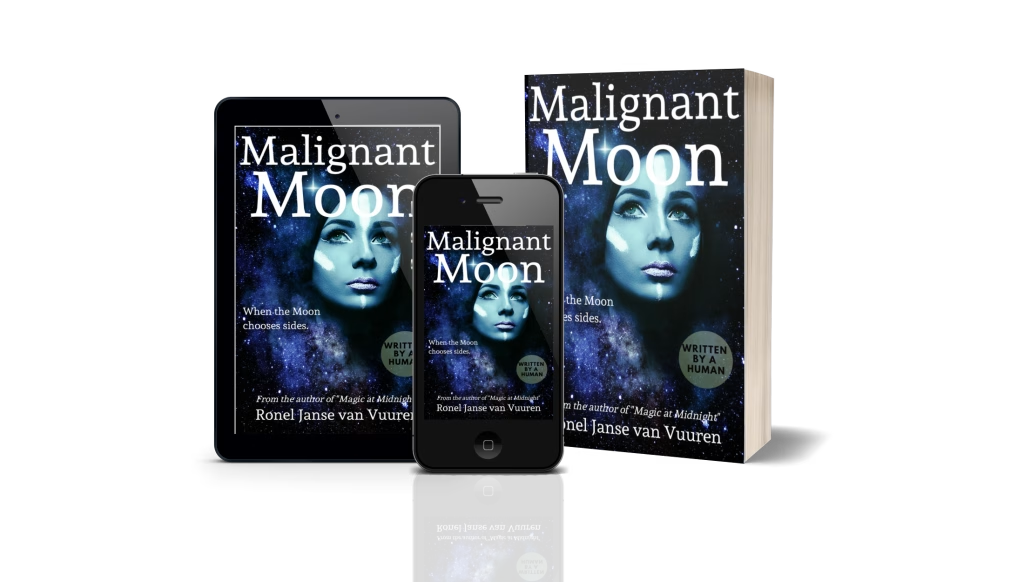
Malignant Moon (Faery Tales #)
If this tale has lingered with you, I would be glad to hear it.
Where did you first encounter this creature – through story, superstition, memory, or something half-remembered?
If you know other versions of its myth, feel free to leave them in the record below. Folklore survives by being spoken again.
Further fragments and interpretations of this creature can be found in my Pinterest grimoire.
If you wish to support the time and craft behind these folklore posts – researching old tales, gathering fragments, and shaping them into something worth reading – you may do so by buying me a coffee. It can be a single offering, or something you return to whenever the spirit moves you.


So many folklore have the draining of blood, what was doing that? I can see the curse of wasting away – no one knew of childhood diabetes or cancers. They might be aware of some of the parasites eating people inside-out, but the body actually turning on you? So, yes, those curses making a parent look for the reason their child is dying and blaming a “witch”, the odd person on the edge of society could satisfy the wailed question of “why my baby?”.
But draining of blood and leaving a husk behind in a single night? Why is that a wide-spread, cross-cultural folklore item?
Many auto-immune diseases could be to blame for the witch-hysteria. Husks, though, could just be a bit of hysteria (like the rye flour fungi that caused everyone to be on an acid trip during the Salem witch trials).