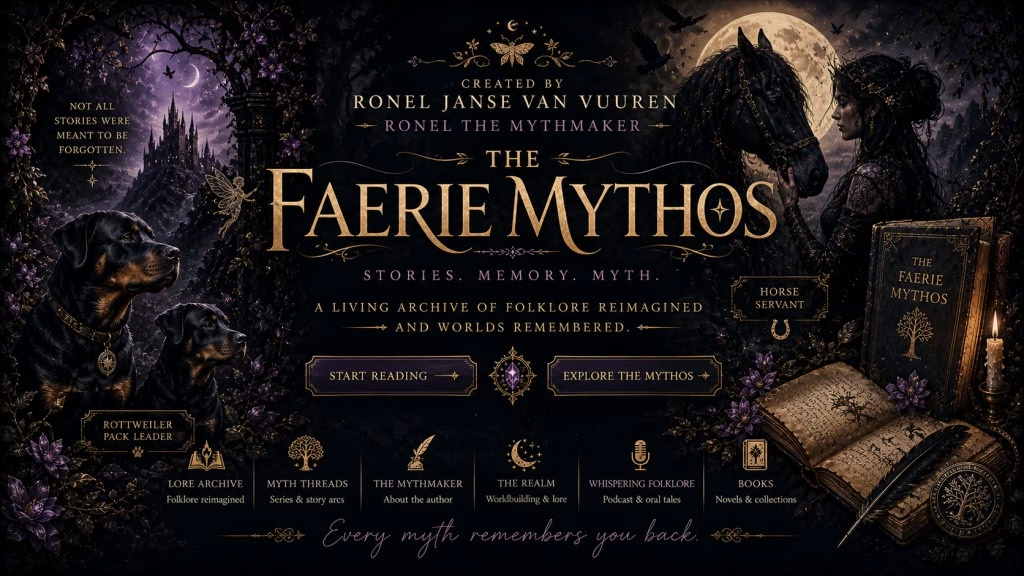
Sandman: Weaver of Dreams
W is for Weaver

I’m weaving folklore and book reviews into a single offering, shaped to reach a wider audience drawn to both. In years past, interest has surfaced in fragments of each; now, I’m gathering those threads into April alone, so the rest of the year remains quiet and deliberate.
If you came only for today’s book review, you may follow the link here.
[intro about subject]
Folklore
[sources]
Element Encyclopedia of Fairies by Lucy Cooper
Billy Winkler
A Lancashire nursery spirit similar to Wee Willie Winkle, who sprinkles magic dust or sand into the eyes of children to get them to sleep.
La Dormette
A sleep fairy in French folklore. She is a nursery spirit, who like the English Sandman… lulls children into a pleasant night’s slumber.
Sandman
The sleep fairy in English folklore, he is a nursery fairy who sprinkles sand or dust into children’s eyes as they fall asleep at night so that they may enjoy pleasant dreams.
*More can be read in the book.
Encyclopedia of Fairies in World Folklore and Mythology by Theresa Bane
La Dormette
Similar to the sandman of British lore and ole luk øj of Denmark, the la dormette ensures pleasant dreams and sleep for infants in the neighbourhood of Poitou, located in western France. She is described as a kindly woman who sprinkles sand and sleep in sleeping children’s eyes.
Ole Luk Øj
In Danish lore and as popularized by Hans Christian Anderson, Ole Luk Øj was a type of nocturnal fairy known as a sandman; each night he gently lulled children to sleep and depending on their behaviour distributed appropriate dreams to them. In the Anderson version of the tale Ole Luk Øj reveals not only was he the Greek god of dreams, Morpheus but his brother, also called Ole Luk Øj was the god of death.
Sandman
Variations: Mister Sandman
Originally, in Scandinavian folklore, the sandman was a nursery bogie used to frighten children into going to bed willingly; those who did not were likely candidates to be victimised by this fairy. First he would rub sand in their eyes until their eyes popped out of their heads, then he would collect their eyeballs and take them home to feed to his own children who lived on the crescent moon. Over time, the sandman was a household fairy with a clown-like appearance that threw sand into the eyes of children who would not go to bed and go to sleep; the sand had magical properties making them sleepy.
*More can be read in the book.
Further Reading:
[links]
Folklore in a Nutshell by Ronel
[piece]
Sandman in Modern Culture
[sources]
Sandman in My Writing
Origin of the Fae: Sandman
[origin of fae]
[translation]
[book extract image with link]
Love Bites (Faery Tales #)

If this tale has lingered with you, I would be glad to hear it.
Where did you first encounter this creature – through story, superstition, memory, or something half-remembered?
If you know other versions of its myth, feel free to leave them in the record below. Folklore survives by being spoken again.
Further fragments and interpretations of this creature can be found in my Pinterest grimoire.
If you wish to support the time and craft behind these folklore posts – researching old tales, gathering fragments, and shaping them into something worth reading – you may do so by buying me a coffee. It can be a single offering, or something you return to whenever the spirit moves you.


My cousin said the family cat had Sandman powers. Anyone who the cat curled up on would be asleep a few minutes later.
Some nights, I miss that cat. 😴
Excellent post.
Yeah, curling up with my Rottweiler Caitlin causes instant relaxation followed by deep sleep 🙂