
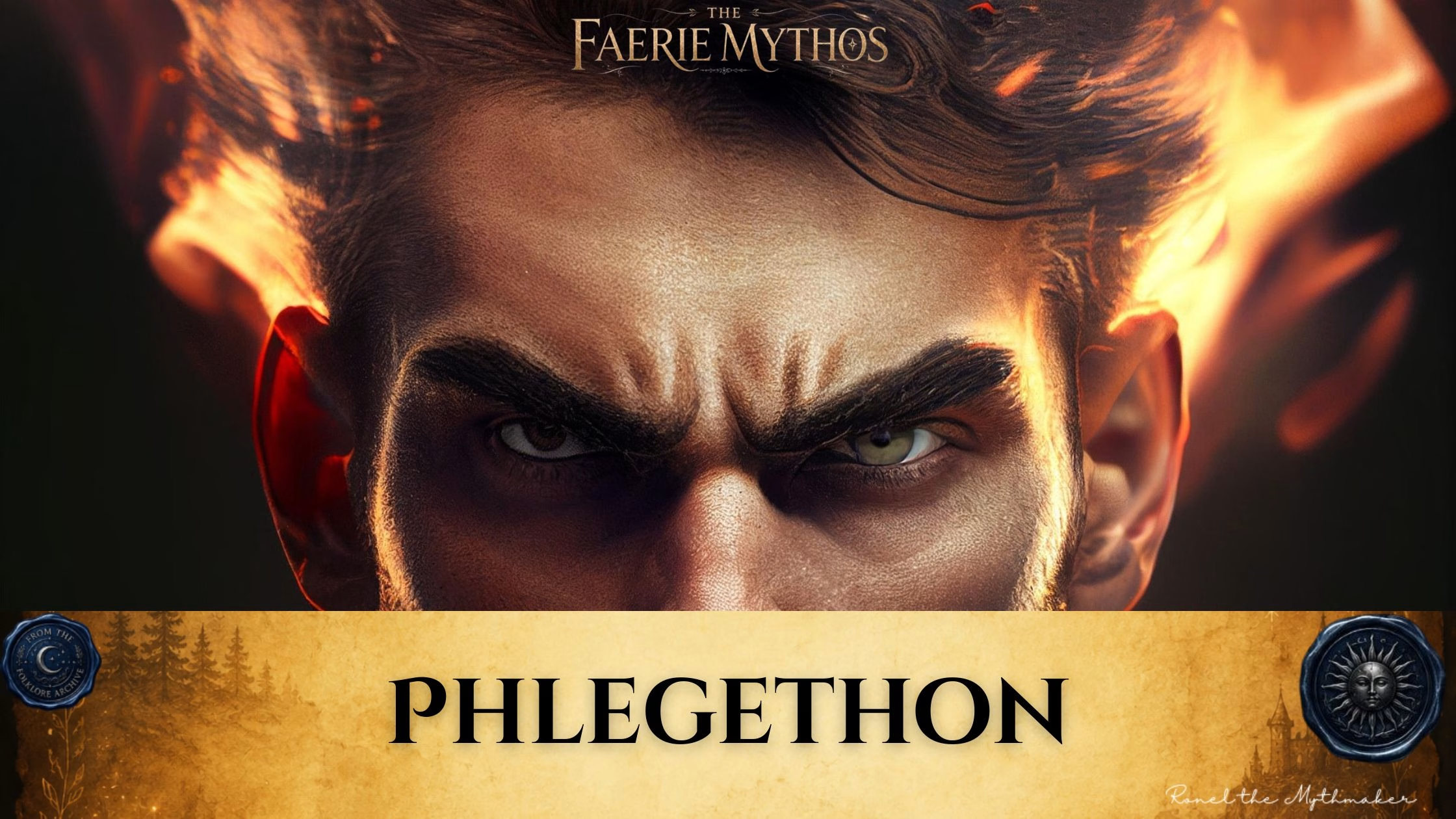
R is for River

I’m weaving folklore and book reviews into a single offering, shaped to reach a wider audience drawn to both. In years past, interest has surfaced in fragments of each; now, I’m gathering those threads into April alone, so the rest of the year remains quiet and deliberate.
If you came only for today’s book review, you may follow the link here.
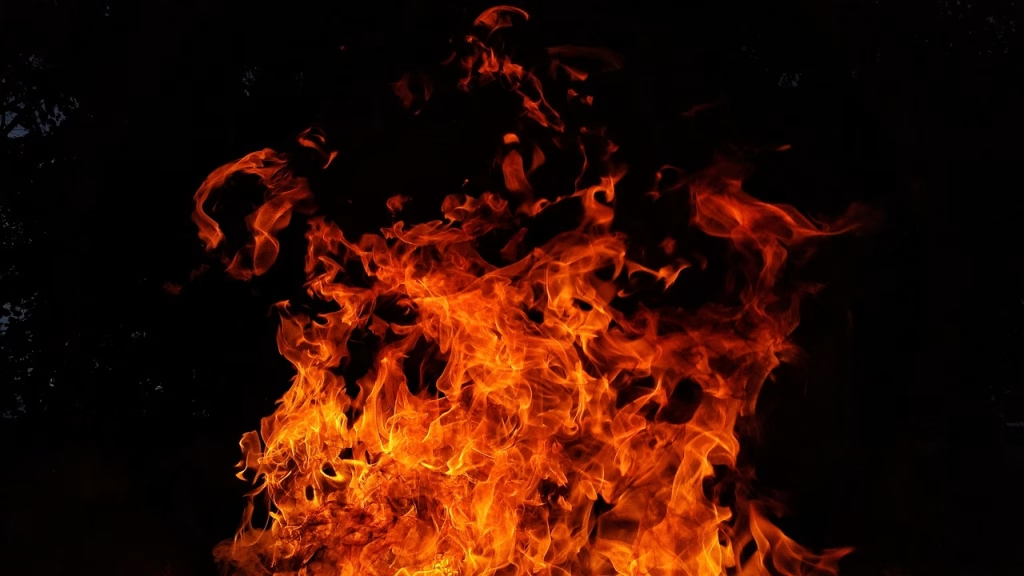
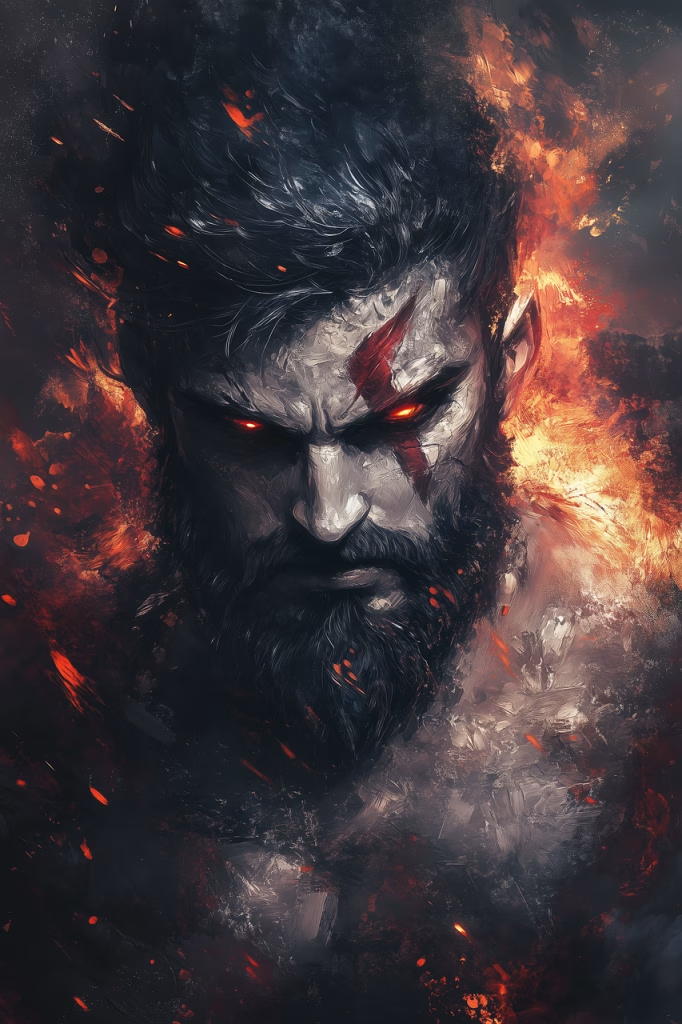
A river of fire sounds rather scary, evoking visions of lava instead of flames. But this river is made up of flames that seemingly feed on nothing…

Folklore
The Divine Comedy of Dante Alighieri [1321]
Inferno: Canto XII
But fix thine eyes below; for draweth near
The river of blood, within which boiling is
Whoe’er by violence doth injure others.”
…We with our faithful escort onward moved
Along the brink of the vermilion boiling,
Wherein the boiled were uttering loud laments.
People I saw within up to the eyebrows,
And the great Centaur said: “Tyrants are these,
Who dealt in bloodshed and in pillaging.
Here they lament their pitiless mischiefs;
[In Dante’s Inferno, which is the first part of The Divine Comedy, Phlegethon is described as a river of blood that boils souls. It is in the Seventh Circle of Hell, which punishes those who committed crimes of violence against their fellow men (see Canto XII, 46–48); murderers, tyrants, and the like. By causing hot blood to flow through their violent deeds in life, they are now sunk in the flowing, boiling blood of the Phlegethon. The depth at which each sinner must stand in the river is determined by the level of violence they caused in life; Dante sees Attila the Hun and Alexander the Great up to their eyebrows. Centaurs patrol the circle, firing arrows at those who try to rise above their allotted level in the river. Dante and Virgil cross Phlegethon with help from Nessus.]
Explanation from Wikipedia.
Dictionary of Greek and Roman Biography and Mythology by William Smith [1844]
PYRIPHLE′GETHON (Purithlegethôn), flaming with fire, is the name of one of the rivers in the lower world. (Hom. Od. x. 513; Strab. v. p. 244.)
PHLE′GETHON (Phlegethôn), i. e. the flaming, a river in the lower world, is described as a son of Cocytus; but is more commonly called Pyriphlegethon. (Virg. Aen. vi. 265, 550; Stat. Theb. iv. 522.)
Homer, Odyssey 10. 513 (trans. Shewring) (Greek epic C8th B.C.)
“[Kirke (Circe) instructs Odysseusfor his journey to the Underworld :] ‘Beach the vessel beside deep-eddying Okeanos (Oceanus) and pass on foot to the dank domains of Haides. At the entrance there, the stream of Akheron (Acheron) is joined by the waters of Pyriphlegethon and of a branch of Styx, Kokytos (Cocytus), and there is a rock where the two loud-roaring rivers meet.’”
Cicero, De Natura Deorum 3. 17 (trans. Rackham) (Roman rhetorician C1st B.C.) :
“Orcus [Haides] is also a god; and the fabled streams of the lower world, Acheron, Cocytus and Pyriphlegethon, and also Charon and also Cerberus are to be deemed gods. No, you say, we must draw the line at that; well then, Orcus is not a god either.”
Further Reading:
- Phlegethon
- PYRIPHLEGETHON
- THE RIVERS OF THE UNDERWORLD IN GREEK MYTHOLOGY
- You thought the River Styx was scary? Meet PHLEGETHON: The literal River of Fire!
- The myth of the River Phlegethon.
- Phlegethon
- Phlegethon: The Fiery River of the Underworld | Greek Mythology Story

Folklore in a Nutshell by Ronel
One of the five rivers of the Underworld, Phlegethon flowed with fire instead of water. Virgil is one of the few ancient writers who name this infernal river.
In Dante’s Inferno, Phlegethon consists of boiling blood and is filled with the souls of those who had committed violence against others.
Phlegethon flows through Tartarus. As a river of punishment, it’s thought that those being punished in Tartarus were boiled in its fiery waters.
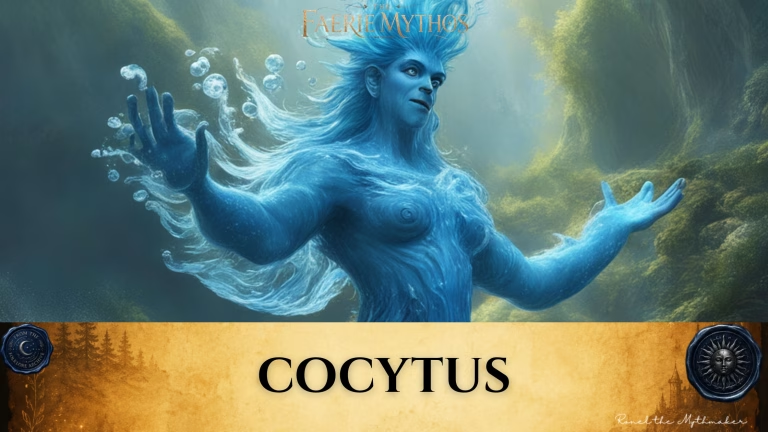
The river god Phlegethon isn’t mentioned much in surviving stories of Greek mythology, though Virgil does say that he is the son of Cocytus even if it is widely thought he is the son of Oceanus as most rivers are.
Phlegethon in Modern Culture
Percy Jackson series by Rick Riordan
The Phlegethon is the River of Fire that flows from Hades’ realm down into Tartarus. The Phlegethon keeps the wicked alive so they can endure the torments of the Fields of Punishment. The river is so hot that it’s actually cold to the touch. It is said to appear like a torrent of burning gasoline that lights up everything red.
Interestingly enough, though it heals mortals, its fire can kill Cyclopes despite their immunity to fire. That being said; it is believed it can burn or heal whoever the fire god wants.
The House of Hades: Annabeth Chase tells Percy Jackson that they need to drink from the river because some legends call it the “River of Healing”. Percy questions how they are supposed to drink fire. Suddenly, Annabeth thrusts her hand into the river and drinks the liquid. Annabeth starts to shake and gag. After she stopped shaking, her blisters on her arm started to fade. With no warning, Percy passes out and Annabeth desperately gets more fire into her hands and pours it into his mouth. Percy wakes up and makes a comment about how it is “spicy, yet disgusting”. He immediately loses his fever. The two use the Phlegethon as a guide to the Doors of Death and continue to drink from the river.
Learn more here.

Phlegethon in My Writing
Origin of the Fae: Phlegethon
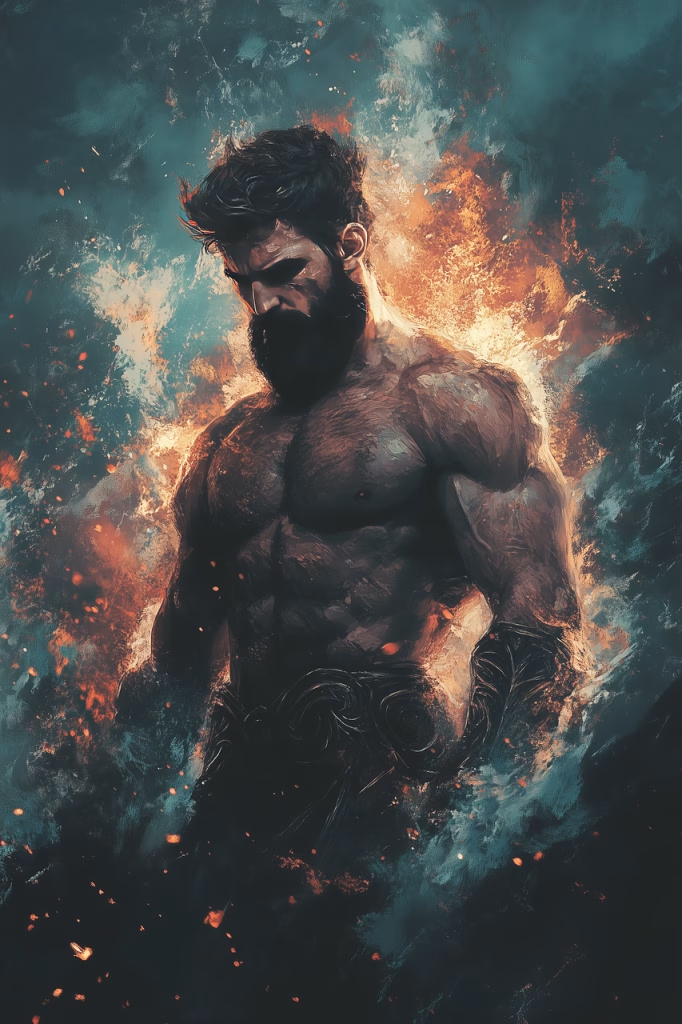
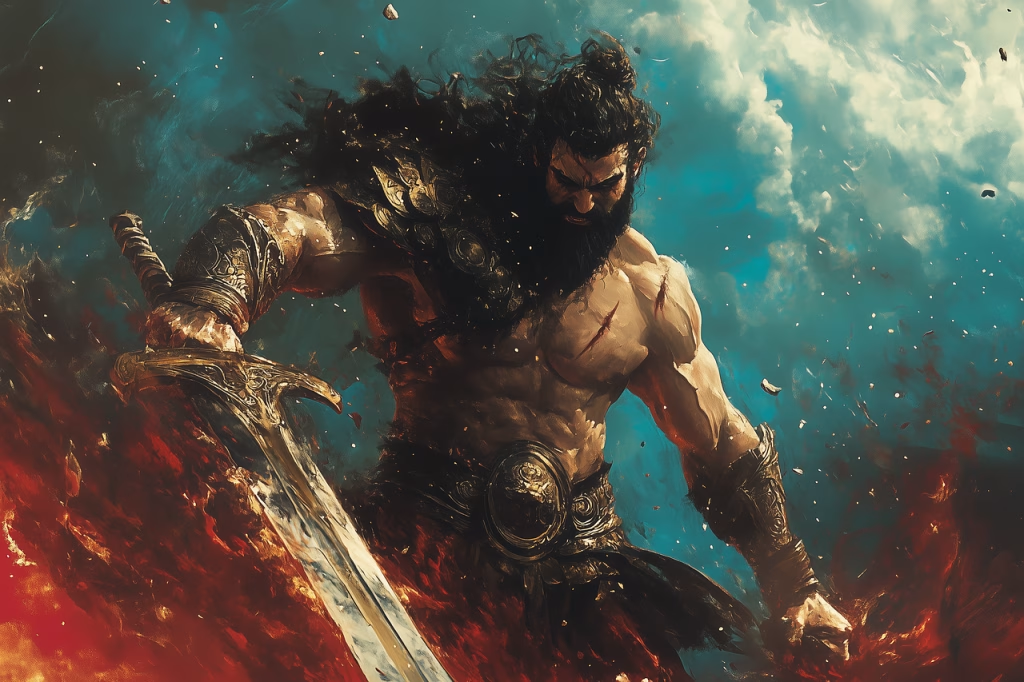
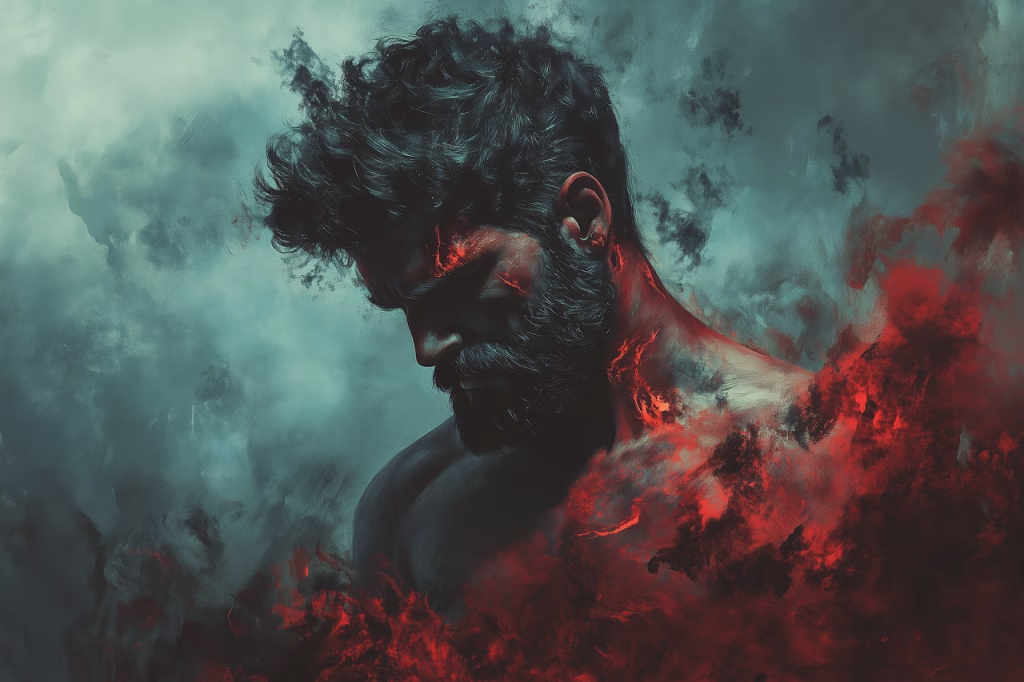
One of the infernal rivers, a son of Oceanus, Phlegethon has kept to himself in the Underworld. He doesn’t mingle with other river gods. He stands apart in his powers as much as his composition. Phlegethon is a river of fire. Though he’s seen as fire alone, he can become fluid.
He is crossed as a river when souls want to be cleansed before standing in line for a new life. These souls are relieved of all their crimes, their emotional hurt and the ingrained thoughts that would surface in a new life to ruin it. He is used as a tool of punishment for those who have to be kept in Tartarus, the deepest part of the Underworld, for their horrendous crimes.
He can burn up other immortals – in such a way that not even their essence remain. He had a love affair with an unnamed water nymph who disappeared in vapour when he lost control of his powers.
My Book
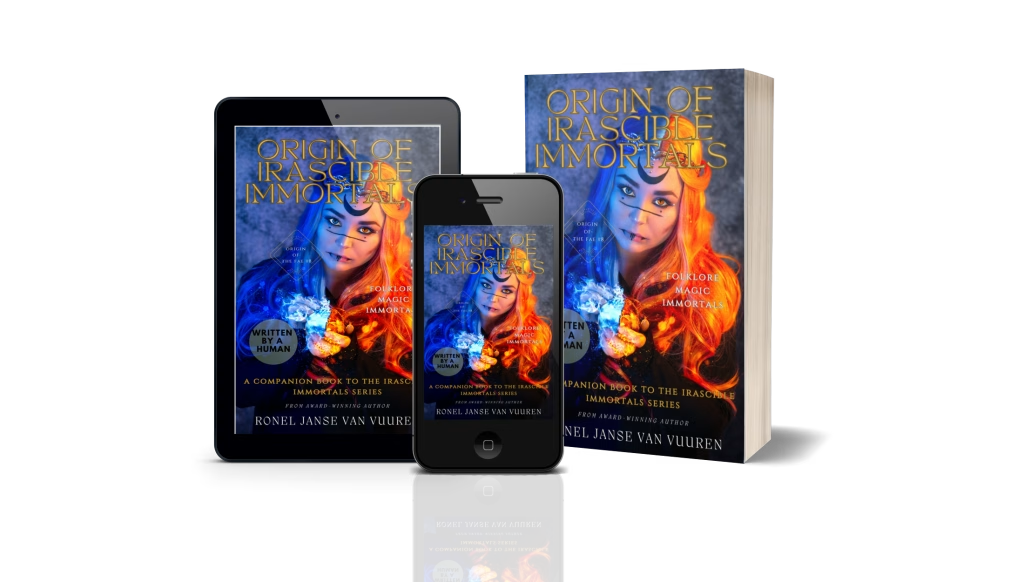
Origin of Irascible Immortals (Origin of the Fae #8)
If this tale has lingered with you, I would be glad to hear it.
Where did you first encounter this creature – through story, superstition, memory, or something half-remembered?
If you know other versions of its myth, feel free to leave them in the record below. Folklore survives by being spoken again.
Further fragments and interpretations of this creature can be found in my Pinterest grimoire.
If you wish to support the time and craft behind these folklore posts – researching old tales, gathering fragments, and shaping them into something worth reading – you may do so by buying me a coffee. It can be a single offering, or something you return to whenever the spirit moves you.




I like Greek mythology but I’ve never heard of this God. Interesting learning more about the river of fire.
Debbie
I’m glad you found this interesting. I’d decided to do a bit of a deep dive into this pantheon and came up with this one.
Phlegethon looks like Jason Momoa. Is it just me?
I like the “modern culture” where the river of fire sounds like it’s hot sauce. 😅
That’s one way to look at him 😉