Oceans, Rivers, Lakes: Water in Folklore
Water has always had the way to mesmerise people, so much so that some believe it to hold other realms within it — or the cure to mortality.
Folklore
BIMINI AND THE FOUNTAIN OF YOUTH, Tales of the Enchanted Islands of the Atlantic by Thomas Wentworth Higginson [1898]
When Juan Ponce de Leon set forth from Porto Rico, March 13, 1512, to seek the island of Bimini and its Fountain of Youth, he was moved by the love of adventure more than by that of juvenility, for he was then but about fifty, a time when a cavalier of his day thought himself but in his prime. He looked indeed with perpetual sorrow–as much of it as a Spaniard of those days could feel–upon his kinsman Luis Ponce, once a renowned warrior, but on whom age had already, at sixty-five, laid its hand in earnest. There was little in this slowly moving veteran to recall one who had shot through the lists at the tournament, and had advanced with his short sword at the bull fight,–who had ruled his vassals, and won the love of high-born women. It was a vain hope of restored youth which had brought Don Luis from Spain to Porto Rico four years before; and, when Ponce de Leon had subdued that island, his older kinsman was forever beseeching him to carry his flag farther, and not stop till he had reached Bimini, and sought the Fountain of Youth.
“For what end,” he said, “should you stay here longer and lord it over these miserable natives? Let us go where we can bathe in those enchanted waters and be young once more. I need it, and you will need it ere long.”
“How know we,” said his kinsman, “that there is any such place?”
“All know it,” said Luis. “Peter Martyr saith that there is in Bimini a continual spring of running water of such marvellous virtue that the water thereof, being drunk, perhaps with some diet, maketh old men young.” And he adds that an Indian grievously oppressed with old age, moved with the fame of that fountain, and allured through the love of longer life, went to an island, near unto the country of Florida, to drink of the desired fountain, . . . and having well drunk and washed himself for many days with the appointed remedies, by them who kept the bath, he is reported to have brought home a manly strength, and to have used all manly exercises. “Let us therefore go thither,” he cried, “and be like him.”
They set sail with three brigantines and found without difficulty the island of Bimini among the Lucayos (or Bahamas) islands; but when they searched for the Fountain of Youth they were pointed farther westward to Florida, where there was said to be a river of the same magic powers, called the Jordan. Touching at many a fair island green with trees, and occupied by a gentle population till then undisturbed, it was not strange if, nearing the coast of Florida, both Juan Ponce de Leon and his more impatient cousin expected to find the Fountain of Youth.
They came at last to an inlet which led invitingly up among wooded banks and flowery valleys, and here the older knight said, “Let us disembark here and strike inland. My heart tells me that here at last will be found the Fountain of Youth.” “Nonsense,” said Juan, “our way lies by water.”
“Then leave me here with my men,” said Luis. He had brought with him five servants, mostly veterans, from his own estate in Spain.
A fierce discussion ended in Luis obtaining his wish, and being left for a fortnight of exploration; his kinsman promising to come for him again at the mouth of the river St. John. The men left on shore were themselves past middle age, and the more eager for their quest. They climbed a hill and watched the brigantines disappear in the distance; then set up a cross, which they had brought with them, and prayed before it bareheaded.
Sending the youngest of his men up to the top of a tree, Luis learned from him that they were on an island, after all, and this cheered him much, as making it more likely that they should find the Fountain of Youth. He saw that the ground was pawed up, as if in a cattle-range and that there was a path leading to huts. Taking this path, they met fifty Indian bowmen, who, whether large or not, seemed to them like giants. The Spaniards gave them beads and hawk-bells, and each received in return an arrow, as a token of friendship. The Indians promised them food in the morning, and brought fish, roots, and pure water; and finding them chilly from the coldness of the night, carried them in their arms to their homes, first making four or five large fires on the way. At the houses there were many fires, and the Spaniards would have been wholly comfortable, had they not thought it just possible that they were to be offered as a sacrifice. Still fearing this, they left their Indian friends after a few days and traversed the country, stopping at every spring or fountain to test its quality. Alas! they all grew older and more worn in look, as time went on, and farther from the Fountain of Youth.
After a time they came upon new tribes of Indians, and as they went farther from the coast these people seemed more and more friendly. They treated the white men as if come from heaven,–brought them food, made them houses, carried every burden for them. Some had bows, and went upon the hills for deer, and brought half a dozen every night for their guests; others killed hares and rabbits by arranging themselves in a circle and striking down the game with billets of wood as it ran from one to another through the woods. All this game was brought to the visitors to be breathed upon and blessed, and when this had to be done for several hundred people it became troublesome. The women also brought wild fruit, and would eat nothing till the guests had seen and touched it. If the visitors seemed offended, the natives were terrified, and apparently thought that they should die unless they had the favor of these wise and good men. Farther on, people did not come out into the paths to gather round them, as the first had done, but stayed meekly in their houses, sitting with their faces turned to the wall, and with their property heaped in the middle of the room. From these people the travellers received many valuable skins, and other gifts. Wherever there was a fountain, the natives readily showed it, but apparently knew nothing of any miraculous gift; yet they themselves were in such fine physical condition, and seemed so young and so active, that it was as if they had already bathed in some magic spring. They had wonderful endurance of heat and cold, and such health that, when their bodies were pierced through and through by arrows, they would recover rapidly from their wounds. These things convinced the Spaniards that, even if the Indians would not disclose the source of all their bodily freshness, it must, at any rate, lie somewhere in the neighborhood. Yet a little while, no doubt, and their visitors would reach it.
It was a strange journey for these gray and careworn men as they passed up the defiles and valleys along the St. John’s River, beyond the spot where now spreads the city of Jacksonville, and even up to the woods and springs about Magnolia and Green Cove. Yellow jasmines trailed their festoons above their heads; wild roses grew at their feet; the air was filled with the aromatic odors of pine or sweet bay; the long gray moss hung from the live-oak branches; birds and butterflies of wonderful hues fluttered around them; and strange lizards crossed their paths, or looked with dull and blinking eyes from the branches. They came, at last, to one spring which widened into a natural basin, and which was so deliciously aromatic that Luis Ponce said, on emerging: “It is enough. I have bathed in the Fountain of Youth, and henceforth I am young.” His companions tried it, and said the same: “The Fountain of Youth is found.”
No time must now be lost in proclaiming the great discovery. They obtained a boat from the natives, who wept at parting with the white strangers whom they had so loved. In this boat they proposed to reach the mouth of the St. John, meet Juan Ponce de Leon, and carry back the news to Spain. But one native, whose wife and children they had cured, and who had grown angry at their refusal to stay longer, went down to the water’s edge and, sending an arrow from his bow, transfixed Don Luis, so that even his foretaste of the Fountain could not save him, and he died ere reaching the mouth of the river. If Don Luis ever reached what he sought, it was in another world. But those who have ever bathed in Green Cove Spring, near Magnolia, on the St. John’s River, will be ready to testify that, had he but stayed there longer, he would have found something to recall his visions of the Fountain of Youth.
Enchantment of the Faerie Realm by Ted Andrews
Water is the creative element of life. Many tales and myths exist about how all life came forth from the spiritual waters. It has long been a symbol of the womb and creation. In Babylonian cosmology, the gods mothered by Tiamat were brought forth from the waters of life. In Scandinavian lore, the sea goddess Ran, and her male counterpart, Aegir, had nine giant daughters – the waves.
Water is both creative and destructive, a source of life and death. From the amniotic fluids of the prenatal experience to the nourishment it provides throughout life, it is essential to our existence. It is a primary element within the human body, coursing through our veins.
On the other hand, death is often described as a crossing of the waters. In Greek mythology, the underworld is only reached by crossing the river Styx. Many of the world’s myths attest to the destructive aspect of water, symbolised by storms and floods.
Water is purifying, and it has rhythm and movement. It represents time and change. Crossing any water was often seen as a change in consciousness and even an initiation.
All the waters of life were considered mysterious. The great oceans and seas were older than anyone knew. They always changed, and yet they were always the same. Civilisations could come and go, but the great seas were always there. From the oceans and the great seas we get life-sustaining foods, and yet many individuals have lost their lives to its depths. Water was always beautiful, always shifting with no beginning and no end.
In more ancient times, the magic of water had no bounds. It could estrange you from that which makes you human, or it could bestow wisdom and spiritual sight. It could cure diseases, and it could even restore youth. In the Celtic tradition there is the Well of the World which could restore life to dead men. In the Arthurian sagas of the Celtic tradition, the Lady of the Lake gave to Arthur the sword Excalibur.
The edges of territory are considered unsafe areas. The points where land meets water are intersections of worlds, doorways by which those of the water realm can enter the physical. Islands, beaches, lakeshores, riverbanks, and the edges of wells are magical points where the mortal world intersects with the faerie realm. It was considered foolhardy to sleep or rest near brooks and the edges of streams. It was likely that you would fall under the enchantments of a water nymph that inhabited or guarded the waters.
Natural ponds, wells and pools are also open doorways and thus very magical.
Pools of water after a rain can provide temporary doorways into the faerie realm. There are many magical uses for them. They can provide windows that enable you to look into the faerie realm.
Anything of the water implies connection to fluidness, emotions and the feminine aspects of life.
*More can be read in the book.
The Element Encyclopedia of the Celts by Rodney Castleden
HOLY WELLS
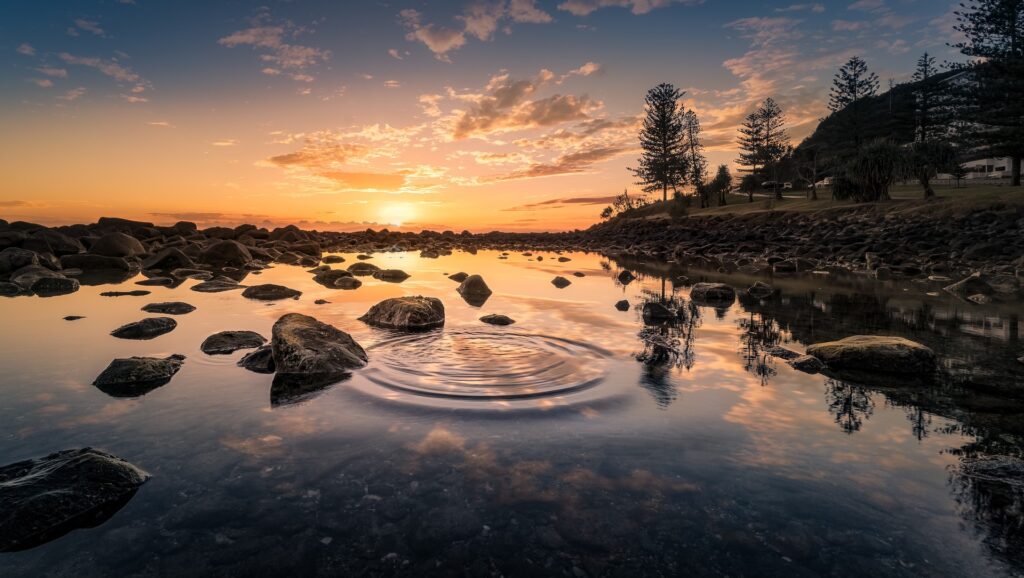
There are large numbers of holy wells in Britain and Ireland, many of which are stone shrinelike structures built around natural springs (see Ritual Shaft, Sacred Springs). There are 600 in Scotland, more than 1,000 in England, the same number in Wales and 3,000 in Ireland.
The sanctity of water and its sources has always been a key feature of the belief system of the Atlantic Celts.
Sacred wells were honored with dances and religious ceremonies. Some of the wells are now little more than wishing wells, but some have specific rituals attaching to them still. The Clootie Well in Culloden Wood near Inverness in Scotland is one that still has its own ceremony.
On Culloden Sunday, in early May, people go to the well and drink from it, making a wish and throwing in a coin as an offering to the spirit of the well. Then a piece of cloth, a clootie, is tied to the branch of a tree near the well. The clootie must be left there to disintegrate—removing it brings bad luck. The custom of hanging rags on thorn bushes was practised at other sacred sites too.
On major feast days, holy wells were decked with flowers. In Derbyshire in England, the pre-Christian custom of well-dressing continues, though it seems to have been intermittent everywhere. Local folklore enthusiasts are often responsible for reviving an old custom and suddenly a village will resume a well-dressing custom that has been allowed to fall into abeyance.
Probably in the early days, well-dressing was no more than someone leaving a posy for a water nymph who was perhaps being thanked for finding a maiden a suitable youth. By the start of the nineteenth century, wells were decorated with simple garlands. Over the years, well-dressing was becoming a more elaborate and intricate art. By 1818, the craft had developed further. Boards were cut to the shape that was to be the design and covered with moist clay to hold the flowers.
A modern well-dressing usually consists of a large picture, usually with a religious subject, and made with a mosaic of overlapping petals, or in some villages whole flower-heads. Other natural organic materials are used as well: bark, moss, lichen, leaves, and berries. Sometimes pebbles, sand, or seashells are used. All of these are held in place by being pressed into soft clay on a background board.
Traditionally, well-dressing was done exclusively by men, but such customary rules are no longer permissible.
Several places in Derbyshire in England maintain the custom of welldressing. Of these, Tissington is the one with the longest continuous tradition, going back to 1615, when it is said that it was resumed as a thanksgiving after a prolonged and serious drought. Tissington’s five wells were the only wells in the area to flow ceaselessly during that drought, supplying not only Tissington but the surrounding communities as well. But there is also a tradition that the practice started in 1350, when Tissington was spared the Black Death while all the other villages around were ravaged by it. Tissington was spared, it was believed, because of the purity of its well water. However it started (or restarted), Tissington’s well-dressing takes place on Ascension Day each year, starting with a service of thanksgiving in the church, followed by a procession of clergy, choir, and congregation to visit each of the five dressed wells in turn.
Buxton’s well-dressing takes place on the Thursday closest to the summer solstice. Often it is said that this started in 1840, though this was probably a revival of a much older practice. Well rituals were probably performed beside St. Anne’s Well, which in the Middle Ages was a healing well. Roman remains have been found nearby, so the practice may have been going on intermittently for 2,000 years or more. In the Middle Ages a statue was found in the well, and people assumed it must be St. Anne. It may have been a Romano-Celtic statue, perhaps of a pagan water sprite, but it was enshrined regardless in a chapel near the well. Many miracles were ascribed to it. In 1538 it was unfortunately swept away by Sir William Bassett, who was one of Thomas Cromwell’s agents. The chapel was forcibly closed and eventually demolished.
Modern well-dressing revives the practice, and includes the blessing of two dressed wells; there is a whole-town festival, presided over by a Wells Festival Queen.
SACRED SPRINGS
Sacred springs and holy wells are hard to separate. What often happened is that a natural spring that was venerated in the Iron Age was later Christianized—and dedicated to a named saint to make that clear. It was often embellished with masonry and the water guided by a duct to fill a small tank or pool. In this new form, it often became known as a well. There is a fine granite-built baptistry at Dupath Well, Callington, Cornwall. Other examples include St. Nun’s Well at Pelynt in Cornwall and St. Hilda’s Well at Hinderwell in Yorkshire.
A t Cerne Abbas, immediately below the graveyard and the site of Cerne Abbey, is St. Augustine’s Well. This is a shady hollow beneath some trees, where a natural spring has been surrounded by paving. The water from the well is supposed to have all kinds of magical healing properties, though this is hard to square with the fact that it runs out of the graveyard.
SPRINGS
The Celts were drawn to springs as places of mystery. The life-giving water came up out of the ground without any reason or cause, so it was supernatural: it must have a divine driving force. Springs often became associated with specific deities or sprites, and the water that flowed out was regarded as possessing special healing properties. Some springs became major cult sites, such as the source of the Seine and Bath. Others were visited by pilgrims and were of no more than local significance, such as the Source des Roches de Chamalières (south of Clermont Ferrand). A typical one was Les Fontaines Salées (Yonne), which offered mineral water with medicinal properties and was in use from the early Iron Age.
RIVER
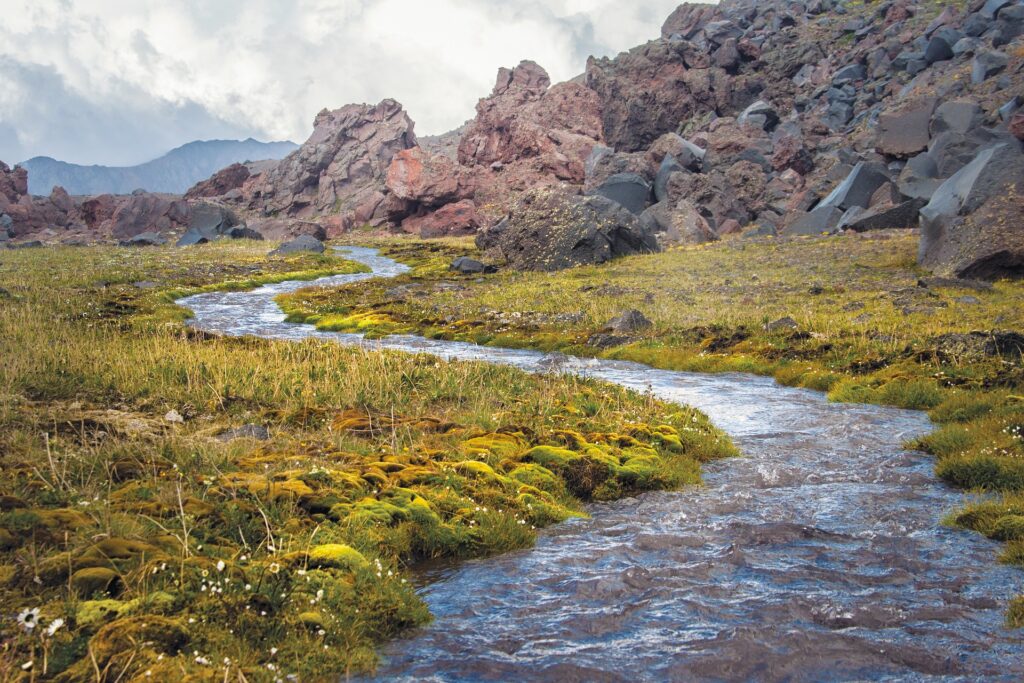
Rivers are regarded as sacred. They are fed by water that springs mysteriously from the Underworld. They are also in continuous motion, like living things. They are a focus for religious feeling and for offerings.
WATER
There is a fascination among the Celts with water in all its forms: the sea, lakes, bogs, rivers, streams, and springs. Water is necessary and essential. People need to drink it and cattle need to drink it; it is essential to make crops grow and keep pastures green. But water can also cause problems. A heavy rainstorm can batter down a cereal crop and a storm at sea can sink ships and drown sailors. There are strong water-veneration and water-propitiation traditions in both Britain and Gaul.
One manifestation of this veneration is the age-old custom of dropping offerings to gods into water. The Battersea shield and the Waterloo Bridge helmet were both very valuable metal objects, high-status objects, that were dropped into the Thames River as offerings. This custom went on throughout the Bronze and Iron Ages. The practice continues even to the present day, on a very small scale, with the tradition of leaving coins in wishing wells.
The Otherworld was seen literally as being underground, so springs were seen as sacred portals: places where water passes from the Otherworld into this world. St. Augustine’s Well at Cerne Abbas was probably a pagan sacred spring that was later Christianized. There are many superstitions surrounding the spring, and visitors still throw the occasional coin into it.
Some years ago, I met Lady Vickers when she was responsible for cleaning St. Augustine’s Well and she showed me two coins that she had retrieved from the spring. One was a 1950s threepenny piece. The other looked as if it might have the bust of a Roman emperor on one side and a classical temple on the other. This was potentially an exciting discovery, as it conceivably might be evidence that the spring was visited in the Roman-British period. Initially it was identified by Chichester Museum as a fourth-century AD Roman coin. Closer examination revealed the word “TED” on the reverse. Dr. Howgego of the Ashmolean Museum in Oxford conclusively identified the coin for me as modern American, a ten-cent piece dating from around 1960, showing Abraham Lincoln on one side and the Lincoln Memorial on the other. The corroded and lime encrusted condition of the coin made it look much older than it actually was; the alleged healing properties of the water prematurely aging it 1,600 years in just 30. The initial excitement of the discovery gave way to disappointment. On the other hand, Roman coins have turned up in rabbit burrows within 100 yards (91m) of St. Augustine’s Well, so we do after all have evidence that the site was visited during the Roman occupation.
Rivers had local cults, many involving depositing offerings in the water. In August 12 BC, Drusus set up the cult of Rome and Augustus outside Lyons (Lugdunum) at the confluence of the Saône and the Rhône. He set up a temple and an altar. On the altar were inscribed the names of 60 Gaulish tribes. The consecration ceremony was conducted by the chief priest of the Aedui tribe, and it must represent a recognition of native Celtic religious ideas.
There were many other river cults. Condatis was the god of the waters meet. The name of the consort of Sucellus, Nantosuelta, meant “Winding River.” Many of the rivers had female deities. The goddess of the Wharfe in northern England was Verbeia.
One explanation for the focus on water for offerings may lie in the simple fact that water was the ultimate resting place of the dead. Earlier, the Battersea shield was mentioned. This was found in the lower Thames along with a large quantity of other prehistoric metalwork, in the same reaches as human remains, including many skulls. So some stretches of some rivers were used for depositing the dead and the offerings to the Otherworld to accompany them. The Thames was not the only river to be treated in this way: the Witham in Lincolnshire was deluged with offerings. The Witham shield, bearing strange animal decoration, is one of many high-status objects to come out of the river not far from Lincoln. A brand-new logboat was deliberately “sacrificed” underneath a timber causeway with a large collection of tools and weapons. The timber was dated to the middle of the fifth century BC.
Springs were often associated with healing. Some were doubtless visited informally in the hope that a prayer or a small offering to the water deity would relieve a toothache, backache, or failing sight. Others were developed with full-scale sanctuaries. At the Giant’s Springs at Duchcov in the Czech Republic there is a natural spring. In the third or second century BC a large bronze cauldron was dedicated to the spring. It contained more than 2,000 bronze offerings: mainly brooches and bracelets. This is interesting in itself, but doubly so since most of the offerings to water elsewhere seem to be not only male in origin but military, like the Battersea shield. Here at the Giant’s Springs is what looks like a collective offering that is exclusively female. But this cannot be pressed too far, as men also wore jewelry. Presumably these offerings were deposited one by one, by individual people over a period, and then collected together to be deposited in the cauldron.
Lakes and bogs were also places people visited in the hope of divine intercession. It is likely that the locations that are now bogs were lakes in the Iron Age; they have become filled up with silt and vegetation. One attraction of lakes was that the offerings left there would rest undisturbed: there was no flow of water to move the offerings around.
The classical writers tell us about the practice. Strabo describes an incident that happened in 106 BC in the territory of the Volcae Tectosages tribe, who lived in the Toulouse area. The tribe had amassed an enormous hoard of gold and silver sacred treasure in the form of metal ingots heaped up at the Tolosa sanctuary; some in temple enclosures and some in a sacred lake. The treasure was plundered by the Romans. Strabo comments that religious treasure hoards such as this existed in many parts of the Celtic lands, “and the lakes in particular provided inviolability for their treasures, into which they let down heavy masses of silver and gold.” The Tolosa sanctuary was regarded by the Gauls as especially sacred; its treasure was unusually large, partly because the place was regarded as unusually sacred and no one would have contemplating committing sacrilege there. The Romans, of course, had no such scruple. The trauma experienced by the Volcae Tectosages when they had their lake sanctuary ransacked can only be imagined.
St. Gregory of Tours describes a three-day (pagan) religious festival that took place at Lake Gévaudan in the Cévennes. During this annual festival, the local peasants threw into the lake food, clothing, and the bodies of sacrificed animals. Depositing offerings into deep water meant that they could never be retrieved; they were gone beyond physical recovery, and were in effect sent to the Otherworld. Throwing something away so irrevocably must have added to the value of the sacrificial act.
The Daghda, an Irish father god, was wedded to the land by being married to the territorial goddess Boanna of the Boyne River. According to legend, she was detained by Nechtan when she questioned the power of his sacred spring.
Water is a regenerative force. Some of the healing springs are a source of mineral water with true medicinal qualities; others are just a source of pure clean water. Water is seen as healing in a number of ways. Devotees can apply it to infected areas of their body, wash in it, immerse themselves in it, or drink it. The evidence from all the different sanctuaries points to all methods being used. Healing and ritual cleansing always go together.
The Lady of the Lake represents the later Celtic aspect of water magic, the Romantic and mysterious aspect. In the fully developed Arthurian legend of the high Middle Ages, there are several fairy ladies who appear and disappear. By the time Sir Thomas Malory told his version of the story, the fairies (originally from the Otherworld) had been converted into enchantresses (dwelling in this world, but with magic powers). Early versions of the tales show the fairy nature of enchantresses better. One very early version of the Lancelot story has the Lady of the Lake as a true spirit of the lake; a queen of an isle of lake maidens in the middle of an enchanted lake, where winter never comes and there is no sorrow. Later in the Middle Ages, the same queen becomes a sorceress and even the lake is an illusion. Jessie Weston argued that the original tale was about the capture of a royal child by a water-fairy. But the Lady of the Lake is still there, just, in the final rendition of the Arthur story. She gives the sword Excalibur to him at the beginning of his reign and takes it back again at the end as a summons to Avalon. At the end of the story, we see only her arm sticking up out of the lake; in the process of endless re-telling, she has almost disappeared from the story.
*More can be read in the book.
The Element Encyclopedia of Witchcraft by Judika Illes
WELLS
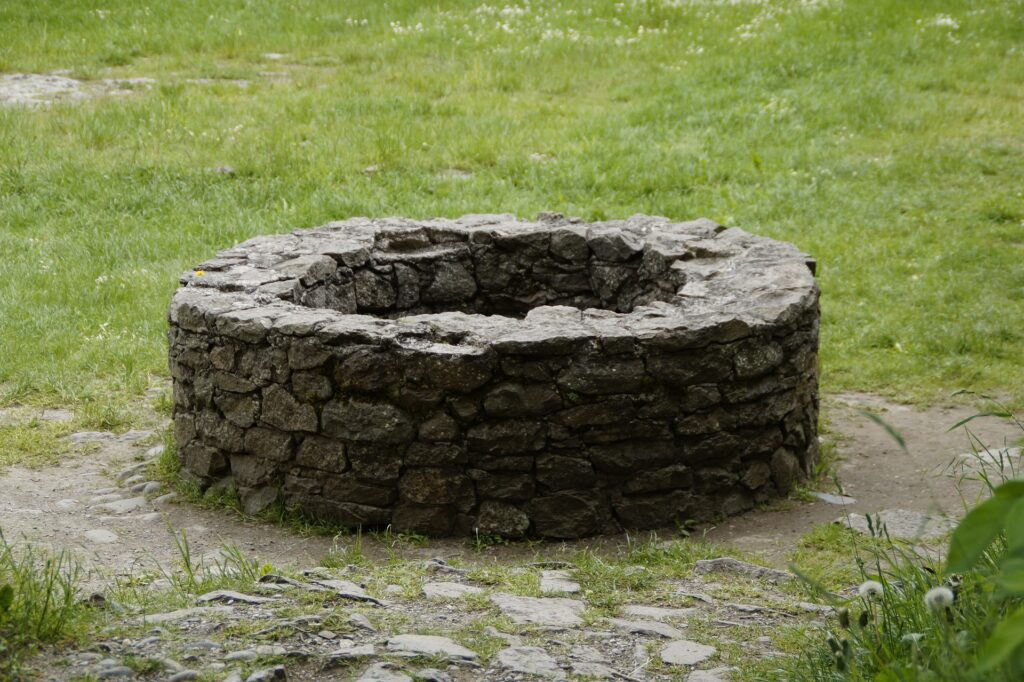
Wells were sacred sites identified with healing, renewal, divination, good fortune, love, and fertility magic. The concept of “wishing wells” derives from these old magical traditions. Wells were either portals to spirits who heard your pleas or they were portals to the heart of the Earth Mother herself. Sometimes wells were understood as portals to the Realm of Death. The Norns, Nordic fate goddesses, live by the Well of Urd.
*More can be read in the book.
Encyclopedia of Imaginary and Mythical Places by Theresa Bane
BIMINI
An island believed to exist in the Bahamas, Bimini of Arawak folklore was thought to be the location of the fabled Fountain of Youth, a well whose waters would give immortality to any who drank from it. Described as lying far beyond the reach of mortal man just beyond the horizon, lovely Bimini may be reached only by the strongest of rowers in the fastest of canoes. Bimini was also the name of a goddess in Arawak mythology who rose from the primal waters to give birth to the entire world.
MIMIRSBRUNNR WELL
Variations: Mimir, Mimir’s Well
In Norse mythology Mimirsbrunnr Well, the font of all wisdom and wit; it is located in MIDGARD at Mimir’s Grove at the JOTUNHEIM root in the land of ODAINSAKER. One of the three wells which nourish the ash tree, YGGDRASIL, the water of this well was so clear that even the future could be seen it in (see HVERGELMIR WELL and URDARBRUNNR WELL). This spring was considered the headwater of memory, and desiring to have great wisdom god Odin exchanged one of his eyes for a drink from it. Mimirsbrunnr Well is guarded by the god Mimir himself.
BARENTON
Variations: Belenton, Bellenton, Berenton, Spring of Barenton
According to the Breton people of Brittany Barenton, the fountain that could make rain was located in the very heart of the legendary forest BROCÉLIANDE; when water was drawn from the well and sprinkled around it unleashed violent storms.
STYX
The UNDERWORLD river of Greek mythology that bordered TARTARUS, the river Styx (“Hate”) was named for the Titianess who is its presiding river-deity; it was given to her as a reward from the god Zeus, as she did not accompany the Titans when they fought against the Olympians. There are in all five rivers in HADES, the ACHERON (“Sorrow”), COCYTUS (“Lamentation”), LETHE (“Forgetfulness”), PYRIPHLEGETHON (“Fire”), and STYX (“Hate”); they form the boundary between upper and lower worlds.
Whenever one of the gods must make a sacred vow the messenger goddess Iris goes to TARTARUS and retrieves a vial of water from Styx; whoever vows upon it, the oath becomes inviolate. If the vow made was broken or done under false pretenses the god fell into a swoon for nine years; if after awakening they did not make good on the oath they were expelled from Olympus forever.
In the Roman telling of the pre-eminent Greek warrior of Troy, Achilles was the handsomest, most valiant, strongest, and swiftest person in his army; this was partially due to his mother being the divine nereid Thetis but also because shortly after his birth she dipped her child into the river Styx which rendered him invulnerable wherever the water touched his skin.
*More can be read in the book.
The Encyclopedia of Celtic Mythology and Folklore by Patricia Monaghan
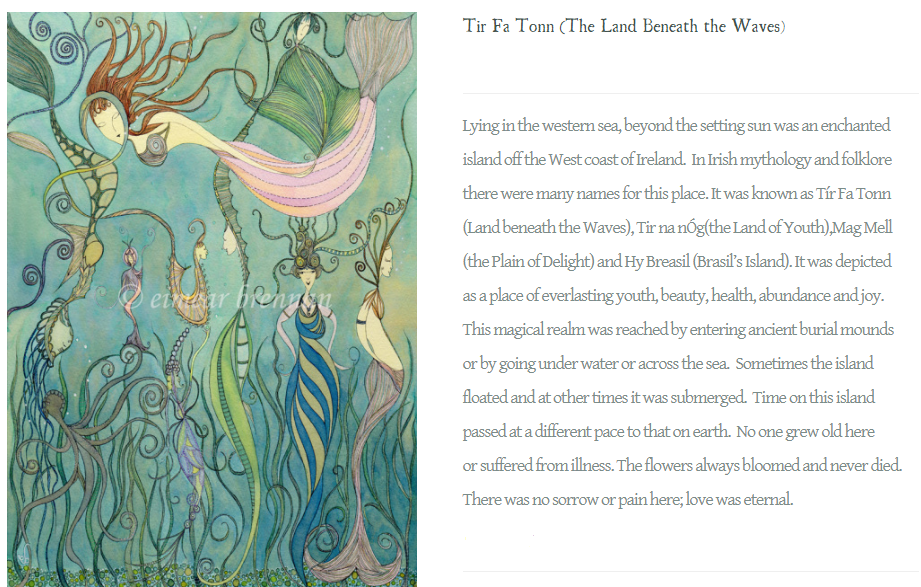
Tir fo Thuinn (Tir-fa-Tonn, Land Under Wave)
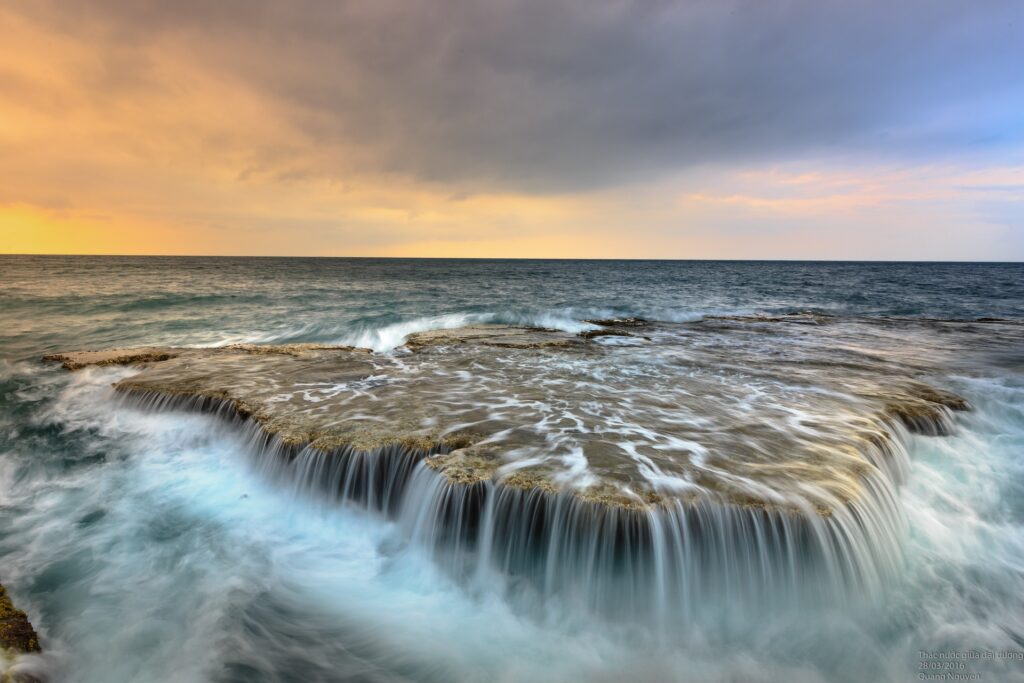
Irish mythological site. One of the many names given to the otherworld or fairyland, Land Under Wave refers to the tradition that lakes and the ocean hide the route between this world and the other. Stories of cities beneath lakes or on the ocean bed, and of mermaids and mermen who live there, are common in all coastal Celtic lands.
*More can be read in the book.
Tír fo Thuinn (Tír fo Thuinn, T’r fo Thuinn (ScG), Tír fa Thonn, Tir-fa-Tonn, Tir-na-Thonn)
Oxford Reference
[Ir. tonn, wave, i.e. Land under Wave].Imagined realm under the seas, one of the many places where the Tuatha Dé Danann would have fled after their defeat by the Milesians. The ‘Hard Gilly’ leads the Fianna here in Tóraigheacht an Ghiolla Dheacair [The Pursuit of the Hard Gilly/ Difficult Servant]. In parts of Gaelic Scotland such as the isle of Tiree, Tír fo Thuinn might also be known as An tEilean Uaine [the Green Island].
Further Reading:
- Water mythology: An assemblage of myths and legends on water and water creatures
- Water Folklore and Legends
- Mythology of Water
- Water Folklore, visions from wells, pools, loughs, rivers and sea
- Power Of Water In Beliefs Of Ancient Cultures
- 5 Famous Mysterious Stories of the Bermuda Triangle
- Bermuda Triangle
- Bermuda Triangle
- Welsh Lake Legends and Folklore: Llyn Cwm Llwch and the Door of the Tylwyth Teg
- Diving for stories – Wild Waves & Wishing Wells
- Wonderful Waterfall Folklore, Myths & Legends
- Avoid the Dark Depths! Dangers Lurk in Lake Folklore
- Strange River Folklore: River Gods and Dark Spirits
- All About the Fountain of Youth in Greek Mythology
- Fountain of Youth
- Water Symbolism and Symbols – A Guide
Folklore in a Nutshell by Ronel
Oceans, rivers and lakes have many myths tied to them all over the world.
In Greek mythology, each source of water has a god, goddess or nymph attached to it. The river Styx is not just a river the gods made vows on, but a goddess that makes sure that those vows are honoured.
In Norse mythology, Odin gave one of his eyes to drink from Mimir’s Well to gain the wisdom within. And, of course, the ocean goddess Ran and her husband Aegir had nine giant daughters – who happen to be the waves.
Tir fo Thoinn is, according to legend, one of many places the Tuatha de Danaan had fled after their epic defeat by the Milesians. Lakes and the ocean, of course, hide the route between this world and the other. Stories about cities beneath water filled with merpeople are common in all coastal lands – this one just references Celtic myth.
And we all know the myth of the Fountain of Youth – searching for it never ends well.
Water is mysterious and ever-changing. It is capable of creation and destruction. And whether wells and springs and the rest are holy or not, whether they host nymphs and other water fae or not, one thing is clear: without water, all life on Earth will perish.

Water in Modern Culture
In Art
TV series
Movies
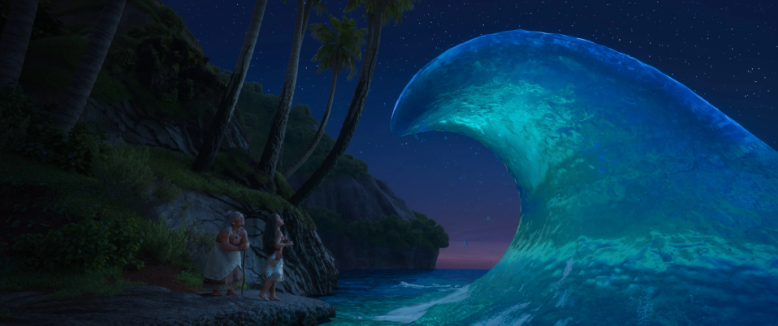
“The ocean is a friend of mine!”―Moana to Heihei
The Ocean of the South Pacific is an expanse of sea that serves as a supporting character in Disney’s 2016 animated feature film Moana. The ocean has a high level of sentience and acts as a legitimate character within the supernatural logic of the film’s world. It spends a millennium searching for an individual capable of saving humanity when the world falls victim to a devastating curse, and ultimately chooses a young islander named Moana. Over the course of the journey, the ocean becomes one of Moana’s most trusted and significant companions.
Learn more here.

In the film, which draws its plot loosely from the 1987 novel On Stranger Tides by Tim Powers, the eccentric pirate Captain Jack Sparrow (Johnny Depp) is forced into a shaky alliance with Angelica (Penélope Cruz), a mysterious woman from his past, as they embark on a quest for the Fountain of Youth, confronting the infamous pirate Blackbeard (Ian McShane) and outrunning Jack’s old foe Barbossa (Geoffrey Rush).
Learn more here.
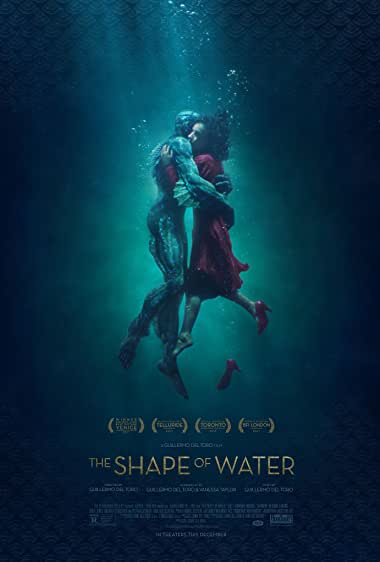
The amphibian man in The Shape of Water is Del Toro actively subverting the mythology of Yacuruna. The connection may seem weird at first. Perhaps they just look similar? The webbed feet, the slick skin, the tall and languid body. These all point toward a physical connection. But Michael Shannon’s character, Strickland, has a line in the movie that undeniably points toward Yacuruna’s influence on Del Toro’s fairy tale. “The natives in the Amazon worshipped him as a God.”
Read more about this take on this movie here.
Books
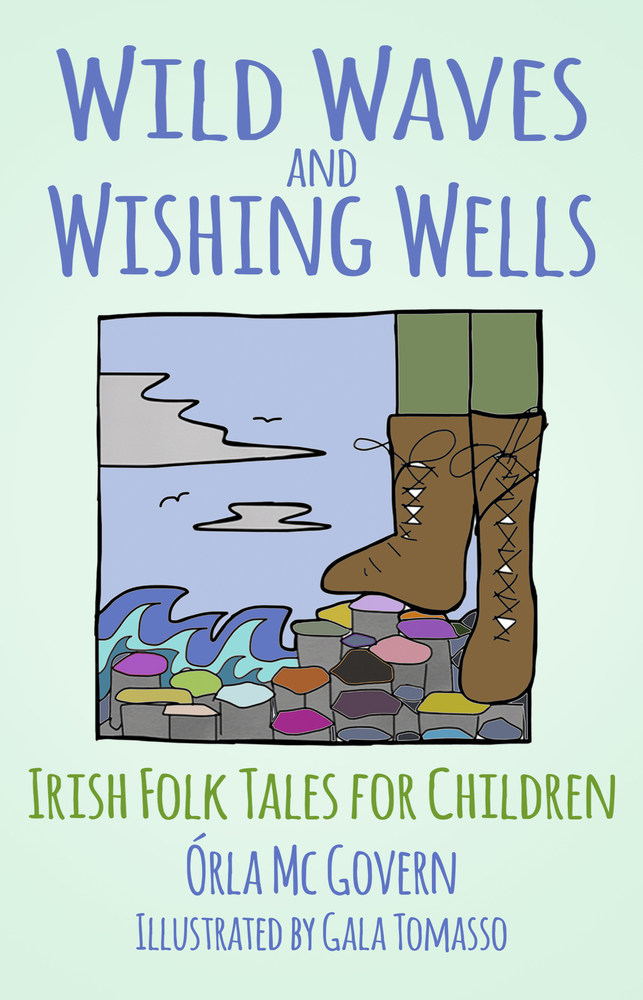
Who owned a great boat called The Wave Sweeper? Who went seeking wisdom to Connla’s Well? What was the secret of The White Trout? What gave the giant jellyfish its sting? What was the Fairy Ship of Roses? Here you will find the answers, as well as some traditional facts and modern musings. Wild Waves and Wishing Wells is full of hidden story treasures, lost lore and watery whimsy, and is specially compiled for the enjoyment of 7-11-year-old readers. These stories of the waters of Ireland have been selected by writer and storyteller Órla Mc Govern, and illustrated by Gala Tomasso. Dive in for story adventures not to be missed.
Check it out on Goodreads.
Water in My Writing
Origin of the Fae: Oceans, Rivers and Lakes
There are two ways to look at this: the water as a home — Tir fo Thoinn (the Land beneath the Waves) — and as sentient itself.
We’ve taken a brief look at water as a home in Thin Places and the Other Side:
Otherworld
Realm of deathfae and the dead. Encompasses Tir fo Thoinn (the Land beneath the Waves, home of Merrows, Sirens, etc.) the Underworld and other grey areas in-between (Valhalla, Hades, Castle of the Keeper of the Veil, etc.).
Tir fo Thoinn
Tir fo Thoinn, the Land beneath the Waves, is the home realm of most water fae. On the surface there is nothing, as is usual on lakes and other places of entrance in the mortal realm and Faerie, but below the waves is an entire kingdom. Palaces, houses and more inhabited by water fae and aquatic faery creatures who farm, herd and otherwise labour the same as in any other kingdom. It’s a prosperous land with pockets that specifically belong to certain races.
Some bodies of water are sacred: the lake of Avalon where the Lady of the Lake resides, giving guidance and help to Arthur and his knights; Mimir’s Well that nourishes the World Tree Yggdrasil; and a couple of non-descript lakes, springs and wells that move place and through time to help those in need.
As fluid sentient beings, oceans, rivers and lakes find form in the nine daughters of Ran who are the waves, the river Styx who is a goddess, and other ways that water itself comes to life without losing itself in a form that will bind it – such as human, animal or fae.
See this in action:
Tortured Tales (Faery Tales #6)

She swam with Caspian over beautiful coral reefs that held a colourful variety of fish and other sea life.
He led her down deeper. In forgotten cellars she could barely see ships covered with brown algae and sea worms that made shiny bubbles. Seaweed grew against the wrecks. They swam down even deeper. Elsa was surprised that she could see at all. They swam around a mountain.
She gasped. A palace of pearls and shells stood in front of her, glittering and glimmering in the light from the sea life around it. Merpeople swam around with seals.
Bride of the Unfathomable Deep, Tortured Tales, Faery Tales #6, Ronel Janse van Vuuren
If this tale has lingered with you, I would be glad to hear it.
Where did you first encounter this creature – through story, superstition, memory, or something half-remembered?
If you know other versions of its myth, feel free to leave them in the record below. Folklore survives by being spoken again.
Further fragments and interpretations of this creature can be found in my Pinterest grimoire.
You can listen to this post on my podcast:
If you wish to support the time and craft behind these folklore posts – researching old tales, gathering fragments, and shaping them into something worth reading – you may do so by buying me a coffee. It can be a single offering, or something you return to whenever the spirit moves you.



One Comment
Comments are closed.