Q is for Quiver
I’m weaving folklore and book reviews into a single offering, shaped to reach a wider audience drawn to both. In years past, interest has surfaced in fragments of each; now, I’m gathering those threads into April alone, so the rest of the year remains quiet and deliberate.
If you came only for today’s book review, you may follow the link here.
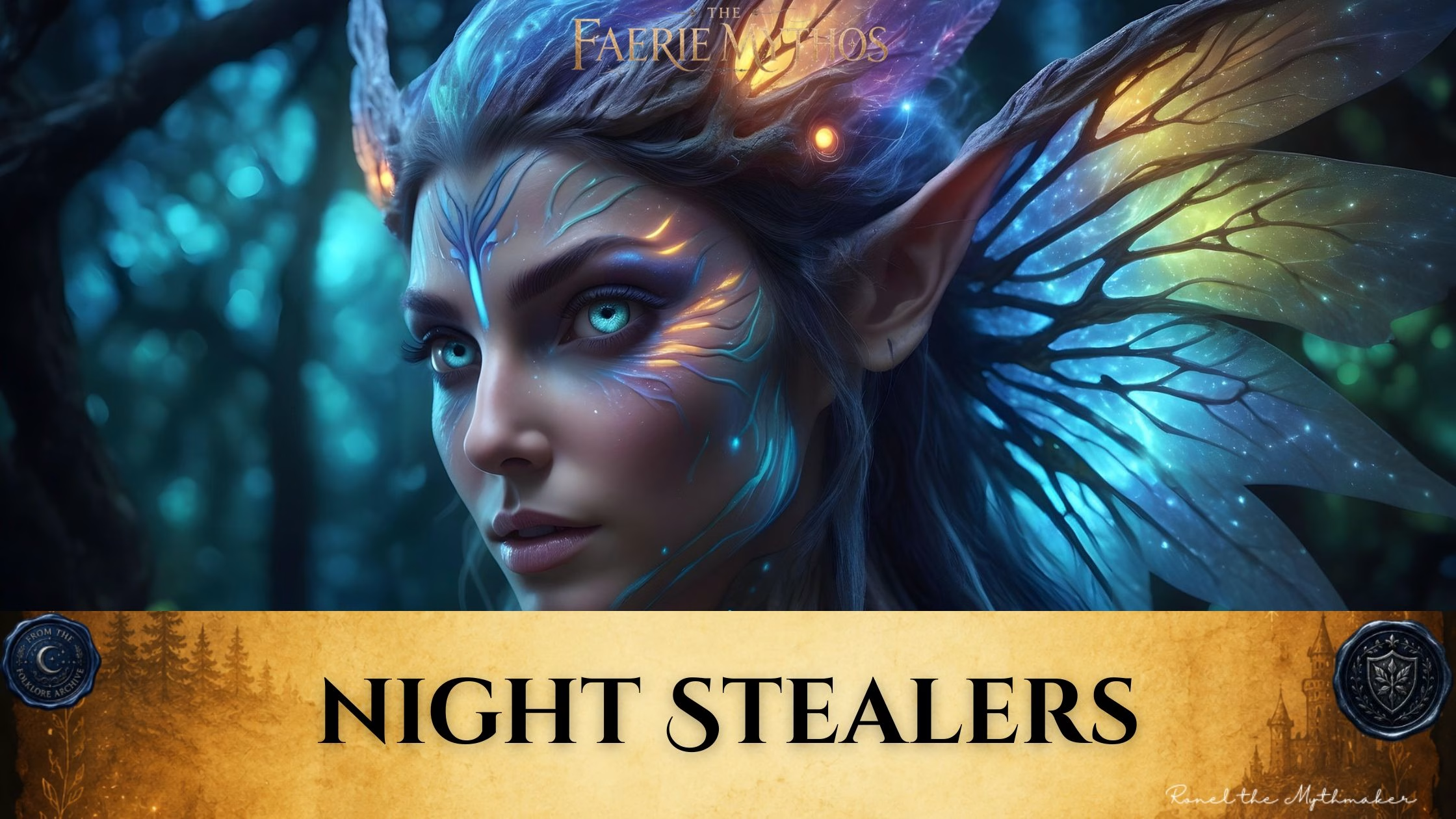
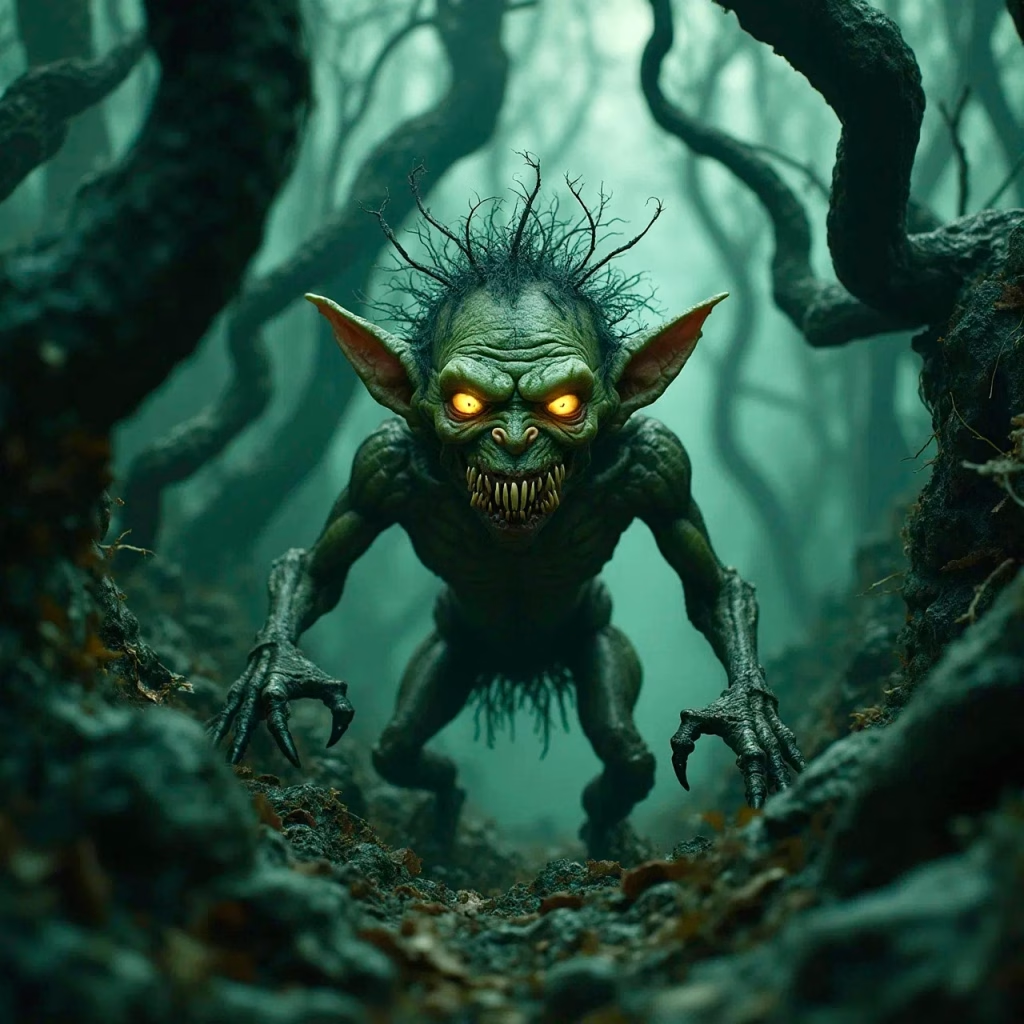
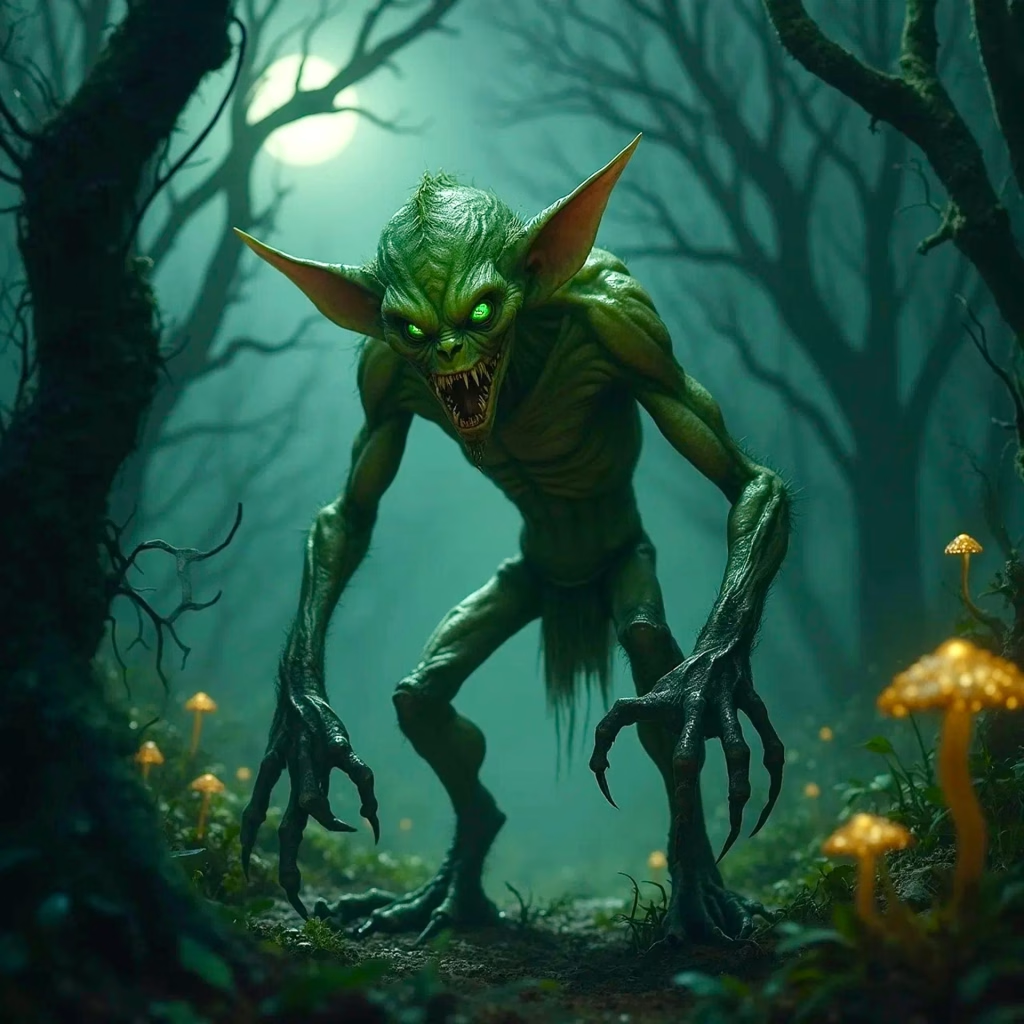
Many quiver in fear when they hear the names of the Night Stealers. You might not know who or what they are exactly, but you know to be afraid. The Trows and the Tylwyth Teg are eerily similar…
Folklore
British Goblins: Welsh Folk-lore, Fairy Mythology, Legends and Traditions by Wirt Sikes [1880]
Chapter VI: Living with the Tylwyth Teg
CLOSELY akin to the subject of changelings is that of adults or well-grownchildren being led away to live withthe Tylwyth Teg. In this field the Welsh traditions are innumerable, and deal not only with the last century or two, but distinctly with the middle ages. Famed among British goblins are those fairies which are immortalised in the Tale of Elidurus. This tale was written in Latin by Giraldus Cambrensis (as he called himself, after the pedantic fashion of his day), a Welshman, born at Pembroke Castle, and a hearty admirer of everything Welsh, himself included. He was beyond doubt a man of genius, and of profound learning. In 1188 he made a tour through Wales, in the interest of the crusade then in contemplation, and afterwards wrote his book–a fascinating picture of manners and customs in Wales in the twelfth century.
The scene of the tale is that Vale of Neath, already named as a famous centre of fairyland. Elidurus, when a youth of twelve years, ‘in order to avoid the severity of his preceptor,’ ran away from school, ‘and concealed himself under the hollow bank of a river. After he had fasted in that situation for two days, ‘two little men of pigmy stature appeared to him,’ and said, ‘If you will go with us, we will lead you into a country full of delights and sports.’ Assenting, Elidurus rose up and ‘followed his guides through a path at first subterraneous and dark, into a most beautiful country, but obscure and not illuminated with the full light of the sun.’ All the days in that country ‘were cloudy, and the nights extremely dark.’ The boy was brought before the king of the strange little people, and introduced to him in the presence of his Court. Having examined Elidurus for a long time, the king delivered him to his son, that prince being then a boy. The men of this country, though of the smallest stature, were very well proportioned, fair-complexioned, and wore long hair. ‘They had horses and greyhounds adapted to their size. They neither ate flesh nor fish, but lived on milk-diet, made up into messes with saffron. As often as they returned from our hemisphere, they reprobated our ambition, infidelities, and inconstancies; and though they had no form of public worship, were, it seems, strict lovers and reverers of truth. The boy frequently returned to our hemisphere, sometimes by the way he had gone, sometimes by others; at first in company, and afterwards alone; and made himself known only to his mother, to whom be described what he had seen. Being desired by her to bring her a present of gold, with which that country abounded, he stole, whilst at play with the king’s son, a golden ball with which he used to divert himself, and brought it in haste to his mother, but not un-pursued; for, as he entered the house of his father, he stumbled at the threshold;’ the ball fell, ‘and two pigmies seizing it, departed, showing the boy every mark of contempt and derision. Notwithstanding every attempt for the space of a year, he never again could find the track to the subterraneous passage. He had made himself acquainted with the language of his late hosts, ‘ which was very conformable to the Greek idiom. When they asked for water, they said Udor udorum; when they want salt, they say Halgein udorum. [See Sir R. C. Hoare’s Translation of Giraldus]
Exactly similar to this medieval legend in spirit, although differing widely in detail, is the modern story of Shuï Rhys, told to me by a peasant in Cardiganshire. Shuï was a beautiful girl of seventeen, tall and fair, with a skin like ivory, hair black and curling, and eyes of dark velvet. She was but a poor farmer’s daughter, notwithstanding her beauty, and among her duties was that of driving up the cows for the milking. Over this work she used to loiter sadly, to pick flowers by the way, or chase the butterflies, or amuse herself in any agreeable manner that fortune offered. For her loitering she wasoften chided; indeed, people said Shuï’s mother was far too sharp with the girl, and that it was for no good the mother had so bitter a tongue. After all the girl meant no harm, they said. But when one night Shuï never came home till bed-time, leaving the cows to care for themselves, dame Rhys took the girl to task as she never had done before.
‘ Ysgwaetheroedd, mami,’ said Shuï, ‘ I couldn’t help it it was the Tylwyth Teg.’ The dame was aghast at this, but she could not answer it–for well she knew the Tylwyth Teg were often seen in the woods of Cardigan. Shuï was at first shy about talking of the fairies, but finally confessed they were little men in green coats, who danced around her and made music on their tiny harps; and they talked to her in language too beautiful to be repeated; indeed she couldn’t understand the words, though she knew well enough what the fairies meant. Many a time after that Shuï was late; but now nobody chided her, for fear of offending the fairies. At last one night Shuï did not come home at all. In alarm the woods were searched; there was no sign of her; and never was she seen in Cardigan again. Her mother watched in the fields on the Teir-nos Ysprydion or three nights of the year when goblins are sure to be abroad; but Shuï never returned. Once indeed there came back to the neighbourhood a wild rumour that Shuï Rhys had been seen in a great city in a foreign land-Paris, perhaps, or London, who knows? but this tale was in no way injurious to the sad belief that the fairies had carried her off; they might take her to those well-known centres of idle and sinful pleasure, as well as to any other place.
Dancing and music play a highly important part in stories of this class. The Welsh fairies are most often dancing together when seen. They seek to entice mortals to dance with them, and when anyone is drawn to do so, it is more than probable he will not return to his friends for a long time. Edmund William Rees, of Aberystruth, was thus drawn away by the fairies, and came back at the year’s end, looking very bad. But he could not give a very clear account of what he had been about, only said he had been dancing. This was a common thing in these cases. Either they were not able to, or they dared not, talk about their experiences.
Two farm servants named Rhys and Llewellyn were one evening at twilight returning home from their work, when Rhys cried Out that he heard the fairy music. Llewellyn could hear nothing, but Rhys said it was a tune to which he had danced a hundred times, and would again, and at once. ‘Go on,, says he, ‘ and I’ll soon catch you up again.’ Llewellyn objected, but Rhys stopped to hear no more; he bounded away and left Llewellyn to go home alone, which he did, believing Rhys had merely gone off on a spree, and would come home drunk before morning. But the morning came, and no Rhys. In vain search was made, still no Rhys. Time passed on; days grew into months; and at last suspicion fell on Llewellyn, that he had murdered RIys. He was put in prison. A farmer learned in fairy-lore, suspecting how it was, proposed that he and a company of neighbours should go with poor Llewellyn to the spot where lie had last seen Rhys. Agreed. Arrived at the spot, ‘ Hush,’ cried Llewellyn, ‘I hear music! I hear the sweet music of the harps! ‘ They all listened, but could hear nothing. ‘ Put your foot on mine, David,’ says Llewellyn to one of the company; his own foot was on the outward edge of a fairy ring as lie spoke. David put his foot on Llewellyn’s, and so did they all, one after another; and then they beard the sound of many harps, and saw within a circle about twenty feet across, great numbers of little people dancing round and round. And there was Rhys, dancing away like a madman! As he came whirling by, Llewellyn caught him by his smockfrock and pulled him out of the circle. ‘Where are the horses? where are the horses?’ cried Rhys in an excited manner. ‘ Horses, indeed!’ sneered Llewellyn, in great disgust; ‘wfft! go home. Horses! But Rhys was for dancing longer, declaring he had not been there five minutes. You’ve been there,’ says Llewellyn, ‘long enough to come near getting me hanged, anyhow.’ They got him home finally, but he was never the same man again, and soon after he died.
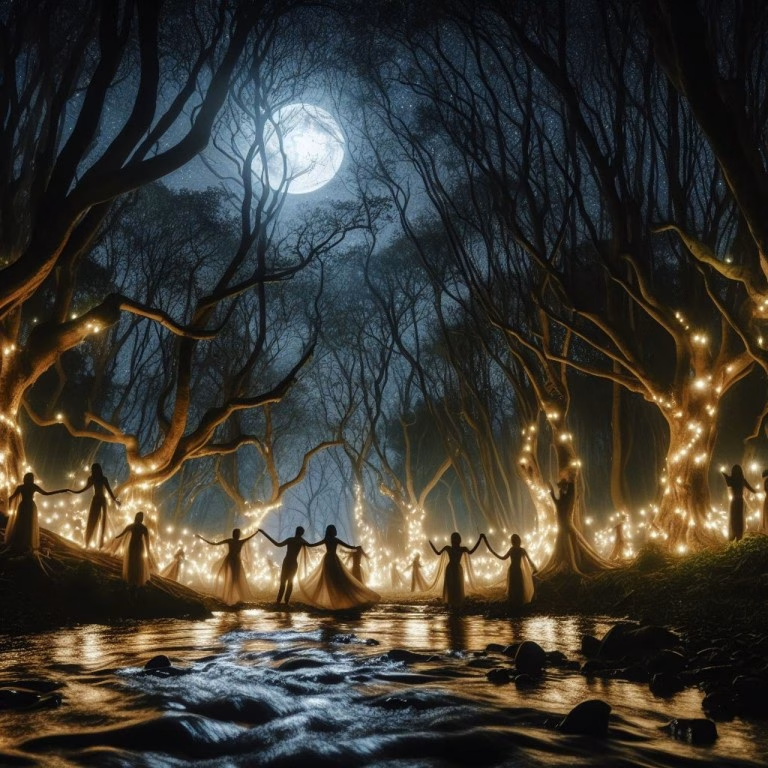
In the great majority of these stories the hero dies immediately after his release from the thraldom of the fairies–in some cases with a suddenness and a completeness of obliteration as appalling as dramatic. The following story, well known in Carmarthenshire, presents this detail with much force: There was a certain farmer who, while going early one morning to fetch his horses from the pasture, heard harps playing. Looking carefully about for the source of this music, he presently saw a company of Tylwyth Teg footing it merrily in a corelw. Resolving to join their dance and cultivate their acquaintance, the farmer stepped into the fairy ring. Never had man his resolution more thoroughly carried out, for having once begun the reel he was not allowed to finish it till years had elapsed. Even then he might not have been released, had it not chanced that a man one day passed by the lonely spot, so close to the ring that he saw the farmer dancing. ‘ Duw catto ni!’ cried the man, ‘God save us! but this is a merry one. Hai, holo! man, what, in Heaven’s name, makes you so lively?’ This question, in which the name of Heaven was uttered, broke the spell which rested on the farmer, who spoke like one in a dream: ‘O dyn!’ cried he, ‘what’s become of the horses?’ Then he stepped from the fairy circle and instantly crumbled away and mingled his dust with the earth.
The Fairy Mythology by Thomas Keightley [1828]
The Shetlanders, he informs us, believe in two kinds of Trows, as they call the Scandinavian Trolls, those of the land and those of the sea.
The former, whom, like the Scots, they also term the guid folk and guid neighbours, they conceive to inhabit the interior of green hills. Persons who have been brought into their habitations have been dazzled with the splendour of what they saw there. All the interior walls are adorned with gold and silver, and the domestic utensils resemble the strange things that are found sometimes lying on the hills. These persons have always entered the hill on one side and gone out at the other.
They marry and have children, like their northern kindred. A woman of the island of Yell, who died not long since, at the advanced age of more than a hundred years, said, that she once met some fairy children, accompanied by a little dog, playing like other boys and girls, on the top of a hill. Another time she happened one night to raise herself up in the bed, when she saw a little boy with a white nightcap on his head, sitting at the fire. She asked him who he was. “I am Trippa’s son,” said he. When she heard this, she instantly sained, i. e. blessed herself, and Trippa’s son vanished.
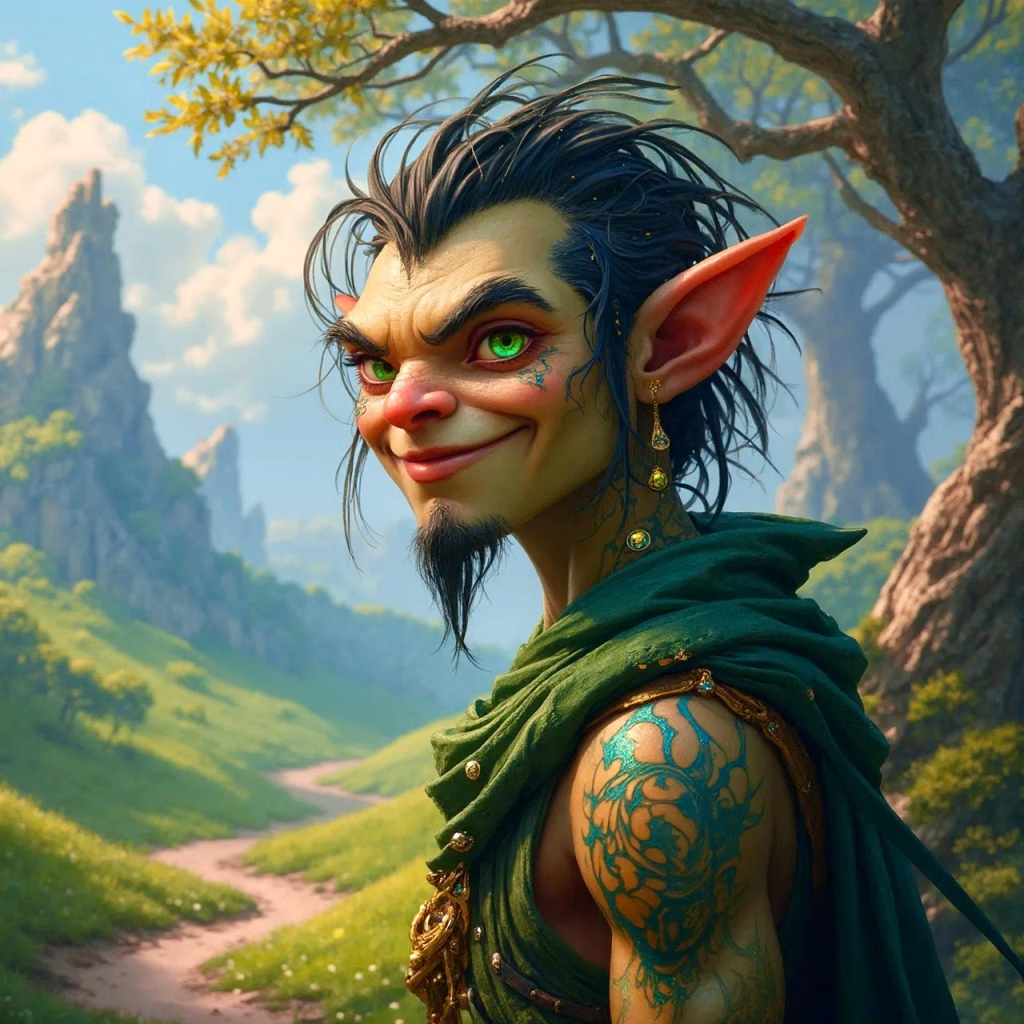
Saining is the grand protection against them; a Shetlander always sains himself when passing by their hills.
The Trows are of a diminutive stature, and they are usually dressed in gay green garments. When travelling from one place to another they may be seen mounted on bulrushes, and riding through the air. If a person should happen to meet them when on these journeys, he should, if he has not a bible in his pocket, draw a circle round him on the ground, and in God’s name forbid their approach. They then generally disappear.[227]
They are fond of music and dancing, and it is their dancing that forms the fairy rings. A Shetlander lying awake in bed before day one morning, heard the noise of a party of Trows passing by his door. They were preceded by a piper, who was playing away lustily. The man happened to have a good ear for music, so he picked up the tune he heard played, and used often after to repeat it for his friends under the name of the Fairy-tune.
The Trows are not free from disease, but they are possessed of infallible remedies, which they sometimes bestow on their favourites. A man in the island of Unst had an earthen pot that contained an ointment of marvellous power. This he said he got from the hills, and, like the widow’s cruise, its contents never failed.
They have all the picking and stealing propensities of the Scandinavian Trolls. The dairy-maid sometimes detects a Trow-woman secretly milking the cows in the byre. She sains herself, and the thief takes to flight so precipitately as to leave behind her a copper pan of a form never seen before.
When they want beef or mutton on any festal occasion, they betake themselves to the Shetlanders’ scatholds or town-mails, and with elf-arrows bring down their game. On these occasions they delude the eyes of the owner with the appearance of something exactly resembling the animal whom they have carried off, and by its apparent violent death by some accident. It is on this account that the flesh of such animals as have met a sudden or violent death is regarded as improper food.
A Shetlander, who is probably still alive, affirmed that he[Pg 166] was once taken into a hill by the Trows. Here one of the first objects that met his view was one of his own cows, that was brought in to furnish materials for a banquet. He regarded himself as being in rather a ticklish situation if it were not for the protection of the Trow-women, by whose favour he had been admitted within the hill. On returning home, he learned, to his great surprise, that at the very moment he saw the cow brought into the hill, others had seen her falling over the rocks.
Lying-in-women and “unchristened bairns” they regard as lawful prize. The former they employ as wet-nurses, the latter they of course rear up as their own. Nothing will induce parents to show any attention to a child that they suspect of being a changeling. But there are persons who undertake to enter the hills and regain the lost child.
A tailor, not long since, related the following story. He was employed to work at a farm-house where there was a child that was an idiot, and who was supposed to have been left there by the Trows instead of some proper child, whom they had taken into the hills. One night, after he had retired to his bed, leaving the idiot asleep by the fire, he was suddenly waked out of his sleep by the sound of music, and on looking about him he saw the whole room full of fairies, who were dancing away their rounds most joyously. Suddenly the idiot jumped up and joined in the dance, and showed such a degree of acquaintance with the various steps and movements as plainly testified that it must have been a long time since he first went under the hands of the dancing-master. The tailor looked on for some time with admiration, but at last he grew alarmed and sained himself. On hearing this, the Trows all fled in the utmost disorder, but one of them, a woman, was so incensed at this interruption of their revels, that as she went out she touched the big toe of the tailor, and he lost the power of ever after moving it.[228]
In these cases of paralysis they believe that the Trows have taken away the sound member and left a log behind. They even sometimes sear the part, and from the want of sensation in it boast of the correctness of this opinion.[229]
The Encyclopedia of Celtic Mythology and Folklore by Patricia Monaghan
Trow
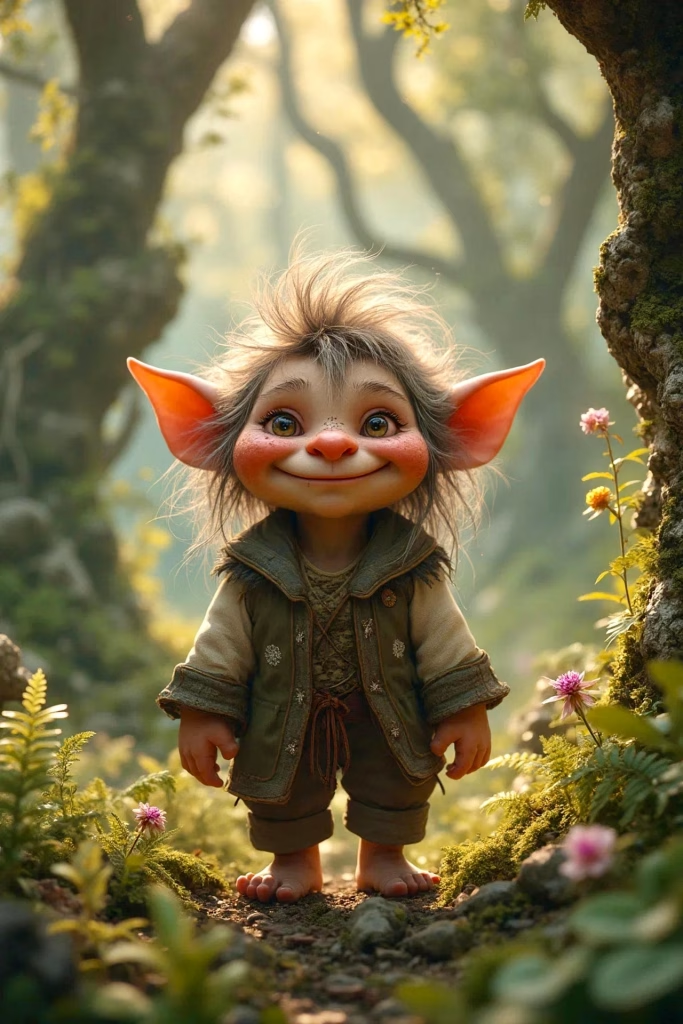
On the Shetland and Orkney Islands, these figures represent the most common kind of fairy. Like the Scandinavian trolls, from whom their name probably derives, the trows did not like sunlight and so were nocturnal creatures. Unlike trolls, trows were not typically turned to stone by sunlight but were merely paralyzed, to return to life at nightfall.
Trows were found in two varieties. The sea trow lived beneath the waves, like a mermaid or seal, while the land trows could be giants or human-sized gray-coated fairies. If you met one on the road, he walked backward rather than toward you. Seeing one was unlucky, but overhearing them talking to each other brought good luck.
*More can be read in the book.
Element Encyclopedia of Fairies by Lucy Cooper
Trows
Shetland folklore and its otherworldly creatures have strong connections with those of Scandinavia, and trows are described in Brewer’s Dictionary of Phrase and Fable (1870) as “Dwarfs of Orkney and Shetland mythology, similar to the Scandinavian trolls. There are land-trows and sea-trows. ‘Trow tak thee’ is still a phrase used by the island women when angry with their children.”
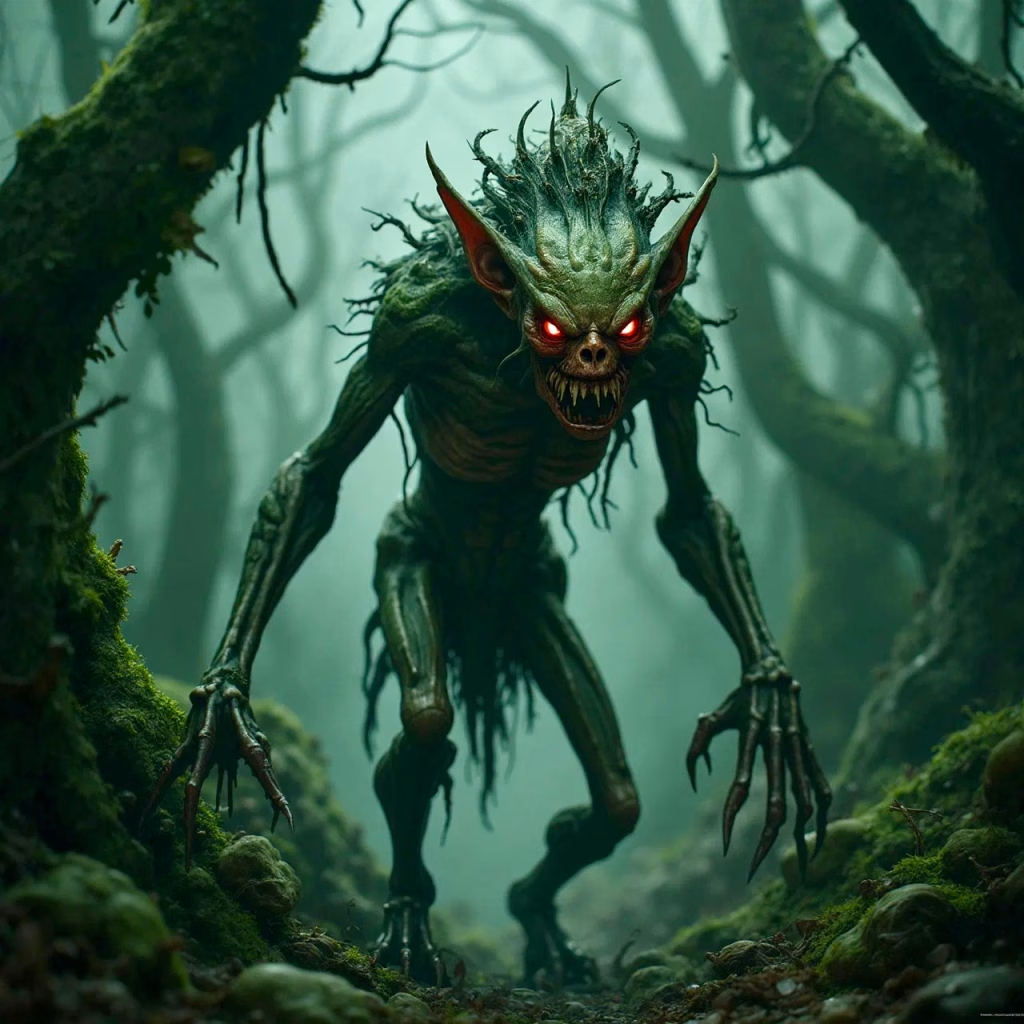
The shy, nocturnal trows are subterranean dwellers, living in trowie knows, or earthen mounds, from which they emerge to make mischief and, sometimes, to be helpful. Their love of feasting and music is the cause of much human annoyance, as with their magical trusty arrows the clever trows provide beef and mutton aplenty for their table, while substituting erstwhile living animals with illusory images, much to the befuddlement of farmers. Musicians, too, beware, for trows are master fiddlers and their sweet music lures mortal players to their underground lairs to entertain at lavish feasts. Their enchanted stay may seem but to pass in the blink of an eye, but can last a year or more.
Tylwyth Teg
“The Fair Family” or “Fair Folk”, the Welsh name for fairies, sometimes called Bendith y Mamau, Mother’s Blessing, a euphemism used for protection from their sometimes malicious activities.
*More can be read in the book.
Encyclopedia of Fairies in World Folklore and Mythology by Theresa Bane
Trow
Variations: Creepers, Grey Neighbours, Night Stealers
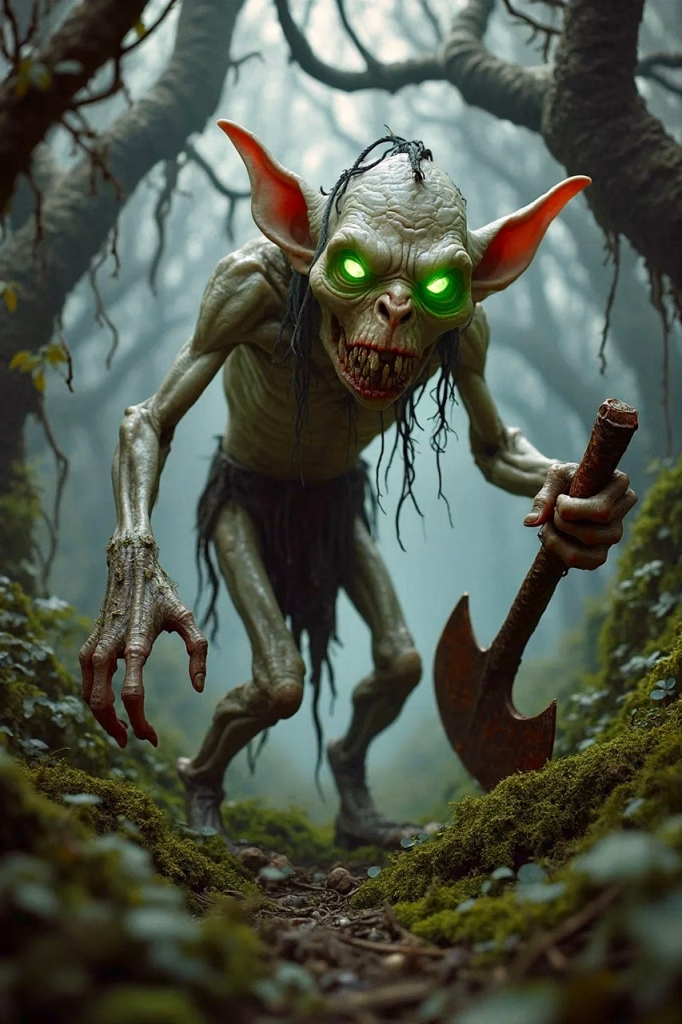
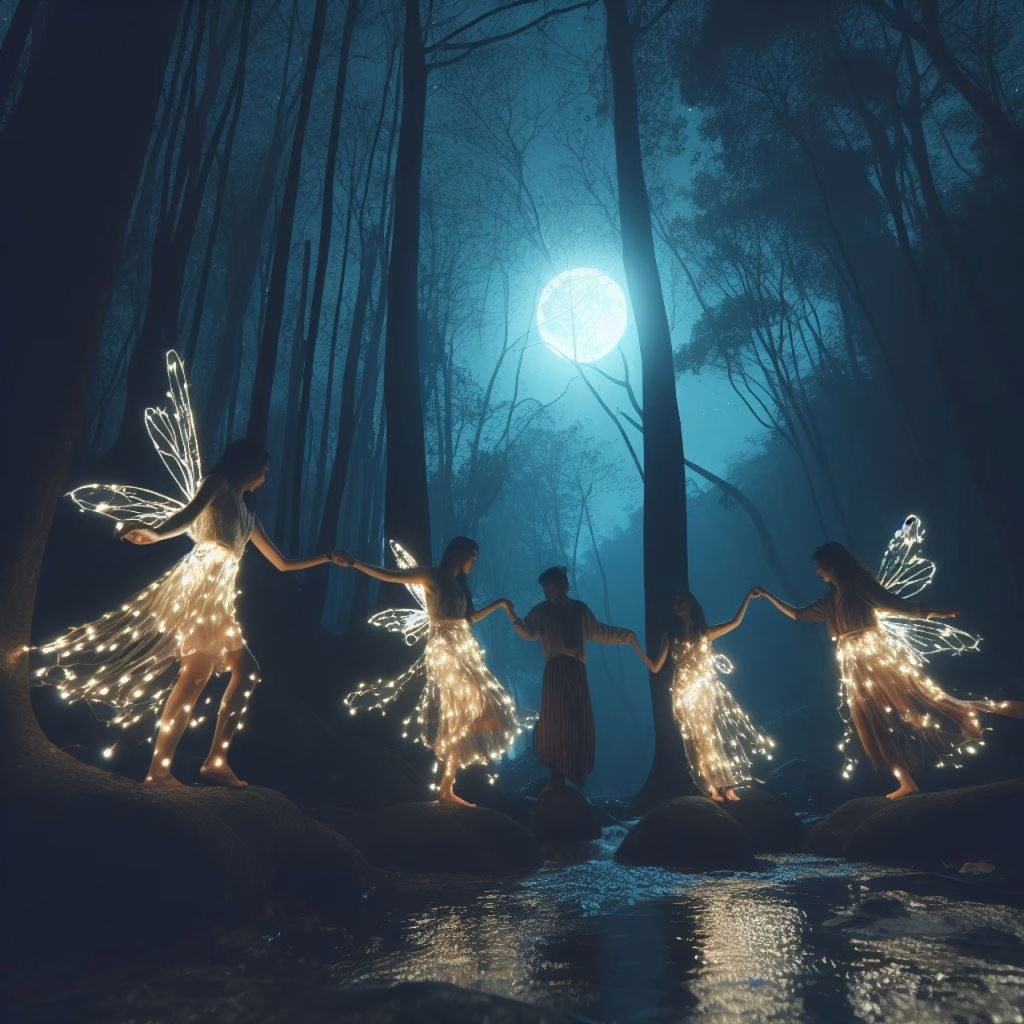
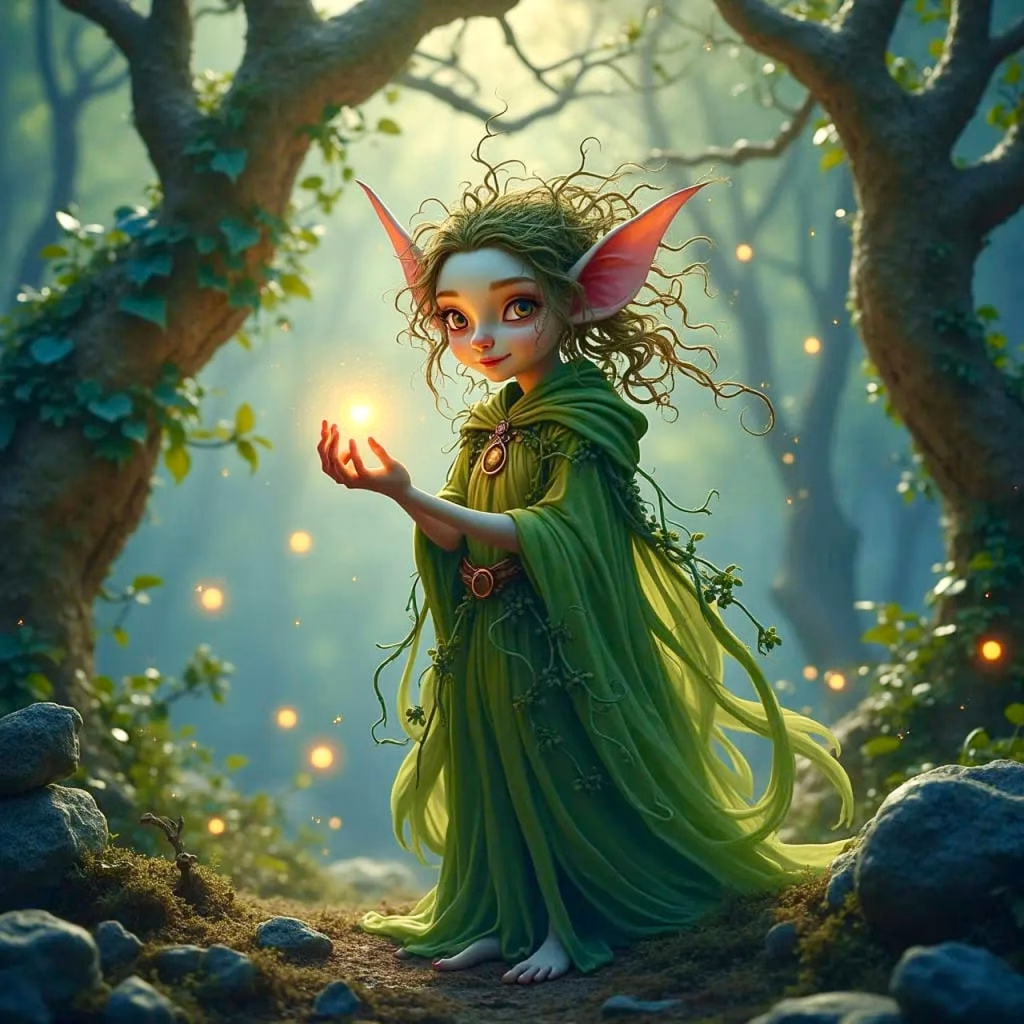
On the Shetland Islands the trow are small goblins dressed in grey. In many ways they are similar to the troll such as living inside earth mounds which are alleged to be filled with gold, precious metals, and silver; they serve only the finest drink and food upon their tables. Trows have a fondness for music and are not above kidnapping a musician and bringing him back to its home to play for one of its feasts. While only a few days may pass within the mound, years could pass in the real world. Trows are also known to kidnap human babies and leave a changeling in its place. Descriptions of trows vary greatly in the specifics but generally they are described as being short and ugly.
Tylwyth Teg
…were said to live off of the Welsh coast on fairy islands connected to the mainland by tunnels. While visiting the mainland the Tegs had fairy forts they stayed in. as was the case with many fairy dwellings, time moves differently inside their homes…described as beautiful, fair-haired and ethereal, the Teg were generally considered to be benign but occasionally inclined toward palying a prank…fearful of iron…the Teg was accused of kidnapping fair-haired mortal babies and replacing them with Changelings…
*More can be read in the book.
Further Reading:
Folklore in a Nutshell by Ronel
[piece]
Night Stealers in Modern Culture
Carnival Row TV series
Trow are large humanoid creatures with grotesque features that hail from the far north of Ignota. They are a very strong race and in The Burgue generally perform heavy labor. While they are easily spotted because of their size, they tend to keep to themselves.
Learn more here.
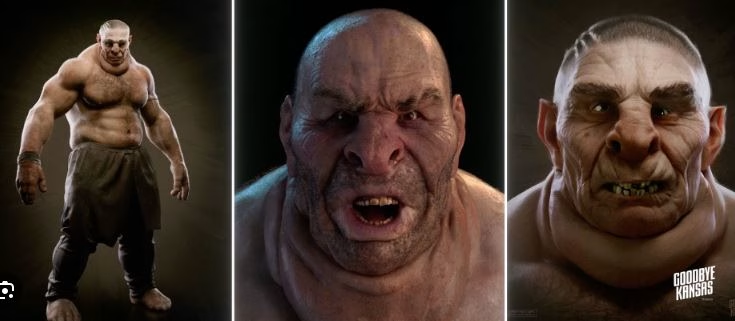
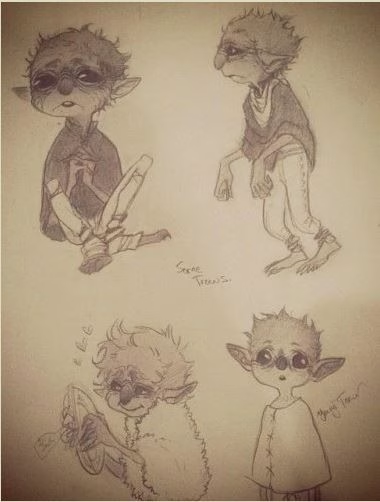
Fae Tales Verse (looks like a type of Fanfiction on Ao3, though it might be original fiction. See the wiki page.)
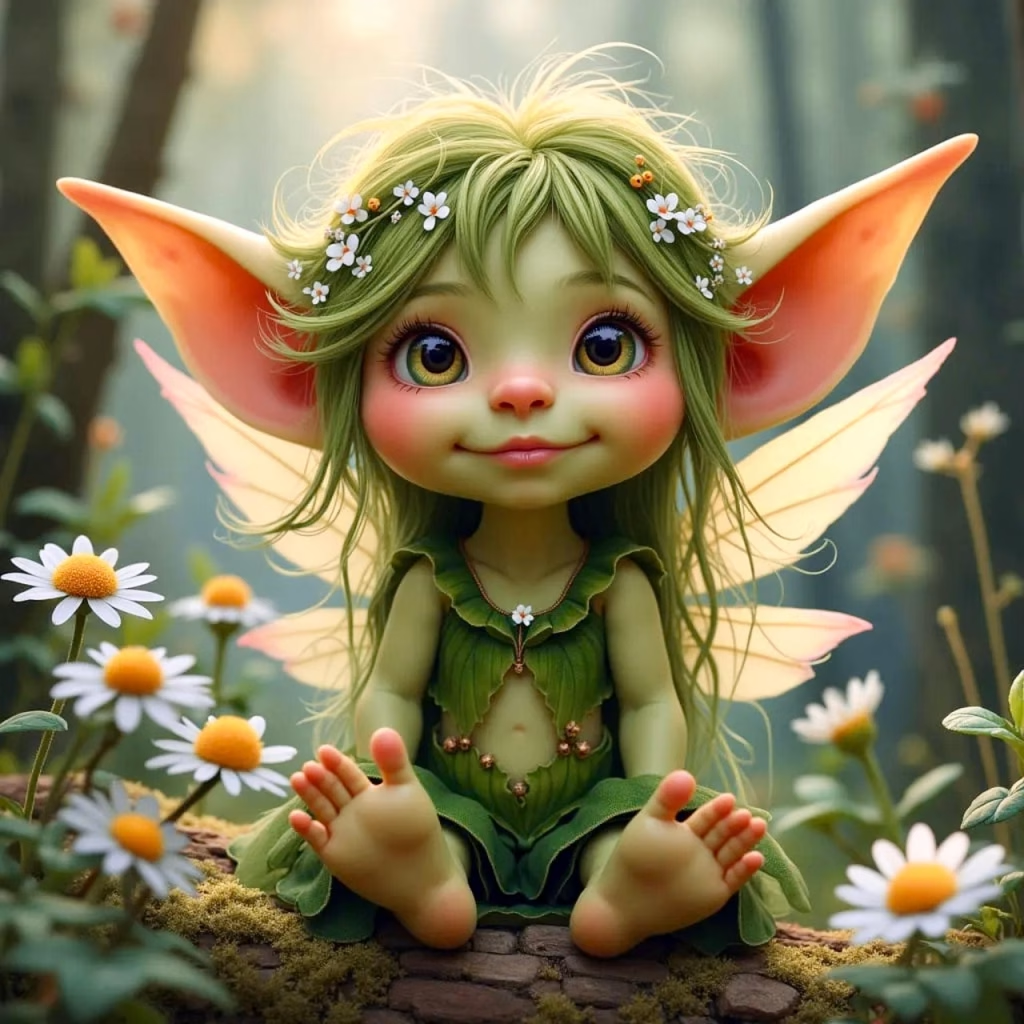
Trows are a short, shy species of fae who can be either Seelie or Unseelie, and are notable for often disregarding this division and happily associating with each other, following the philosophy of being ‘cousins across the river.’[1] As they have a natural inclination toward tidying and looking after those in their charge, they are often employed as household servants. There are land and sea trows, with some of the latter employed by Ondine on the Mantissa.[2] They have their own underground kingdom called Trowna, which other fae are rarely invited to.[3]
Learn more here.
Night Stealers in My Writing
Origin of the Fae: Night Stealers
[origin of fae]
[translation]
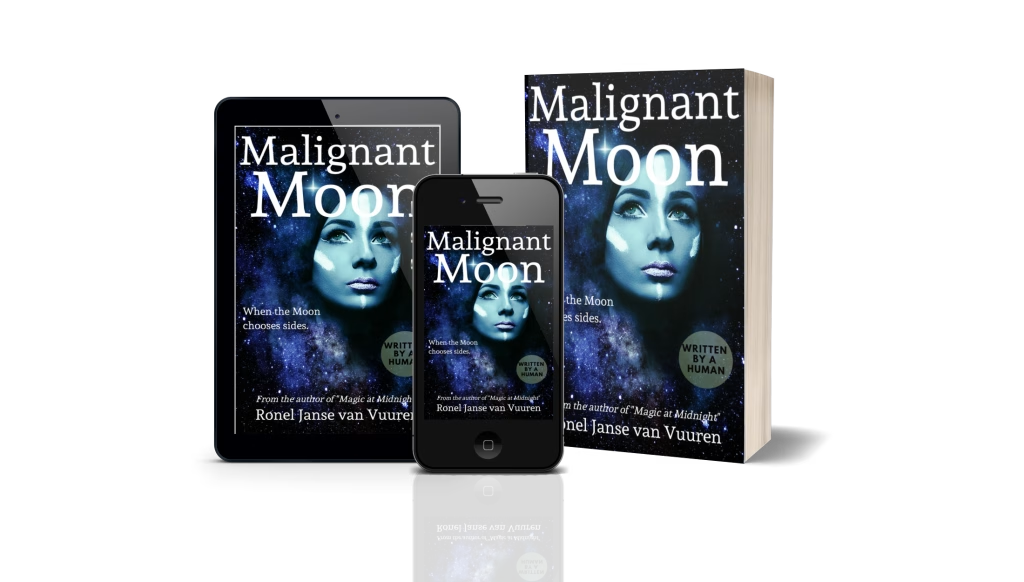
Malignant Moon (Faery Tales #)
If this tale has lingered with you, I would be glad to hear it.
Where did you first encounter this creature – through story, superstition, memory, or something half-remembered?
If you know other versions of its myth, feel free to leave them in the record below. Folklore survives by being spoken again.
Further fragments and interpretations of this creature can be found in my Pinterest grimoire.
If you wish to support the time and craft behind these folklore posts – researching old tales, gathering fragments, and shaping them into something worth reading – you may do so by buying me a coffee. It can be a single offering, or something you return to whenever the spirit moves you.