V is for Valiant

I’m weaving folklore and book reviews into a single offering, shaped to reach a wider audience drawn to both. In years past, interest has surfaced in fragments of each; now, I’m gathering those threads into April alone, so the rest of the year remains quiet and deliberate.
If you came only for today’s book review, you may follow the link here.

As I’m also promoting my Faery Tales series this month, I had to choose folklore creatures that feature in the books for the A-Z, which is why the creature and letter are a bit twisted to fit together. LOL.

Valiant adjective possessing or showing courage or determination
Oxford Dictionary
[intro about subject]
Folklore
[sources]
Element Encyclopedia of Fairies by Lucy Cooper
Barbegazi
Mountain-dwelling, white-bearded gnomes of French and Swiss tradition, whose element is ice and snow. Their extremely large feet are advantageous for gliding over the snow-covered terrain. Their name is derived from barbe-glacée, meaning “frozen beard”.
Gnomes
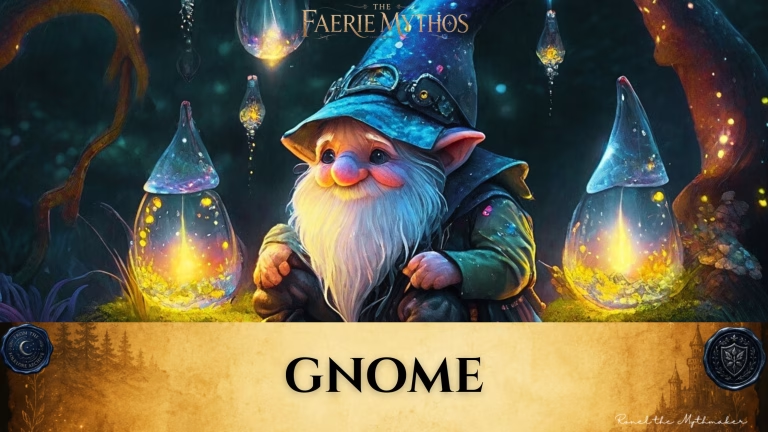
Earth-dwellers, variously known as dwarves or goblins in traditional tales, but originally described as earth elementals by the fifteenth-century alchemist and physician Paracelsus.
Other descriptions of gnomes are found in Brewer’s Dictionary of Phrase and Fable (1898):
Gnomes according to the Rosicru’cian system, are the elemental spirits of earth, and the guardians of mines and quarries. (Greek, gnoma, knowledge, meaning the knowing ones, the wise ones)… The gnomes, or demons of the earth, delight in mischief.
Kabouter
Friendly gnomes in Dutch folklore… they offer help around the home, cooking, cleaning, and tending the fire, and lend farmers a hand threshing grain and attending to livestock… Kabouter are usually depicted as little old men with long white beards wearing red pointy hats.
Maanväki
Literally, “Earth-Dwellers”. These gnome-like creatures from the folklore of Finland are guardian spirits of the Earth. They are generally benevolent, but will punish any humans who do not show respect for the territory under their stewardship.
*More can be read in the book.
Encyclopedia of Fairies in World Folklore and Mythology by Theresa Bane
Barbegazi
The barbegazi were a small gnome-like race of fairy living in the Alps between France and Switzerland; their name was likely a corruption of the French words barbe glacées translated to mean “frozen beards”. They had overly large feet allowing them to ski over snow easily. They also had the ability to completely cover themselves up with snow and disappear within moments. They were described as having long and thick frozen hair resembling icicles. The barbegazi communicated to one another over long distances by use of an eerie hooting oftentimes mistaken as the wind whistling through the mountain peaks. Living in a network of caves they dug out by use of their oversized feet, the barbegazi were only seen in the winter months and never below the tree line.
Pech
In Scottish Lowland mythology the pech was a short gnome-like fairy being who, although small of stature was extremely strong. Described as having long arms, wide feet, and wild red hair, the pech were believed to have been the builders of the ancient stone megaliths of ancient Scotland. Pechs were strictly nocturnal fairies, as they could not stand the light of day.
Kabouter
The kabouter are a friendly Dutch species of Irish leprechaun or German kobold; they lend a hand by cleaning and cooking, feeding the cattle, fetching water, lighting household fires, threshing grain, and other daily household and farm chores.
Kaboutermannekin
In the lowlands of Holland the kaboutermannekin is a species of domestic fairy, similar to the brownie but are easily identified by their green face and hands and bright red hats. Kaboutermannekin enjoy household chores such as maintain the hearth’s fire. If ever offered a set of clothing the kaboutermannekin will become offended and leave the home.
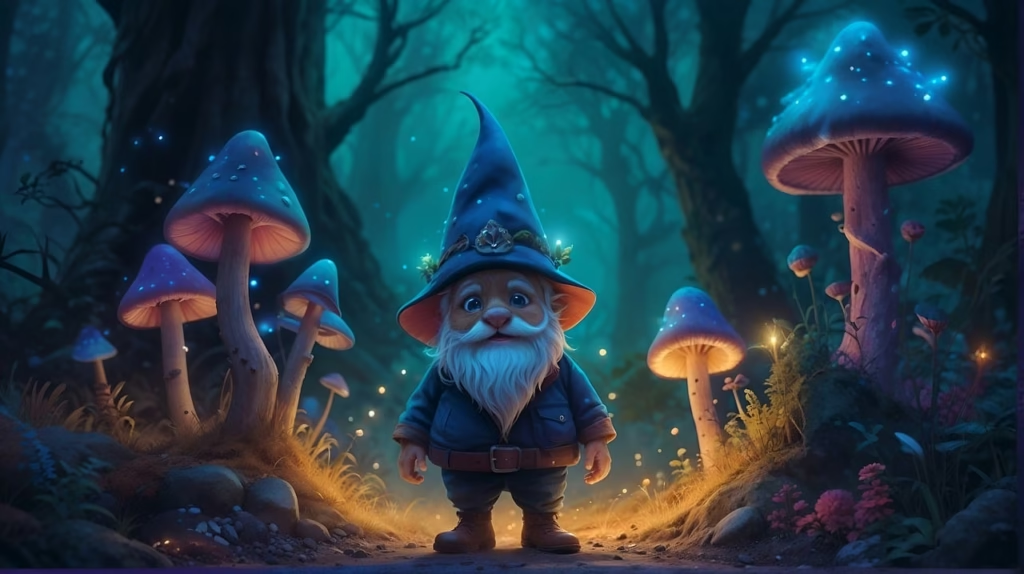
Gnome
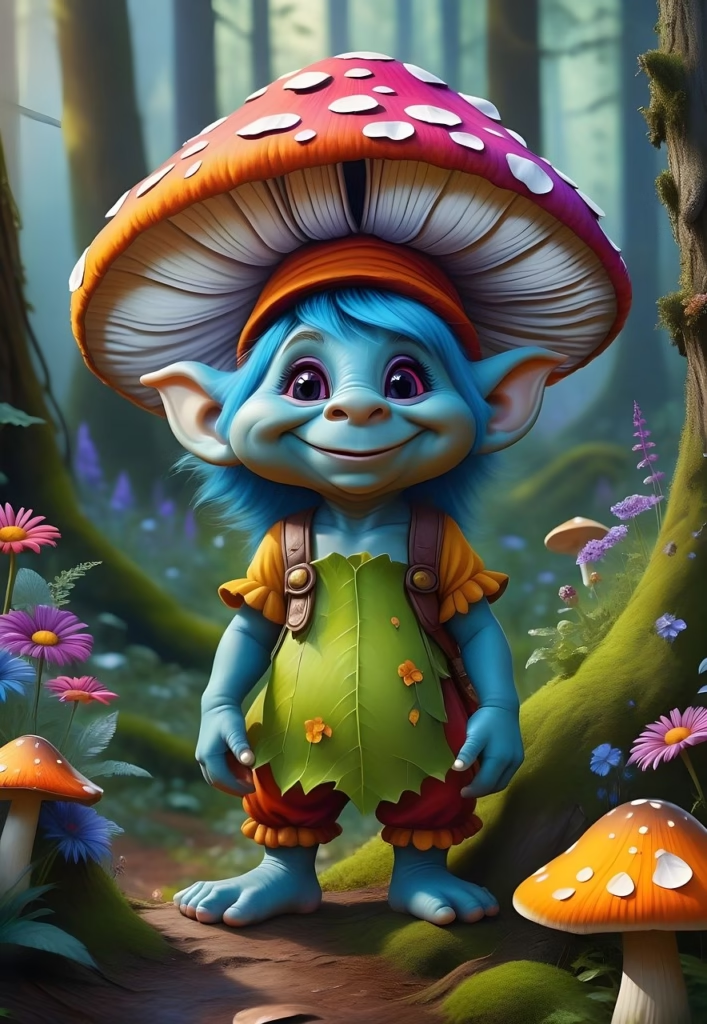
Gnomes are traditionally a part of fairy lore but in truth have no folkloric stories or legends of their own; they have little in common with the dwarfs and knockers they are likened to except by physical appearance. In the late middle age German folklore said the gnomes had a king named Number-nip or Rubezahl, but it was not until very modern times the gnome was fleshed out and fully described, re-imagined into a kindly, forest dwelling being with a highly developed culture.
*More can be read in the book.
Further Reading:
[links]
Folklore in a Nutshell by Ronel
[piece]
Gnomes in Modern Culture
[sources]
Gnomes in My Writing
Origin of the Fae: Gnomes
[origin of fae]
[translation]
[book extract image with link]
Wings (Faery Tales #)

If this tale has lingered with you, I would be glad to hear it.
Where did you first encounter this creature – through story, superstition, memory, or something half-remembered?
If you know other versions of its myth, feel free to leave them in the record below. Folklore survives by being spoken again.
Further fragments and interpretations of this creature can be found in my Pinterest grimoire.
If you wish to support the time and craft behind these folklore posts – researching old tales, gathering fragments, and shaping them into something worth reading – you may do so by buying me a coffee. It can be a single offering, or something you return to whenever the spirit moves you.