Fun Fauns
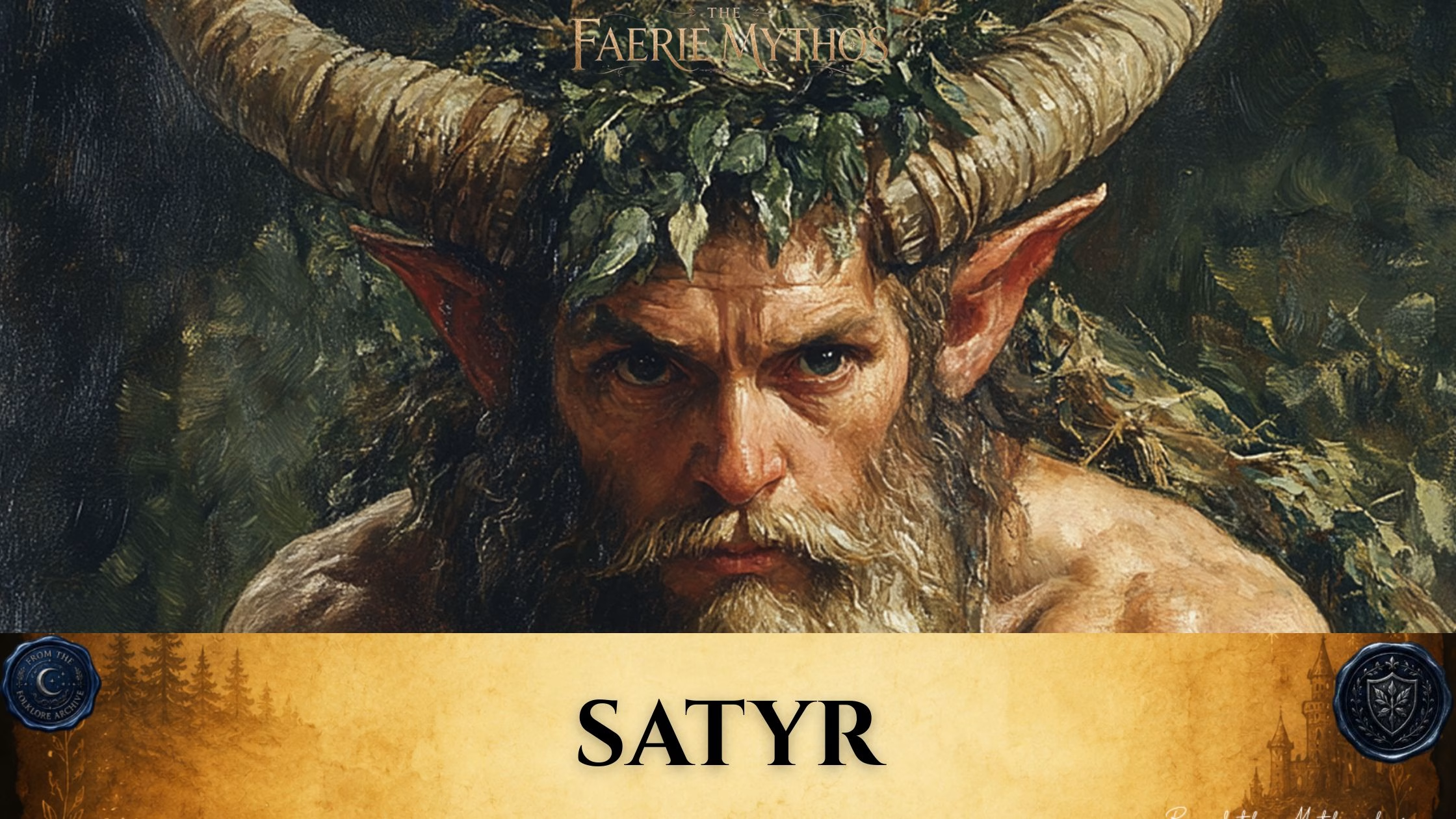
F is for Fauns

I’m weaving folklore and book reviews into a single offering, shaped to reach a wider audience drawn to both. In years past, interest has surfaced in fragments of each; now, I’m gathering those threads into April alone, so the rest of the year remains quiet and deliberate.
If you came only for today’s book review, you may follow the link here.
Also known as a satyr, fauns are a part of fantasy as much as elves and other mythological creatures. I first saw a satyr in Disney’s Hercules.
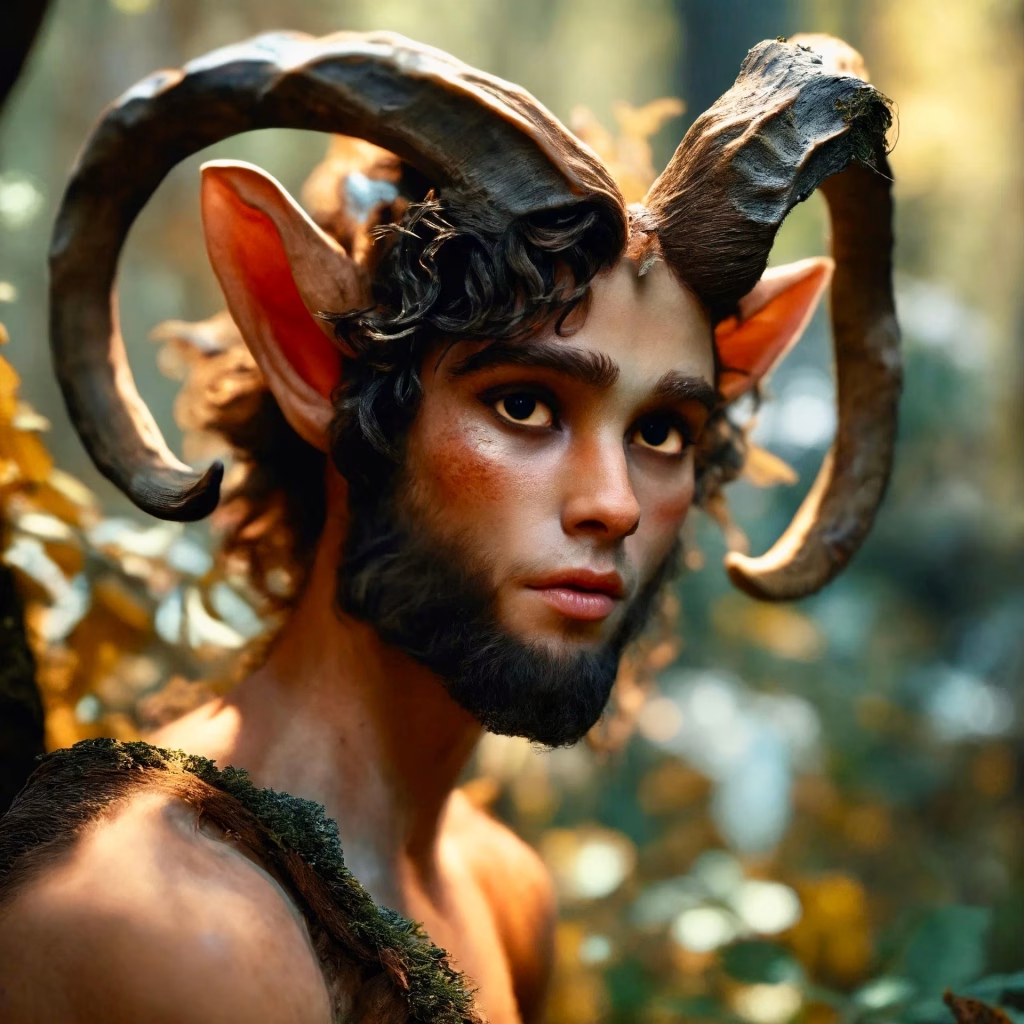
Folklore
Lycidas by John Milton [1637]
Rough Satyrs danced; and Fauns, with cloven heel,
From the glad sound would not be absent long.
*The full poem can be read here.
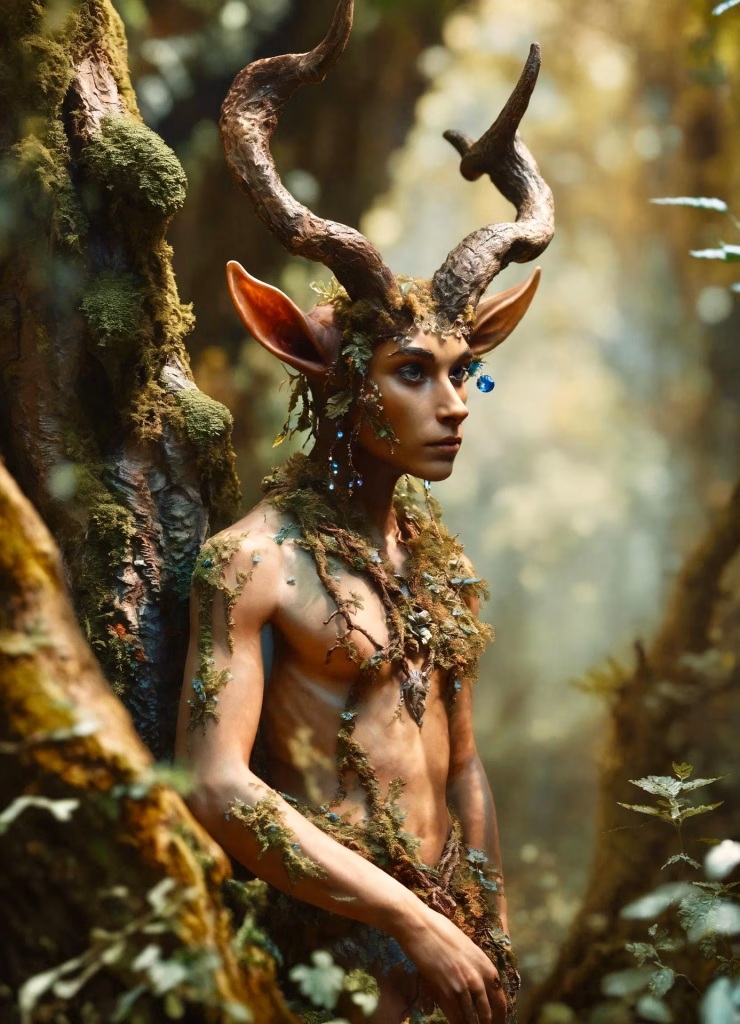
Dictionary of Greek and Roman Biography and Mythology by William Smith [1844]
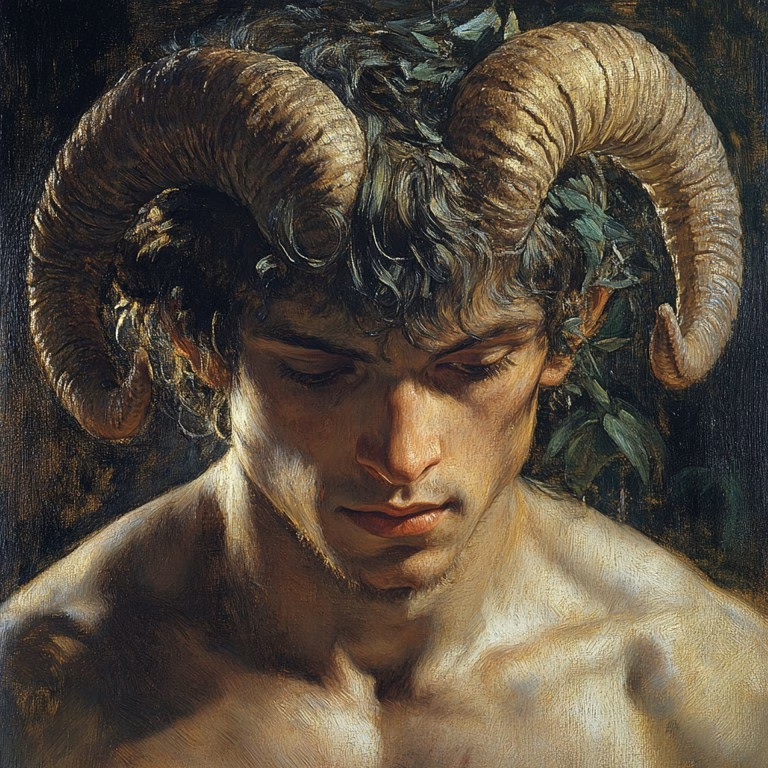
SA′TYRUS (Saturos), the name of a class of beings in Greek mythology, who are inseparably connected with the worship of Dionysus, and represent the luxuriant vital powers of nature. In their appearance they somewhat resembled goats or rams, whence many ancients believed that the word saturos was identical with tituros, a ram. (Schol. ad Theocrit. iii. 2, vii. 72; Aelian, V. H. iii. 40; comp. Eustath. ad Hom. p. 1157; Hesych. s. v.; and Strab. x. p. 466.) Homer does not mention any Satyr, while Hesiod (Fragm. 94, ed. Göttling) speaks of them in the plural and describes them as a race good for nothing and unfit for work, and in a passage quoted by Strabo (x. p. 471) he states that the Satyrs, Nymphs and Curetes were the children of the five daughters of Hecataeus and the daughter of Phoroneus. The more common statement is that the Satyrs were the sons of Hermes and Iphthima (Nonn. Dionys. xiv. 113), or of the Naiads (Xenoph. Sympos. v. 7); Silen also calls them his own sons. (Eurip. Cycl. 13, 82, 269.)
The appearance of the Satyrs is described by later writers as robust, and rough, though with various modifications, but their general features are as follows: the hair is bristly, the nose round and somewhat turned upwards, the ears pointed at the top like those of animals (whence they are sometimes called thêres, Eurip. Cycl. 624); they generally have little horns, or at least two hornlike protuberances (phêrea), and at or near the end of the back there appears a little tail like that of a horse or a goat. In works of art they were represented at different stages of life; the older ones, commonly called Seilens or Silens (Paus. i. 23. § 6), usually have bald heads and beards, and the younger ones are termed Satyrisci (Saturiskoi, Theocrit. iv. 62, xxvii. 48). All kinds of satyrs belong to the retinue of Dionysus (Apollod. iii. 5. § 1; Strab. x. p. 468; Ov. Fast. iii. 737, Ars Am. i. 542, iii. 157), and are always described as fond of wine, whence they often appear either with a cup or a thyrsus in their hand (Athen. xi. p. 484), and of every kind of sensual pleasure, whence they are teen sleeping, playing musical instruments or engaged in voluptuous dances with nymphs. (Apollod. ii. 1. § 4; Horat. Carm. ii. 19. 3, i. 1. 30; Ov. Met. i. 692, xiv. 637; Philostr. Vit. Apoll. vi. 27 ; Nonn. Dionys. xii. 82.) Like all the gods dwelling in forests and fields, they were greatly dreaded by mortals. (Virg. Eclog. vi. 13; Theocrit. xiii. 44; Ov. Her. iv. 49.)
Later writers, especially the Roman poets, confound the Satyrs with the Pans and the Italian Fauns, and accordingly represent them with larger horns and goats’ feet (Horat. Carm. ii. 19. 4; Propert. iii. 15. 34; Ov. Met. i. 193, vi. 392, xiv 637), although originally they were quite distinct kinds of beings, and in works of art, too, they are kept quite distinct. Satyrs usually appear with flutes, the thyrsus, syrinx, the shepherd staff, cups or bags filled with wine; they are dressed with the skins of animals, and wear wreaths of vine, ivy or fir. Representations of them are still very numerous, but the most celebrated in antiquity was the Satyr of Praxiteles at Athens (Paus. i. 20. § 1; Plin. H. N. xxxiv. 8, s. 19.)
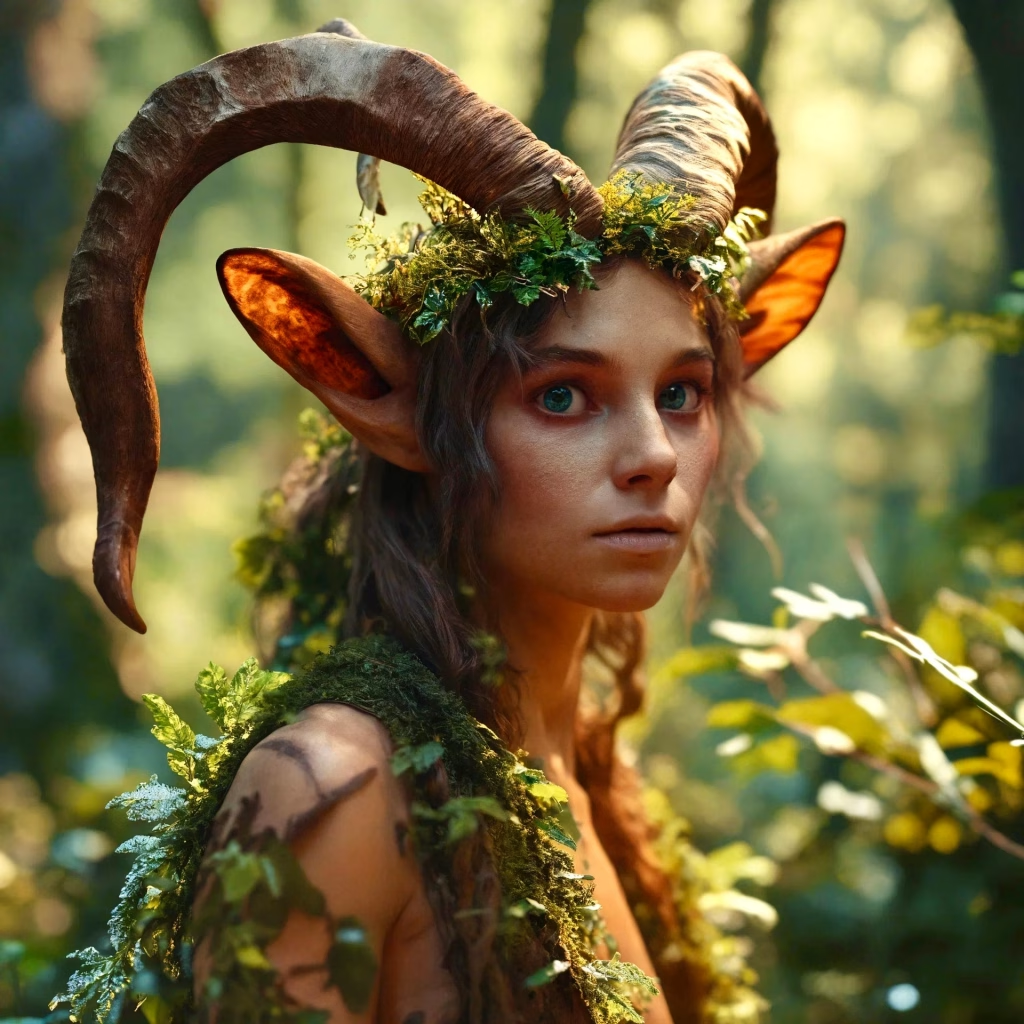
The Element Encyclopedia of Magical Creatures by John and Caitlín Matthews
FAUN
A hybrid creature from Graeco-Roman mythology, the faun is usually represented as a man above the waist and a goat below, with small horns upon its head. Fauns are said to be the offspring of the god Faunus, known as ‘the kindly one’, a god of the Forest and a protector of the creatures who lived there. The foundations of the temple dedicated to him still exist on an island in the Tiber. Faunus was sometimes identified with Pan, and in this form appeared in the erotic dreams of women. Fauns are sometimes confused with satyrs. The Renaissance natural magician and healer Paracelsus (1493-1541) defined fauns as mystical spirits who had control over the elements.
SATYR
In Greek mythology, satyrs are beings who are human above the waist with goat’s legs and cloven hooves below the waist. They bear small horns upon their head. They are members of the Silvani or Forest Peoples and their leader is Silenus. Satyrs have a particularly lascivious nature, pursuing the nymphs with rampantly sexual intentions, and often getting drunk or playing pranks. In Greek drama, especially after tragedies, actors attired as satyrs enacted performances that were humorous and satiric, which is where the word ‘satire’ comes from. In medieval lore, the satyr became the main depiction of the devil, who acquires their goat-like ears, cloven hooves and tail. The devil inherited the satyr’s taste for musicmaking. Interestingly, the devil was believed to be the only one who was able (or indeed permitted) to dance. Dancing was forbidden to people as the path to sin and lasciviousness. This led to the expression ‘the devil has the best tunes’.
*More can be read in the book.

Encyclopedia of Fairies in World Folklore and Mythology by Theresa Bane
Basa-Juan
Variations: Basajuan
From the Basque folklore of northwest Spain comes the nature spirit known as Basa-Juan. Taking the appearance of a faun or wood sprite, this fairy was said to have taught humans agriculture an iron-working. Similar to the French fairy known as Homme de Bouc (“he-goat man”), Basa-Juan was mischievous and enjoyed playing tricks. Living high up in the Pyrenean Mountains with his wife Basa-Andre, a siren-like fairy often seen sitting and combing her hair, Basa-Juan protected the wandering flocks of goats and sheep from predators and thunderstorms.
Faun
A fairy animal from Roman mythology he faun is often associated with Greek satyers and the Greek god Pan (Faunus). Described as a horned human from the waist up and a goat from the waist down, this nature spirit would guide those who were lost in the woods or terrorize those who travelled through the woods; it depends of the fairy’s whimsy.
Satyer
Variations: Satry
In Greek mythology, satyers are a type of fairy being or nature spirit; living in the mountains and woods they were described as having the upper half of a man and the lower half of a goat, curly hair, flat noses, full beards, pointed ears, a long thick tail, and short goat horns atop their head. In art the satyers was often depicted wearing a wreath of ivy on its head and carrying a thyrsus (the rod of Dionysus ripped with a pine cone) in their hand.
There are many origin stories for the creation of satyers but according to the Greek oral poet Hesoid, the satyers were born of the five oread granddaughters of Phoroneus; satyers were described by the poet as being “worthless and unsuitable for work”. The satyer’s fondness for uninhibited carousing made them perfect companions for the gods Dionysus and Pan. As Dionysiac creatures they are natural born lovers of boys, women, and wine; they play bagpipes, cymbals, castanets, and pipes and love to dance with nymphs, their fellow, ageless, immortals.
*More can be read in the book.
Further Reading:
- The Satyrs – The Joyous and Mysterious Creatures of the Woods
- Satyr and Silenus
- Satyrs (Satyroi)
- Satyr
- The Satyrs & Fauns of Greek & Roman Mythology
- faun
- Faun
Folklore in a Nutshell by Ronel
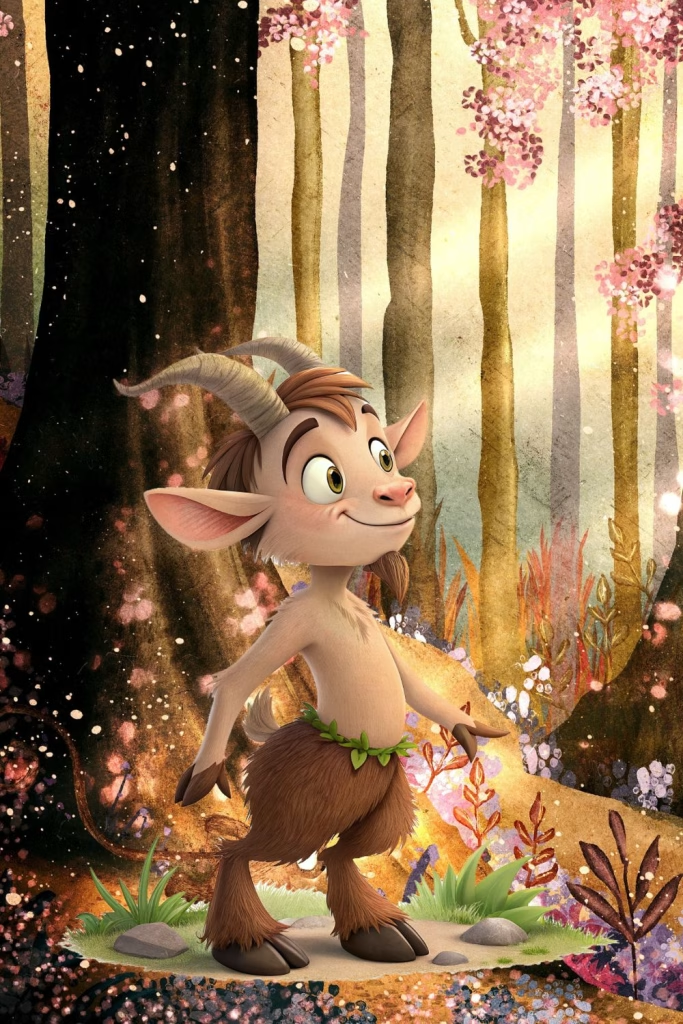
Satyrs embody the rich and abundant life force of nature. Hesiod described them as no-good layabouts.
Originally, satyrs had goat-like features, such as small horns, coarse hair and pointy ears. Roman poets conflated them with Pan and fauns, giving them larger horns, goat’s feet and, in some cases, the lower half of goats.
In art, satyrs are usually depicted with flutes and other musical instruments, dressed in animal furs and with wreaths of vine.
They are followers of Dionysus and enjoy revels with lots of wine and women.
Fauns are naturally timider than satyrs, tending to the forests and other parts of nature where humans aren’t present, while satyrs chase nymphs, enjoy parties, and live life to the fullest.
Whether the same creature just with cultural difference from where they’re from or completely different creatures, the satyrs and fauns are usually a male-only species. The female variant comes from post-Renaissance art and modern fantasy.
Fauns/Satyrs in Modern Culture
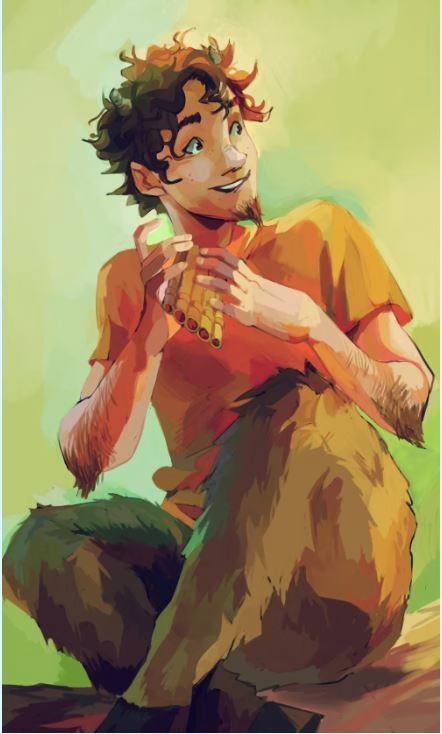
Percy Jackson books by Rick Riordan
Satyrs, also known as Fauns by Romans, are creatures with the upper body of a man and the lower body of a goat complete with hairy goat legs and hooves, as well as goat horns, and the pointed ears of a goat. When in public, they tend to be clumsy, for they have to wear fake feet and hats (such as Grover’s rasta cap) so that the sound or appearance of their hooves or horns won’t draw unwanted attention from mortals.
Learn more here.
The Iron King by Julie Kagawa
A herd of satyrs surrounded me, their eyes bright in the gloom.
“Pretty flower,” one of them said, stepping forward. He had a dark face, a goatee, and horns curling through his thick black hair. His voice was low and soft, and had a faint Creole accent. “Why so sad, lovely one? Come with me, and we will make you laugh again.”
I shivered and rose shakily to my feet. “No, thank y– No. I’m fine. I just want to be alone for a while.”
“Alone is a terrible thing to be,” the satyr said, moving closer. He smiled, charming and attractive. Glamour shimmered around him, and I saw his mortal guise for a split second: a handsome college boy, out walking with his friends.
From The Iron King by Julie Kagawa

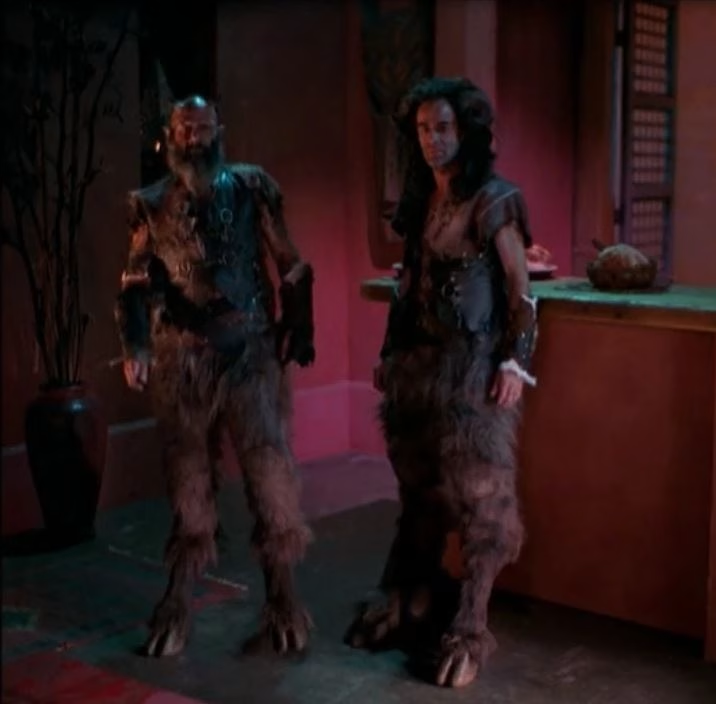
The Legendary Journeys TV series
A Satyr or Faun is a being with the upper body of a human and the legs of a goat. They have horns on their foreheads and usually have pointed ears.
Learn more here.
The Chronicles of Narnia
Fauns were creatures that appeared part human and part goat, and which existed in the World of Narnia. They were some of Aslan‘s most trusted servants, who were loyal, noble and kind creatures.
Learn more here.
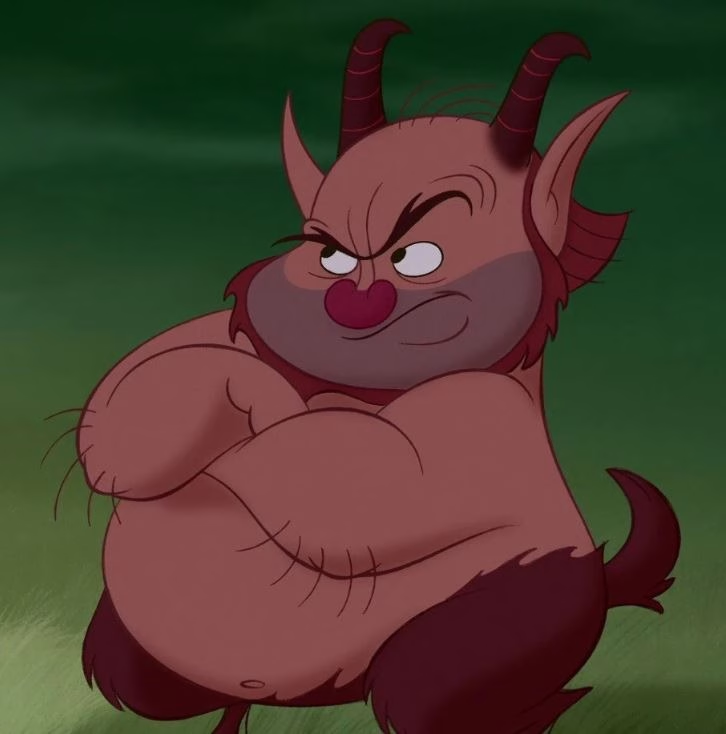
Disney’s Hercules
Philoctetes (better known as Phil) is the tritagonist of Disney‘s 1997 animated feature film Hercules. He is a red-bearded and -nosed, crotchety old Satyr (half-man, half-goat) who served as a trainer of heroes in Ancient Greece—most notably Achilles and the powerful demigod, Hercules.
Learn more here.
Fauns/Satyrs in My Writing
Origin of the Fae: Satyr
Satyrs and Fauns are the same creatures. They are followers of Pan, whom they resemble, and Dionysus, with whom they like to party. Their job is to take care of nature. They work alongside nymphs.
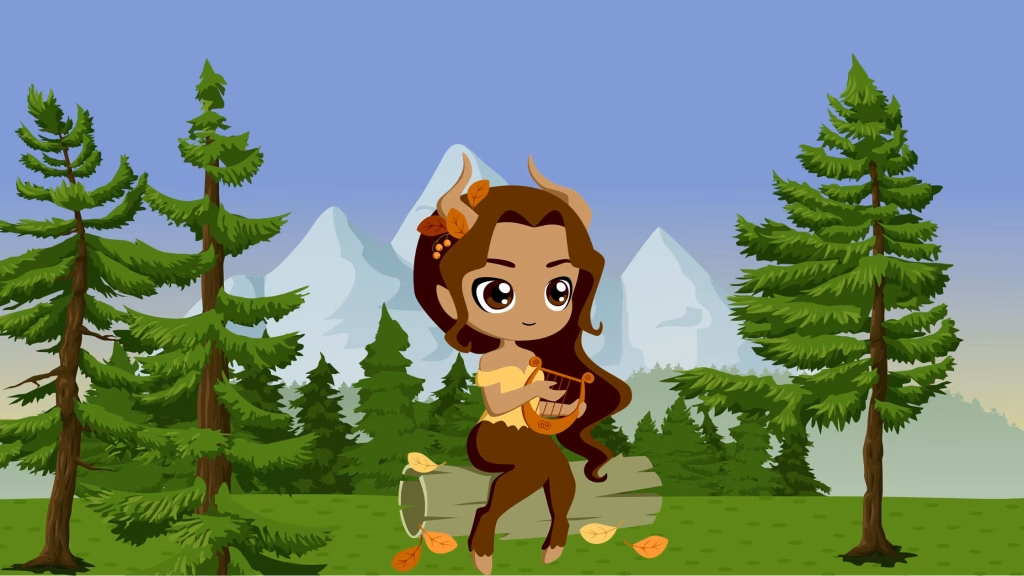
The moment a female satyr, a satyress, was born, nymphs and satyrs knew that a giant shift had occurred in their world.
Satyrs have pointy ears, small horns, the bottom half of a goat, and the upper body of a human. They are great musicians, especially proficient with wind instruments.
Satyr/Faun translated to Afrikaans: Bosgod
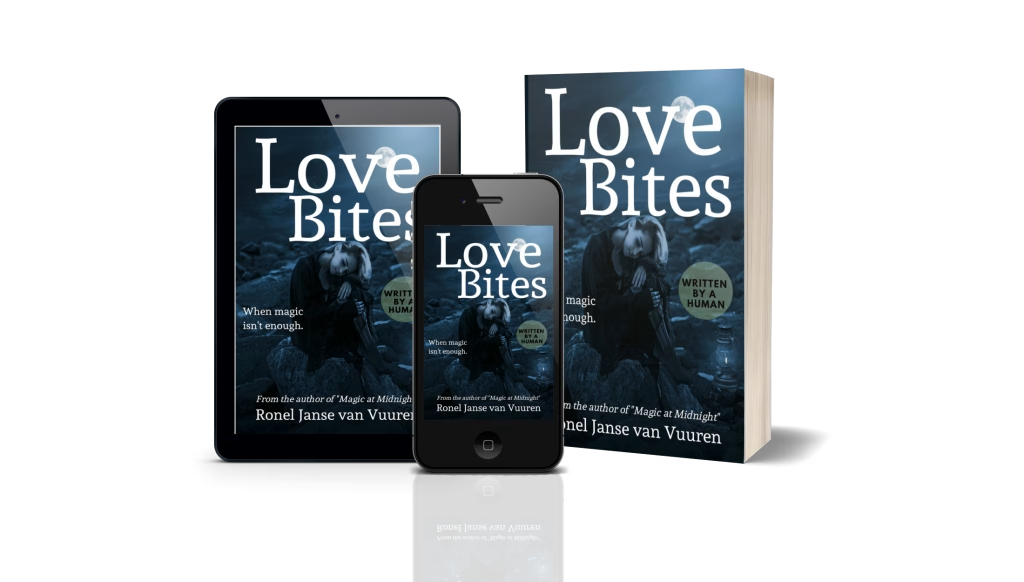
Love Bites (Faery Tales #11)
If this tale has lingered with you, I would be glad to hear it.
Where did you first encounter this creature – through story, superstition, memory, or something half-remembered?
If you know other versions of its myth, feel free to leave them in the record below. Folklore survives by being spoken again.
Further fragments and interpretations of this creature can be found in my Pinterest grimoire.
If you wish to support the time and craft behind these folklore posts – researching old tales, gathering fragments, and shaping them into something worth reading – you may do so by buying me a coffee. It can be a single offering, or something you return to whenever the spirit moves you.

I didn’t know that satyrs were the etymology of satire. Thanks for that tidbit!
https://nydamprintsblackandwhite.blogspot.com/2026/04/f-is-for-fairies.html
Glad you found it informative.
learning something new all the time.
So glad!
Woah! Love this, and I also feel fauns, satyrs, druids still walk amongst us, unbeknownst to us.
Love your hard efforts to create this post, Ronel. The visuals are so appealing. The fauns and satyrs are gorgeous.
I’m glad you enjoyed it 🙂 And yeah, they’re just not as obvious about their existence as before.