U is for Undomesticated
I’m weaving folklore and book reviews into a single offering, shaped to reach a wider audience drawn to both. In years past, interest has surfaced in fragments of each; now, I’m gathering those threads into April alone, so the rest of the year remains quiet and deliberate.
If you came only for today’s book review, you may follow the link here.
[intro about subject]
Folklore
[sources]
Element Encyclopedia of Fairies by Lucy Cooper
Wood Wives
German fairies of the forest. Small and dressed in clothes of leaves, they are kind to those who treat them with respect. Hunters must offer them part of their catch to keep them appeased, and, as they are attracted by the smell of baking bread, cooks are advised to bake an extra loaf in case they pay a visit. They will pay the cook with sticks or woodchips that later turn to gold. Wood wives have a deep connection to the forest, and it is said that for every tree felled, a wood wife dies.
*More can be read in the book.
The Forest in Folklore and Mythology by Alexander Porteous
What were known as Wood-Wives frequented the old sacred forests or groves, and apparently it had been they who had formed the court or escort of the ancient gods when they sat enthroned on the trees. These Wood-Wives were principally found in Southern Germany, but varieties of them are mentioned in Northern Germany and in Scandinavia. They were the quarry of the Wild Huntsman but were saved from him if they could reach a tree with a cross on it. In fact, the foresters, when felling trees, used to cut three crosses on a part of the tree. The little Wood-Wives would go and sit in the centre of these, and there they were secure. These little Wood-Wives are said to approach people when they are baking and ask that a cake might be baked for them; or else they appear with a little broken wheelbarrow and request that it be mended. They also often appear to the woodcutters asking for food, though frequently they help themselves out of the pot, yet they never fail to give a handsome recompense. This usually takes the form of chips of wood which turn into gold. It is believed that every time the stem of a young tree is twisted till the bark comes off a wood-wife dies.
*More can be read in the book.
Encyclopedia of Fairies in World Folklore and Mythology by Theresa Bane
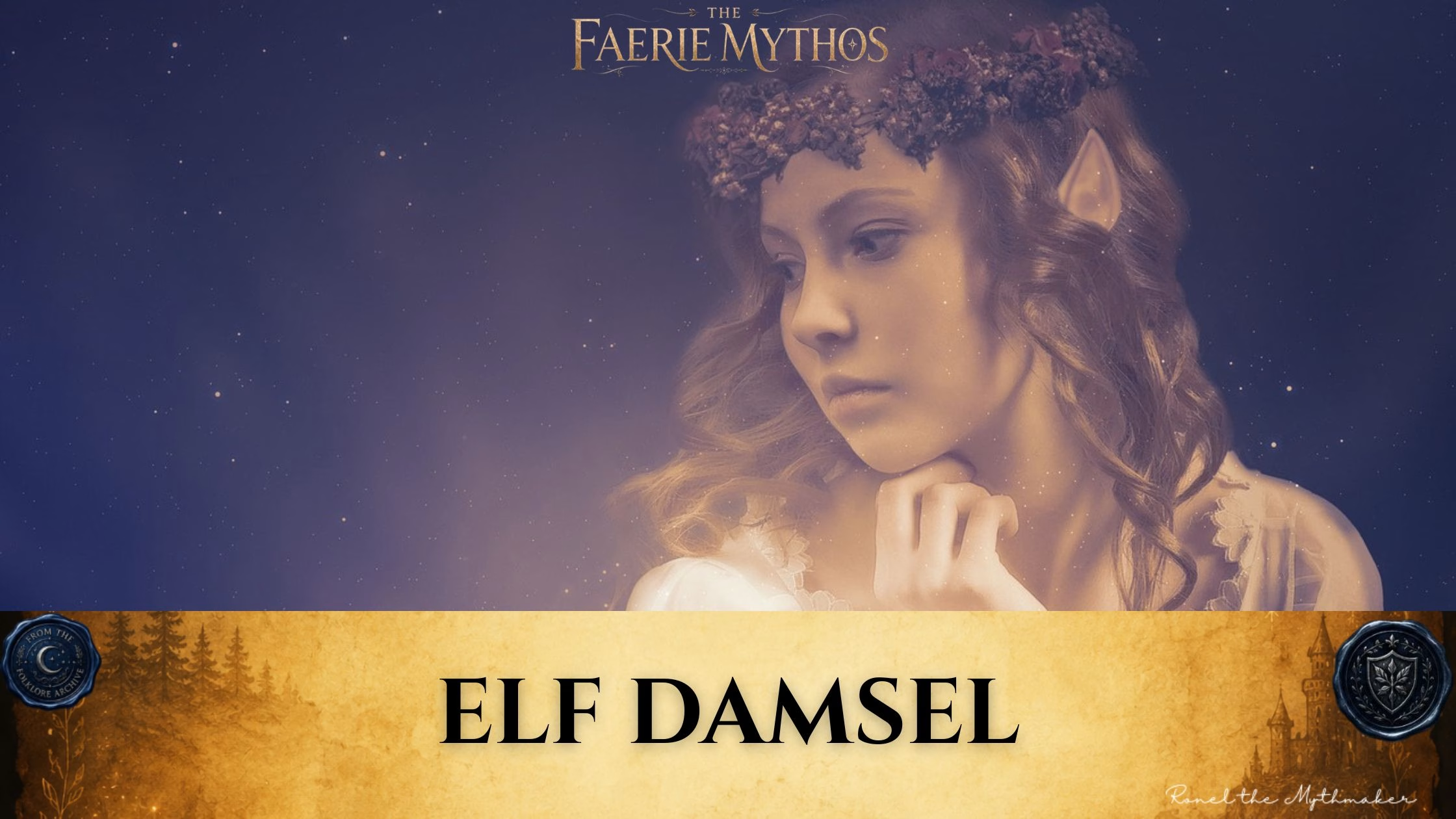
Spae-Wife
Variations: Elf Damsel
In Icelandic folklore the spae-wives (“prophecy wives”) were described as looking like a diminutive peasant woman who was believed to live in ancient burial places, barrows, and mounds considered being sacred to the sidhe. Similar to the wood-wife of German and Swiss lore, these fairies were experts in herbal magic and healing; there are tales of mortally wounded heroes who would smear their blood on a fairy fort and make offering of meat; in return the resident spae-wife would heal his wounds. Spae-wives were blessed with the gift of prophecy and could easily divine the future by means of reading natural omens, runes, and tea leaves.
Fairy Fort
Variations: Barrow Mound, Burghs, Stone Fort, Rath
Found all over Ireland a fairy fort was the remains of a hill fort or some other circular dwelling; most of these locations date back to the Iron Age. At one time there was said to be as many as sixty-thousand such locations over the country; fairies were said to frequent these locations, thereby giving the name. It was believed damage to these ancient sites would anger the fairies who dwelt within and would cause some disaster to befall the perpetrator. Fairy forts were also believed to the entryway to Fairyland.
Wood-Wife
Variations: Skoggra, Swor Skogsfru (“wood-wife”), Wish Wife
The wood-wife of German and Swiss lore were said to live in dense groves in old forest; these fairy beings are described as being petite and beautifully dressed. These fairies were believed to be connected to the trees of the forest in a way similar to the dryad of ancient Greece; there was a belief that if the bark of the tree was twisted off, a wood-wife will die. In the oldest mythology, the wood wives made up the court of the ancient gods who dwelled in the forests.
Oftentimes these fay would approach people in the woods asking for assistance in baking bread or mending a broken wheelbarrow. Anyone who assisted them was richly rewarded as wood chips in the area would turn into gold coins and remain thus so long as their origin was not revealed.
Wood Wives were the prey of the relentless Wild Huntsman; the only way these diminutive fairies could save themselves would be to find a tree a woodcutter had cut a cross into and dive into the center of the cross.
Divozenky
In Slavic lore the Divozenky (“wild women”) were fairies who looked like beautiful women with large, square heads, long thick black or ruddy hair, long fingers and hairy bodies; they lived in caves in the woods and kept a household very closely resembled a human’s. Knowing the secrets of nature these fairy-being can become invisible by use of their herbology. Fond of dancing and singing, they can cause storms when enjoying this activity. Friendly toward humans they will do housework in exchange for food or borrowing household items, some will even take a man for a husband.
Divozenky will steal a human baby and leave one of their own in its place; these fairy-babe are called Divous (“wild brats”) or Premien (“changelings”) and are noticeably ugly.
*More can be read in the book.
Further Reading:
[links]
Folklore in a Nutshell by Ronel
[piece]
Elf Damsel in Modern Culture
[sources]
Elf Damsel in My Writing
Origin of the Fae: Elf Damsel
[origin of fae]
[translation]
[book extract image with link]
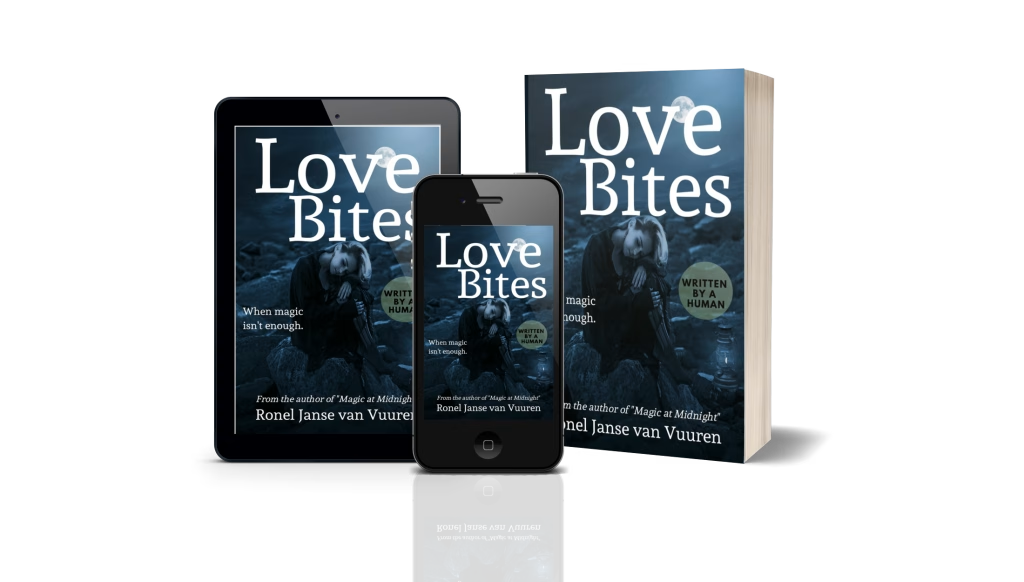
Love Bites (Faery Tales #)
If this tale has lingered with you, I would be glad to hear it.
Where did you first encounter this creature – through story, superstition, memory, or something half-remembered?
If you know other versions of its myth, feel free to leave them in the record below. Folklore survives by being spoken again.
Further fragments and interpretations of this creature can be found in my Pinterest grimoire.
If you wish to support the time and craft behind these folklore posts – researching old tales, gathering fragments, and shaping them into something worth reading – you may do so by buying me a coffee. It can be a single offering, or something you return to whenever the spirit moves you.


I LOVE 🥰😍 the new unicorn header!
Supernatural, Mrs. Butters, a wood nymph living in the bunker. That’s what immediately came to mind with the wood wives.
I like the header, too 🙂