Berserkers: Legendary Warriors
Z is for Zing
I’m weaving folklore and book reviews into a single offering, shaped to reach a wider audience drawn to both. In years past, interest has surfaced in fragments of each; now, I’m gathering those threads into April alone, so the rest of the year remains quiet and deliberate.
If you came only for today’s book review, you may follow the link here.
[intro about subject]
Folklore
[sources]
The Element Encyclopedia of Magical Creatures by John and Caitlín Matthews
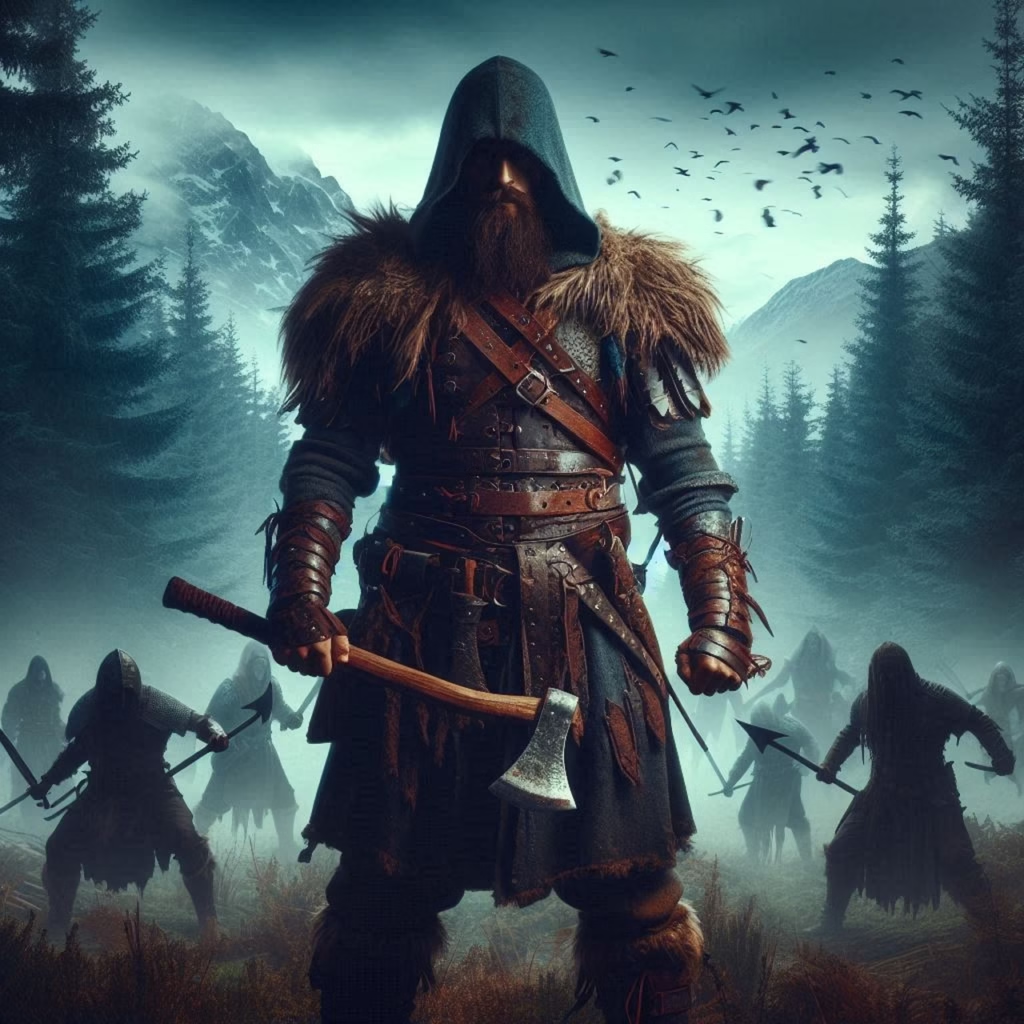
Lycanthropy is the medical term for when the supposed victim believes himself to be a wolf, behaving in gait and appetite like one who is indeed transformed. In historical record, many warriors, including the famous Germanic and Scandinavian berserkers called Ulfhednar, who prepared themselves for battle in magical ways to receive the spirit of their totem animal or spirit within them, may possibly have led to some reports of lycanthropy. Burchard of Worms, writing in AD 1000, speaks of werewolves, and the wearing of a wolfskin in medieval Scandinavia was believed to be the means of becoming a werewolf. It is known that the Picts of Alba (now Scotland) went into battle naked so as to show and perhaps activate the woad-tattoos of clan totems upon their bodies; their fearless manner of throwing themselves upon their enemies unprotected by any armour made a distinct impression upon their foes.
*More can be read in the book.
Encyclopedia of Beasts and Monsters in Myth, Legend and Folklore by Theresa Bane
Were-Creature
Although WEREWOLVES are perhaps the most well-known of the species of were-creatures (man-creatures), there are numerous other weres which originate from cultures all over the world. A were-creature is most of the time a human being who for some reason—be it a curse, the willful application of a magical item or spell, or an innate ability—has the ability to shape-shift into an animal form or an anthromorphic hybrid of the animal; at some point, the individual reverts back to their original human form.
Therianthropy (“wild animal man”) is the ability of a human being able to shape-shift their body into the form of an animal; typically a person has the ability to change into one specific species of animal but what the animal may be is limited only to the range of known animals.
Not all were-creatures are dangerous, evil, or malevolent. In many religions and traditions shamans have the ability to shape-shift into an animal form, either physical or in a dream state, doing so for the benefit of their community in order to perform certain tasks; this sort of transformation is known as spiritual therianthropy. Among the Vikings, berserkers (“bear skin”) would, at least on a psychological level, mentally shape-shift into a bear before going into combat.
*More can be read in the book.
The Element Encyclopedia of Witchcraft by Judika Illes
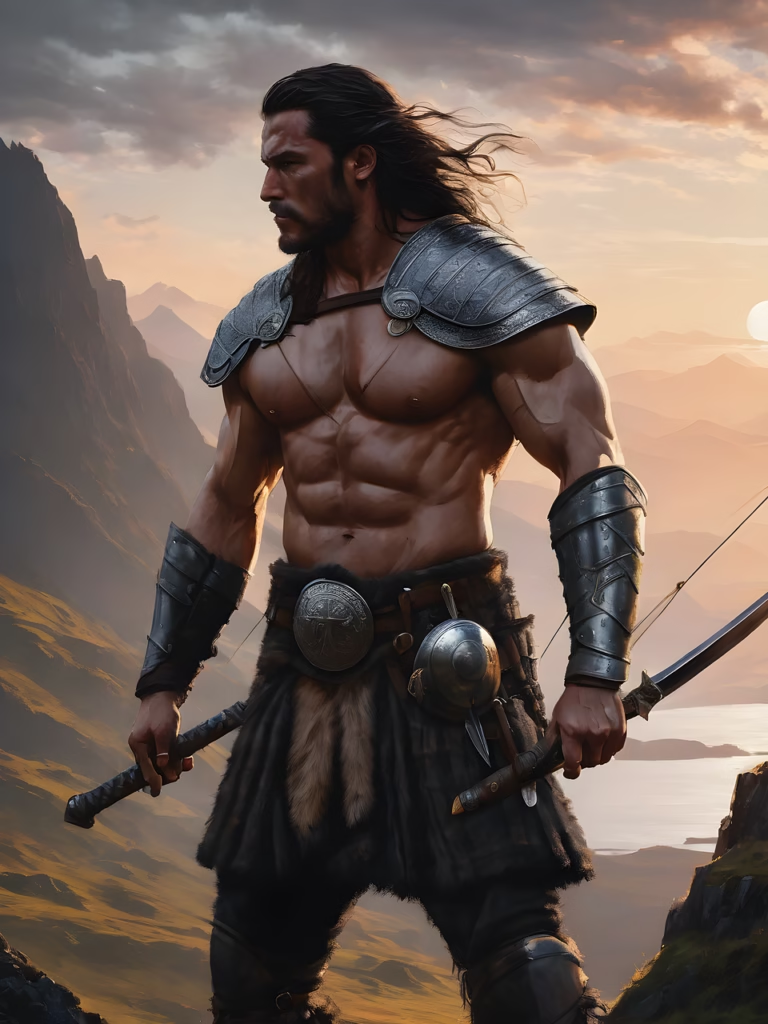
The ancient Norse associated bears with the shaman god Odin. Warriors who fought under his protection were known as “berserkers” (berserk means bear shirt). They fought naked but for bear skins, ritually channeling bear power—temporarily incorporating the bear’s spirit—in order to become fierce, formidable, and virtually unbeatable, striking terror into their opponents as they went berserk. (In a sense, they become temporary were-bears; their comrades, also under Odin’s protection, were wolf warriors.)
Odin, the Nordic shamanic-warrior deity, was the spiritual sponsor of the dread warriors known as Berserkers or “Bear Shirts.” These men eschewed battle armor and, sometimes, even weapons—who needs anything else when you’re armed with the spirit of the bear?
They were incredibly feared and allegedly pretty invincible. Ordinarily normal men went berserk: they made such an impression that the word still lingers and is easily understood. The berserkers fought under Odin’s protection, these shaman warriors who channeled the spirits of bears, so that it was the bear who fought inside a man’s body. It is now commonly believed that the berserkers fought under the influence of hallucinatory substances, notably Amanita.
*More can be read in the book.
Further Reading:
[links]
Folklore in a Nutshell by Ronel
[piece]
Berserkers in Modern Culture
[sources]
Berserkers in My Writing
Origin of the Fae: Berserkers
[origin of fae]
[translation]
[book extract image with link]
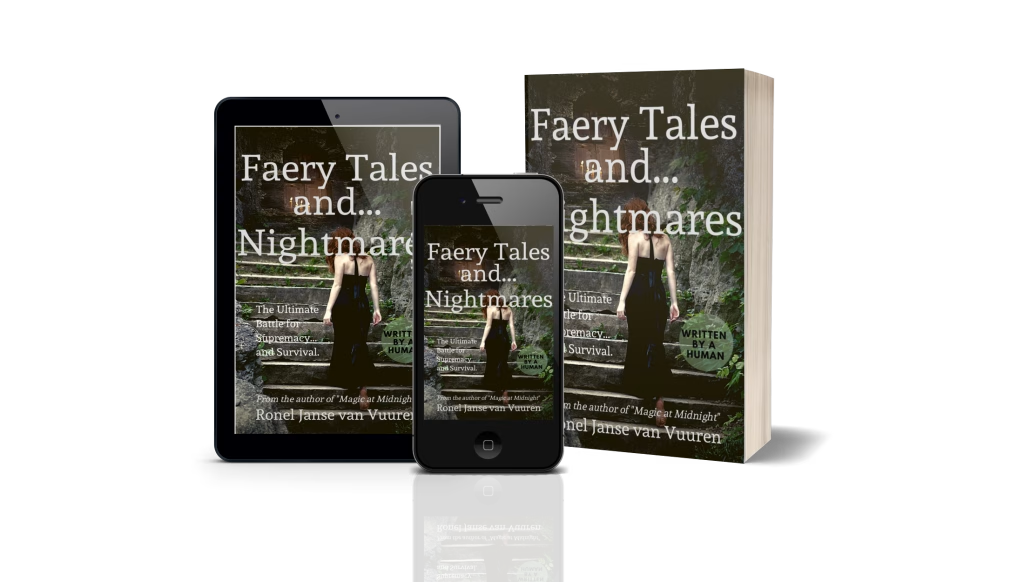
Faery Tales and… Nightmares (Faery Tales #)
If this tale has lingered with you, I would be glad to hear it.
Where did you first encounter this creature – through story, superstition, memory, or something half-remembered?
If you know other versions of its myth, feel free to leave them in the record below. Folklore survives by being spoken again.
Further fragments and interpretations of this creature can be found in my Pinterest grimoire.
If you wish to support the time and craft behind these folklore posts – researching old tales, gathering fragments, and shaping them into something worth reading – you may do so by buying me a coffee. It can be a single offering, or something you return to whenever the spirit moves you.



I’ve heard some of this before, but not the berserkers, although I did wonder where that term came from. Thanks.