Episode 218: Irascible Immortals: Ra
The folklore of Ra in a nutshell and how I reimagined it for my writing.
Transcript
You’re listening to the Faeries and Folklore podcast by Ronel.
I’m dark fantasy author Ronel Janse van Vuuren. With nearly a decade of digging around in dusty folklore books, researching creatures of imagination that ignited my curiosity, I’m here to share the folklore in a nutshell and how I reimagined it for my writing in an origin of the fae.
This is the Faeries and Folklore podcast.
Hi, I’m your host Ronel Janse van Vuuren. You can just call me Ronel. In today’s episode, we’re continuing our exploration of the fae realm.
This episode is brought to you by my Irascible Immortals series, available in ebook, paperback, hardback and audiobook. They’ve been alive forever. They’ve been bored for some time. And now they’re showing it. Go to ronelthemythmaker.com/my-books/the-irascible-immortals-series for more.
We’re continuing our exploration of the Immortals.
Today’s faery: Ra
Folklore in a nutshell by Ronel
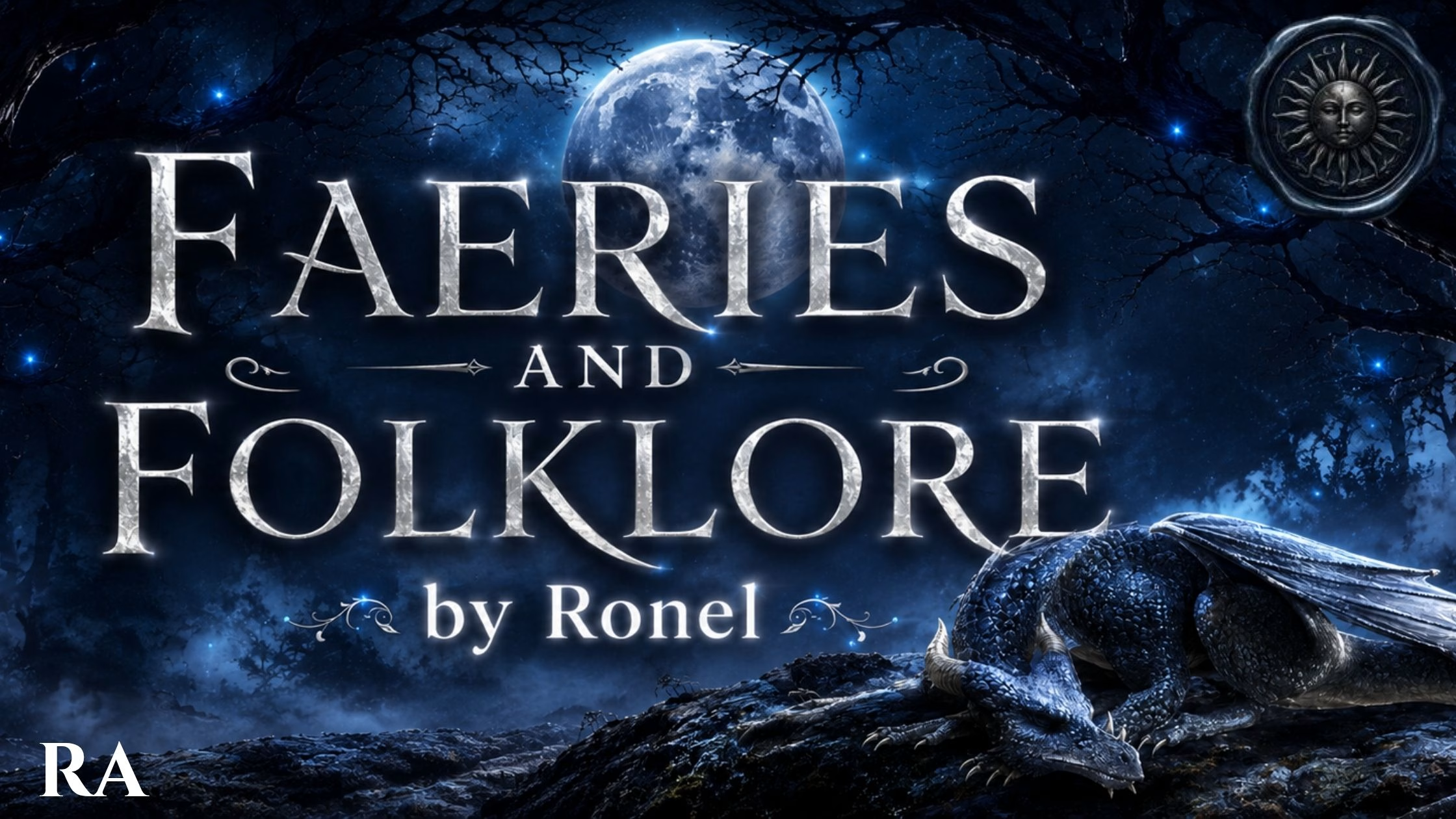
Ra, the Egyptian god of the sun, king of the gods, the light from which everything else came. The sun is such an important part of life, that the ancient Egyptians built various altars to Ra – including the pyramids. Ra symbolically died every night only to be reborn at dawn. As he travelled through the Duat, bringing light to the dead, he was also weaker than during the day and needed other gods with him on his journey in case Apophis decided to attack. His journey through the underworld was to protect the world from chaos.
Ra was portrayed with a falcon head, a man’s body, with a sun disk on his head along with a cobra – the symbol of royalty and divine authority. His morning iteration, Khepri, was depicted as a scarab beetle. His eyes, the wedjat, are the sun and the moon. His late afternoon iteration, Atum, is that of the aging Ra.
His children were Shu (god of the air) and Tefnut (goddess of mists). They were the parents of Geb (earth) and Nut (sky). They in turn were the parents of Osiris, Set, Isis and Nephthys. Ra thought that Nut would be his, but she chose Geb. So he cursed her to not be able to give birth on any day of the year. Thoth, being a good guy, played a game with the moon and took his winnings in the form of the moon’s light. This gave him 5 new days to add to the year – and Nut was able to give birth.
After Horus’s birth, Isis poisoned Ra with snake venom and his own blood. He couldn’t heal himself and asked for her help. She said she could only help him if she had his true name – something which holds power, according to the Ancient Egyptians. He prevaricated, telling her he is Khepri in the morning, Ra at noon and Atum in the evening. Eventually, though, the pain was so bad he told her his true name and she healed him. Her price: his eyes (the sun and the moon). She gave these to Horus and he took over Ra’s job as solar deity.
Ra travels through the sky on his solar barque. He also has a staff he uses to fight off the snake of chaos, Apophis.
Origin of the fae: Ra
Ra is the king of the Egyptian pantheon. He can wield magic, the power of the sun, and can fight with his staff like it’s no-one’s business. He is constantly herding those in his pantheon to keep them from destroying each other, themselves or the world. He keeps out of their petty squabbles and weird secrets – like the one about Osiris hiding from Isis in the Duat. He only interferes when it will impact the world. He spends most of his time on his barque chasing the sun…
I hope that you’ve enjoyed this episode of the faeries and folklore podcast and that you’ve learned something new about faeries.
Remember that you can get a transcript of this episode in the description. If you’re new to the podcast, why not go and grab your free copy of Unseen, the second book in the Faery Tales series, on my website ronelthemythmaker.com? Loads of folklore, magic and danger await! Take care!
Available at
Audible | Podbean | Amazon Music | Spotify | Youtube | iHeart Radio | Player FM | Listen Notes | Apple Podcasts | TuneIn

Read the full folklore article:
Explore the folklore, modern interpretations, and the Faerie Mythos.
Listen to this season’s audiobook:
Listen to the full season with no interruptions.
Explore the Audiobook Library ✦ Browse the Lore Archive ✦ Discover the Faerie Mythos Books ✦ Join the Mythmaker’s Circle
Enjoying the podcast?
If you’ve enjoyed this episode, you can support the time and care that goes into researching, writing, recording, and producing the Faeries & Folklore Podcast by buying me a coffee.
Your support is always appreciated, whether it’s a one-time thank you or an occasional coffee whenever you feel like it. Every contribution helps me continue sharing the folklore, myths, and legends that inspire the Faerie Mythos.