It’s the first Wednesday of the month and time for another posting of the Insecure Writer’s Support Group.
I’m down to #38 on the list…
The awesome co-hosts for the July 1 posting of the IWSG are Rebecca Douglass, Ronel Janse van Vuuren, Cathrina Constantine, and Jacqui Murray!

I’m talking about something different today than the publishing world being in turmoil. Though, you might notice I’ve done a bit of a rebrand of the website!

As a neurodivergent author, I need ways to keep myself motivated to do the work even when it gets boring/I’m ill/it seems too hard.
If you don’t know what neurodivergence is, you’re probably neurotypical (or you just don’t believe in labels where it comes to your brain). #NoJudgement
Neurodivergent is a nonmedical term that describes people whose brains develop or work differently for some reason. This means the person has different strengths and struggles from people whose brains develop or work more typically. While some people who are neurodivergent have medical conditions, it also happens to people where a medical condition or diagnosis hasn’t been identified.
From Cleveland Clinic. Learn more here.
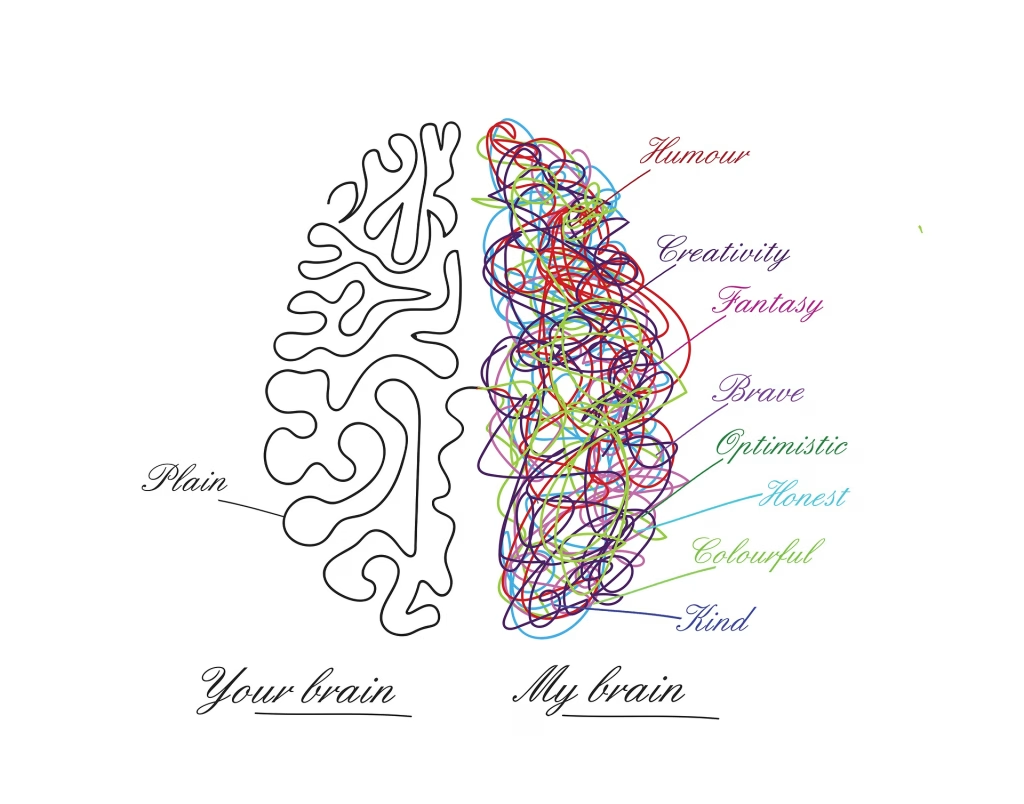
Cleveland Clinic also has this list of some of the conditions that are most common among those who describe themselves as neurodivergent:
- Autism spectrum disorder (this includes what was once known as Asperger’s syndrome).
- Attention-deficit hyperactivity disorder (ADHD).
- DiGeorge syndrome.
- Down syndrome.
- Dyscalculia (difficulty with math).
- Dysgraphia (difficulty with writing).
- Dyslexia (difficulty with reading).
- Dyspraxia (difficulty with coordination).
- Intellectual disabilities.
- Mental health conditions like bipolar disorder, obsessive-compulsive disorder and more.
- Prader-Willi syndrome.
- Sensory processing disorders.
- Social anxiety (a specific type of anxiety disorder).
- Tourette syndrome.
- Williams syndrome.

Personally, I have more than one of the above… But as ADHD is my main issue right now (I mostly have the rest under control), I’ll be focusing more on tools for this condition.
It’s not all bad, of course. You just need to know how to manage your particular situation. Even the Harvard Business Review wrote an article: Neurodiversity as a Competitive Advantage.
Neurodiverse people frequently need workplace accommodations, such as headphones to prevent auditory overstimulation, to activate or maximally leverage their abilities. Sometimes they exhibit challenging eccentricities. In many cases the accommodations and challenges are manageable and the potential returns are great. But to realize the benefits, most companies would have to adjust their recruitment, selection, and career development policies to reflect a broader definition of talent.
Read more in the article.

I attended the Pages & Platforms weeklong workshop for ADHD writers to go from overwhelmed to organised. I learned loads! Especially how getting properly organised makes things better for my brain.
Though I wasn’t able do the three month ADHD Writers’ Accelerator, I do use all the free resources given.
- The ADHD Writer’s Guide to Getting Unstuck
- Writing With ADHD: The Tools, Not Rules, Approach
- Overcoming ADHD Writing Challenges
- Chronic Illness and Creativity: Finding Your Path Forward
I like writing with notebook and pen. I have loads of notebooks and different coloured pens, highlighters, flags, sticky notes, and even gold stars. It’s fun to do it without a computer. I do type everything up and then print it before doing rewrites, edits and all the other fun stuff. When it’s all done, the paper gets recycled. Working on the computer only, or even doing speech-to-text, doesn’t engage the part of my brain that makes writing fun and creative.
And apparently, I’m not the only one. And it’s not just for ADHD or neurodivergent writers, either.
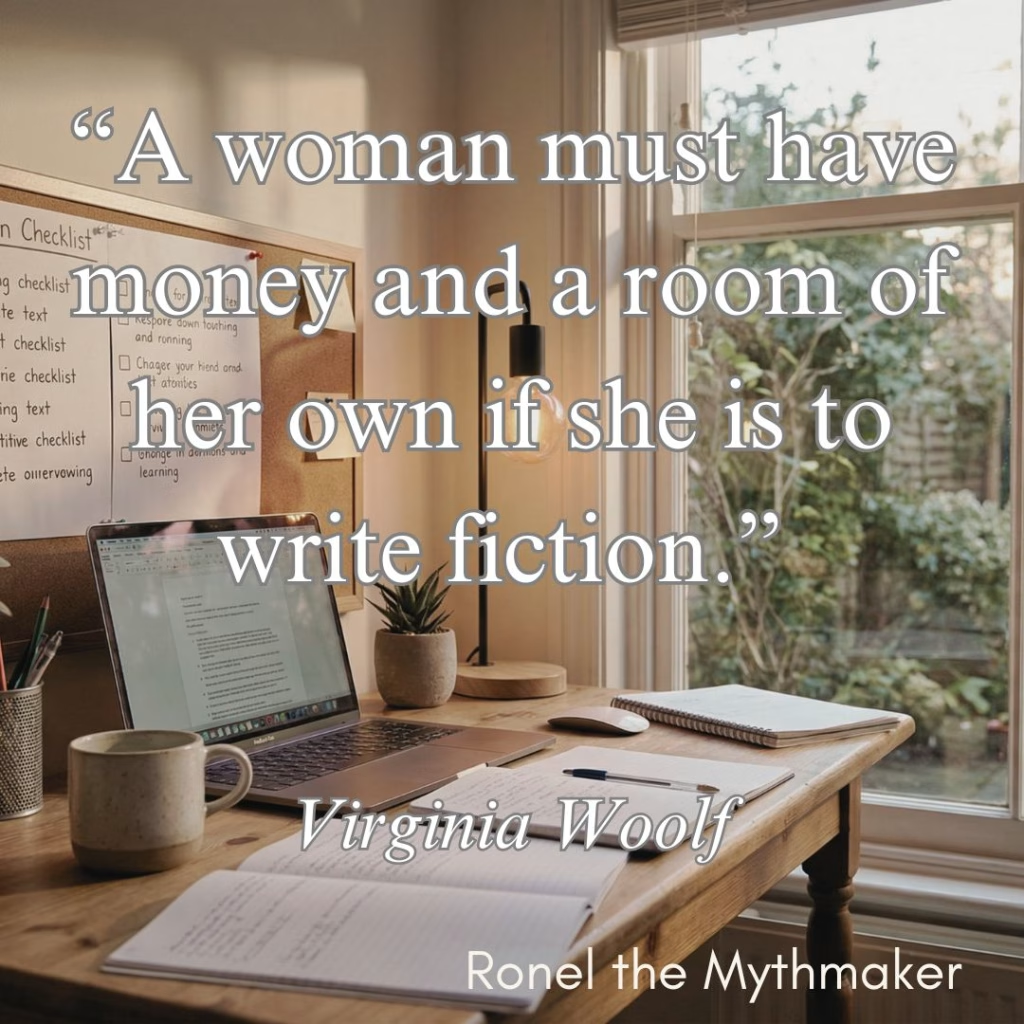
All writers are different. Whether you are neurodivergent or neurotypical, your mind is a unique muscle that works differently from the writer next to you. We all need a different set-up to write the best way we can. Some writers need silence. Some writers need noise-cancelling headphones with the sound of rain in the background. Some writers need music. Some writers need the activity of a coffee shop to be at their best. But what we all need is a dedicated writing space. Even Virginia Woolf said so.
There are many resources out there to help one be the best writer they can be. But not all of those productivity hacks work for neurodivergent creators. Luckily, there are others like us who share their experiences and things that work for them. Again, it might not work for everyone, but it’s a good place to start. My favourite podcast by a writer/illustrator who also has ADHD is the Creative Pep Talk.
I like Andy’s style even if he’s much more peppy than I am. I think my inner writing cave is much darker than my actual study…

I’ve read several books about how to be more focused, get more done, being productive, etc. I’ve shared some of them in previous posts (mostly this year!). Here’s one I recently acquired and have mixed feelings over.
About the Book
The Anti-Planner: How to Get Sh*t Done When You Don’t Feel Like It by Dani Donovan
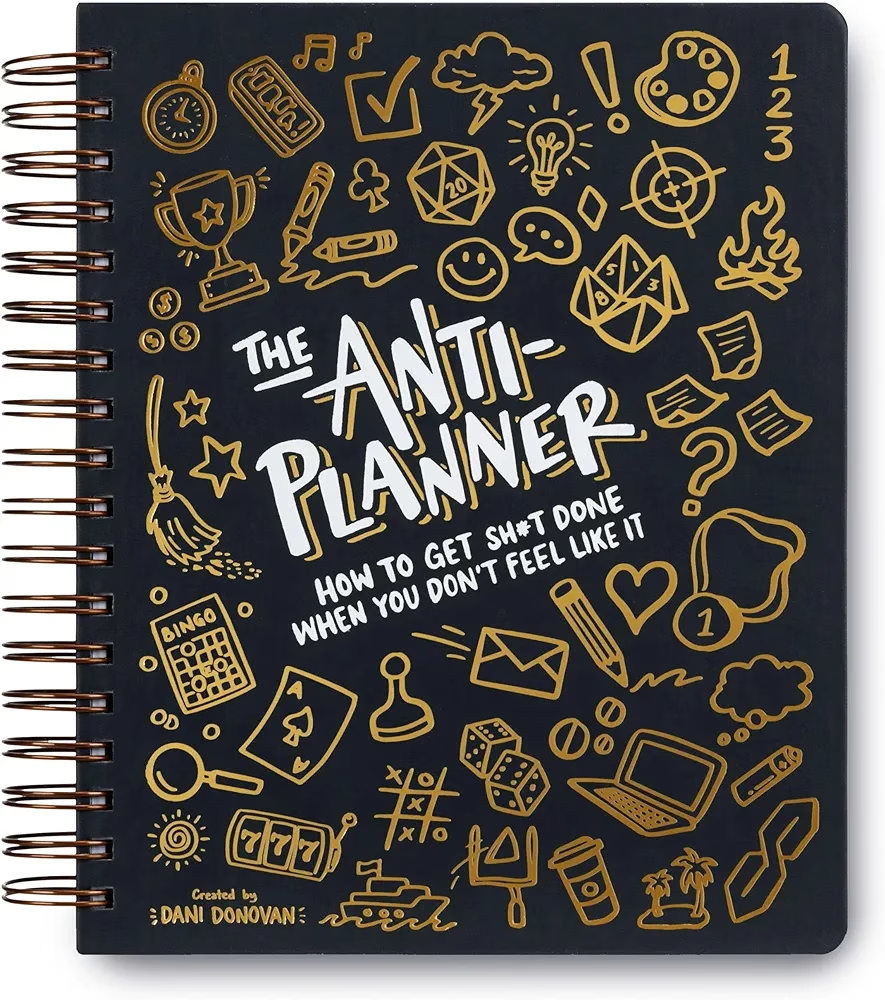
Do you know what you need to do, but struggle to get yourself to do it? Get bored easily? Abandon every planner you’ve ever tried? Beat yourself up a lot? Yeah. Me too.
The Anti-Planner is an activity book specifically designed to help procrastinators:
– Try unique, entertaining ways of completing tasks
– Untangle emotions that make it hard to get sh*t done
– Smash through productivity roadblocks
– 300+ full-color pages (with over 100 activities)
The Anti-Planner is not a planner; there are no dated pages or calendars! Think of it as a productivity recipe book—a survival guide of strategies for when you’re struggling to get sh*t done.
Check it out on Goodreads.
My Review
It’s a helpful tool. Some of the exercises feel like work, but others are all play. I liked the idea of a coin flip to choose a task – fun! I only have coins in my piggy bank (I’ve gone cashless since Covid) and I’m not about to rob Piggy, so I’m doing eenie-meenie-miney-mo, instead. A great way to get motivated to do those tasks that you just don’t want to do.
I like the layout of the book. I like the feel of the book. I like the motivation aspects of the book.
But… I bought this on impulse after it was recommended during an ADHD workshop. I don’t have buyer’s remorse, exactly, but if I want to get bang for my buck, I’ll need to make copies of the exercises and paste them into my bullet point journal, or I’ll run out of space quite quickly (I need to write down everything I need to do in order to remember to do it). I don’t like returning stuff, so I’ll make the best of this and see it as an art book. (The cover is rather pretty.) An ebook would’ve been convenient, but tactile does work best for me.
The food item section was rather absurd. You need to eat healthy to have a healthy body and mind. Most packaged food does not fit the bill. And only eating one type of food will get you ill soon enough, even if it’s fruit. I cook from scratch once a month and freeze individual meals = healthy meals that only need to be heated.
Marketed at ADHD/neurodivergent people to make tasks easier for us, I’d hoped for more. Most of this I already do myself, learned through trial-and-error from advice from psychology websites to deal with neurodivergence. Some of it is pure timewasters, IMO.
Perhaps if I had gotten this before getting help for neurodivergence, I would’ve loved the book. As it is… Disappointed.


I’d found a YouTube video which is a walk-through of the Anti-Planner. And yeah, it looks good, sounds good. But as I said: I found the right help before this and it doesn’t even cover the real issues (if it’s going to give advice, it should be a little more thorough IMO).
Some resources from my blog to help with everything from filling the creative well to being creative (some have book recommendations):
- Notebooks and Other Things for Writing
- Being Busy vs Being Productive
- Seasonal Creativity For Authors
- Find Your Unicorn Space
- Like Herding Cats
- Focusing on Self-Care
- Spring Cleaning and Decluttering
- Guess Who Has Burnout
- Culling the To-Do List and the TBR

When you are neurodivergent, the reasons you struggle to get things planned out and done can range from being stuck, to being overwhelmed, or unmotivated, and disorganised, and even just discouraged.
Stuck: as writers we are used to this. Something in the book isn’t working and we don’t know how to move forward. Or we struggle to start with the work. Personally, starting is my problem, but once I’m going I’m on a roll. Which means getting interrupted is a huge thing… I have to start again. Grr.
I regularly feel overwhelmed. It’s not burnout, at least not right now. It’s stress. The best way to ground myself is to cuddle with a Rottweiler. A body scan meditation is great, too.
My inner toddler regularly yells “I don’t wanna!” for certain tasks, especially the ones that make me sit still for a long time. It might seem like I’m unmotivated to do the task. Productivity gurus tell you to bribe yourself. Yeah, that doesn’t work for me. But body doubling works wonderfully. Usually, I do it with a friend via Zoom (if the internet works right) or I tune in on one which is pre-recorded with other writers. Body doubling is something that’s been around a long time. I think for toddlers it’s parallel play. LOL.
For many people with ADHD, finding the motivation to get the ball rolling can be quite a challenge. This can lead to procrastination. [1] They may also find themselves easily distracted by unrelated thoughts or activities[2]
This is where body doubling comes into play!
To start body doubling, all you need is a family member, colleague, or peer. It can be done physically or virtually, as long as someone is present while you work. You and your body double will agree on a set time and block the session out on your calendar.
The aim of a body doubling session is for you and your body double to work alongside each other. You don’t have to do the same thing. What’s most important is that both of you are working on something. That could be doing the laundry, paying bills, exercising, or completing a work project.
It also helps to share your goals with your body double at the start of the session. This allows them to hold you accountable for what you need or want to achieve.
Body doubling is effective because it helps create a strong sense of accountability. That extra bit of pressure from being watched can go a long way toward holding you responsible. That way, you’re more likely to follow through on your actions.
The ADHD Body Double: A Unique Tool for Getting Things Done, originally published in 1996. Read full article here.
I’ve decided to do things a little differently since April. I’m doing body doubling videos (so the camera watches me and keeps me accountable). I’m filming myself while I’m writing for about thirty minutes in the morning and then upload the video to my YouTube channel. It’s not perfect, but as I need the body doubling to stick to one task at a time, it is a great tool for me. Perhaps it’ll help others, too, as the videos of other authors had helped me. The thumbnail is rather attractive, if I have to say so myself. Caitlin makes great photos.
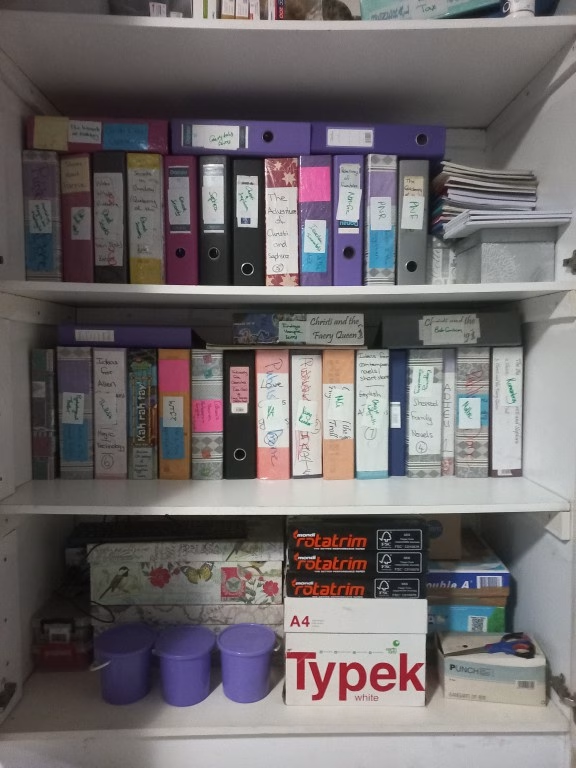
I can be a bit disorganised. Doing the Overwhelmed to Organised challenge in March had really helped me (see how great my writing closet looks at the beginning of this post). And I’ve been doing my best to keep my digital folders clean of whatever builds up as I do my A-Z posts for April (lots of image and research clutter fills my downloads folder by the time I’m done with my folklore posts). I also now put everything back where it belongs once I’m done, instead of letting it lay around for next time. Everything needs a home!
As writers, we get discouraged from time-to-time. It’s normal. It’s why we have the Insecure Writers’ Support Group (we get insecure about our writing). Comparisonitis is deadly! So whether it’s a writing thing or a life thing, just do you.

You can gamify anything. You can do it with toys (dice, playing cards, etc.). You can do it with stickers, colouring books, whatever you like. There’s a reason certain things were fun when you were a kid.
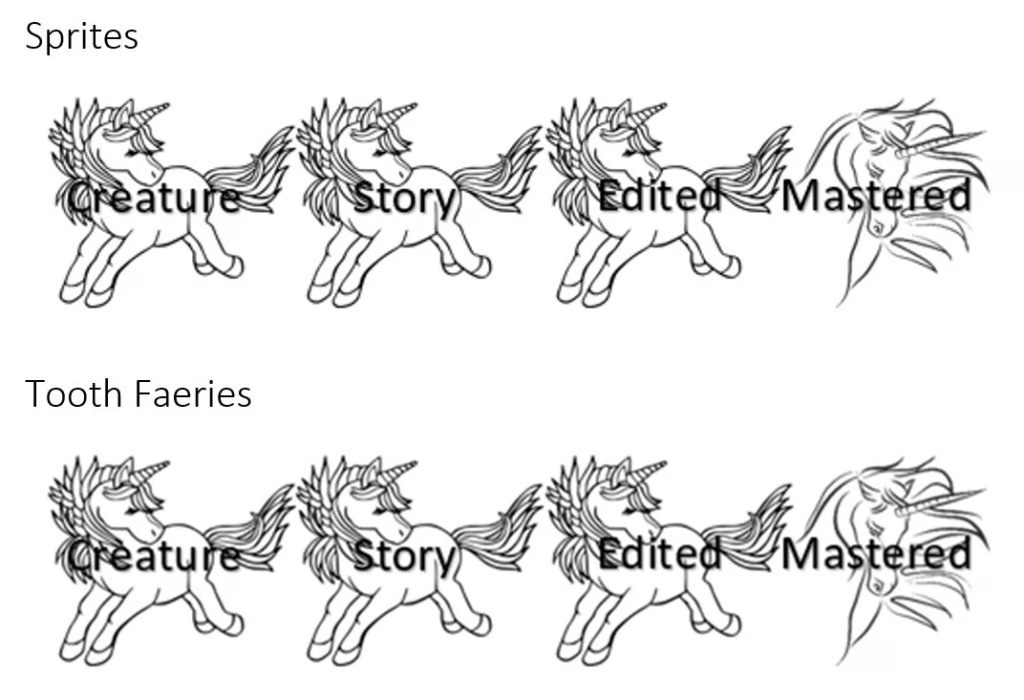
Personally, I like colouring in a unicorn for a specific task and getting a gold star for finishing a project. E.g. for recording the Origin of the Fae series: I get a unicorn to colour in when the non-fiction part is recorded, one for the story, one for editing it all, one for mastering the audio (ready for the final product), and a gold star for having that small part of the larger project done.
The fun aspect motivated me when I was eight and it still motivates me thirty years later. (Yes, therapy helped me to connect with my inner child and I’m much happier.)
Rachelle Ramirez from Pages & Platforms says that there is a specific way to get ADHD brains to get stuff done: interest, challenge, novelty, urgency. You can listen to any of the ADHD videos above and she’ll help you with it. Those four things really work to go from start to finished without all the weird little rabbit holes and “oh, look! Shiny thing over here!” happening.
If you look only at this penname, it might not look like I’m a successful neurodivergent author (I don’t write to market and I’m very niche). But I have other pennames that do really well (I keep them top secret as they are as wildly different from this penname and each other as my reading tastes are diverse). For each penname, I have to write the books, edit the books, get the covers and everything else done for publication, run the marketing department for each (you can’t market different genres to the same people or in the same way!), and be accountable only to myself (and my Rottweiler overlords).
What does your writing routine look like? Do you publish trad or indie? How do you inspire yourself to get through the hard parts of writing?

No-one writes about the fae like Ronel Janse van Vuuren.






And we know what it’s like to herd cats…
You’ve got to work harder to focus but your struggles and triumphs as you have discussed here will help others.
Thanks for co-hosting today!
We deal with all the “dys”s in my family, and as a homeschool mom, I’ve had to learn several methods for helping these kids thrive, which usually means adjusting our timeline in ways traditional educators don’t understand. My worst ADHD child has a 6 week attention span for anything he LOVES, so maybe knowing your personal attention span length will help with conquering projects. Build patterns that work with the way your brain functions.
Thank you so much for sharing. My “thing” is dyslexia.
What an amazing collection of resources! ADHD twinsie here, recently diagnosed and medicated for the first time once Menopause made my usual systems less effective than they had been. @samanthabwriter from
Balancing Act
Thanks for co-hosting this month. It’s great that the ADHD conference was helpful. You’re right that you must have good coping skills. My daughter has ADHD and takes medication and has lots of coping skills to be successful as a chemist.
Lots of interesting material in this post, Ronel. I’ll be watching most of the videos.
Thanks so much for cohosting, and for offering this insightful analysis of how it feels to be neurodivergent.
Not allowed to Like – but -please count me in.
Thanks for being a co-co-host 🙂 I don’t think I’m ADHD, but I struggle with some of those things and use some of the techniques to get the job done. I have a set of “Accountability Buddies” I work with 3 days a week. We don’t keep the cameras on, but we commit to our work projects and have to report success or failure to stick to it. No judgement, but it does seem to make a difference.
I do really procrastinate about doing the hard stuff.
My oldest daughter has ADHD and obsessive tendencies. I had to constantly monitor her education to keep her moving forward. And reteach.
Now as an adult, I like to check in with her. She’s living on her own, but loves to spend! She’s holding down a job. Her employer understands her. Neurodivergent people just need to understand their strengths and weaknesses. Like you said. Stay strong, Ronel. Thanks for cohosting!
It’s sounds like you’ve spent a lot of time and effort figuring out what works for you. That’s impressive. Thank you for co-hosting this monthl.
Very informative post.
My brain issues take a rough back seat to my other health issues, so by the time I get around to addressing them, I’m usually pretty burnt out and ready for a nap. Thus, I’m forever woefully behind. I try the “five minutes is better than no minutes” mantra, but it doesn’t always work.
Thank you for sharing all of the ADHD tips, tricks, and resources. It will take me some digesting to get through these, but it’s nice to know they’re out there! And thanks for co-hosting today.
Thank you for co-hosting this month, and thank you for this post, Ronel. I struggle with ADHD every day, and it’s getting worse as I get older. I appreciate all the resources you’ve listed, and I’ve bookmarked your post. I also deal with anxiety, depression, and mania. I’ve said many times that I have a squash ball court in my brain. I’m embarrassed about how long I’ve been struggling with my memoir, but I know my brain is unique. 😂. I’ll get there, if God grants me more time. 😂 All the best to you. I am so grateful for your sharing.
This is so insightful, Ronel! Not sure what might help, but I’m ready to try anything 😉 Thanks for sharing – and co-hosting!
We NDs definitely need to find different ways to approach our work. I’ve had great attendance at a couple cons when holding ND workshops/talks, and I’m planning to write a book based on those as I continue to hone them. The beauty of hyperfocus! Great resources/info here.
I agree that a woman writer needs a place of her own to write and be creative–preferably one with a lock on the door so that when she’s in the zone, no one bothers her.
Thanks for co-hosting this month. I tried to comment yesterday, but I had login issues.
I love that you’ve found a system that works for you and are helping others by shareing your experience. You always do a good job of sharing helpful information.
As far as I know, I’m not neurodivergent, but the older I get, the more I struggle to a) stay on task, and b) force myself to do things when I’m not feeling motivated. Parallel play works well for me, which is why I love write-ins and have set up a weekly one with one of my critique partners. At least I know I’ll write for an hour on Fridays! As for the rest of the time, I’m learning to work with my energy and motivation patterns, but sometimes it’s rough.
I read and enjoyed your linked post about culling the to-do list and TBR. I really struggle to get real with myself about what I’m actually going to do. Also, I loved the A-Z theme you describe in that post and might have to steal it someday, when I have time to do A-Z again (probably after I retire).
A belated happy IWSG Day!
Thanks for co-hosting, Ronel! This is a lovely post, and I appreciate the effort you always put into your IWSG posts. Cool new website! While ADHD does have some difficulties, I think it’s a superpower in many ways, including enhanced creativity (no wonder you love fantasy), seeing details others don’t see, and a great sense of energy and fun. I attended a training on athletes and ADHD, and the presenters commented on the competitive advantage it offers.
This is a very interesting post. I have learned that getting organized is half the battle, at least. I’m a list-maker, myself. Lists keep me on target, and marking off completed tasks gives me a sense of accomplishment. Thanks for co-hosting.
Multiply neurodivergent here, too! Thank you for sharing. ☺️
A fascinating, and always professional, post, Ronel. And very insightful. I think a lot of us suffer from some form of neurodivergence. Some more than others.
Thanks for co-hosting.