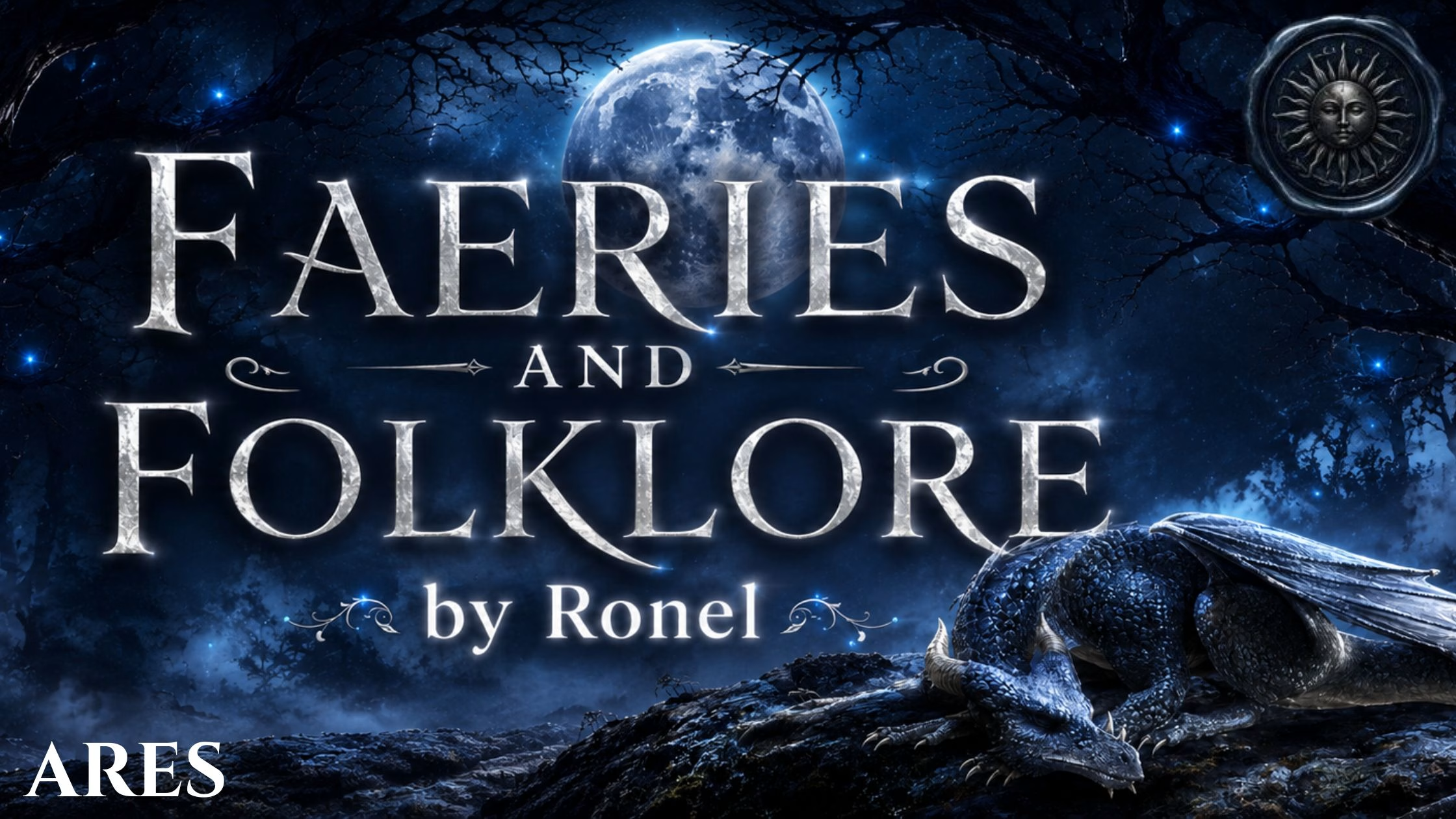
Episode 238: Irascible Immortals: Ares
The folklore of Ares in a nutshell and how I reimagined it for my writing.
Transcript
You’re listening to the Faeries and Folklore podcast by Ronel.
I’m dark fantasy author Ronel Janse van Vuuren. With nearly a decade of digging around in dusty folklore books, researching creatures of imagination that ignited my curiosity, I’m here to share the folklore in a nutshell and how I reimagined it for my writing in an origin of the fae.
This is the Faeries and Folklore podcast.
Hi, I’m your host Ronel Janse van Vuuren. You can just call me Ronel. In today’s episode, we’re continuing our exploration of the fae realm.
This episode is brought to you by my Irascible Immortals series, available in ebook, paperback, hardback and audiobook. They’ve been alive forever. They’ve been bored for some time. And now they’re showing it. Go to ronelthemythmaker.com/my-books/the-irascible-immortals-series for more.
We’re continuing our exploration of the Immortals.
Today’s immortal: Ares
Folklore in a nutshell by Ronel
Ares is the Greek god of war. He encapsulates the brutal and physical aspects of war. It is established by Homer that he is the son of Zeus and Hera, but that the rest of the Olympians weren’t fond of him. In Sparta, prisoners of war were sacrificed to him, and in Enyalius they sacrificed dogs. And despite the temple he had in Athens, he wasn’t a popular god in ancient Greece. But his Roman counterpart, Mars, was held in a much more positive light and even as a chief god in the Roman pantheon.
Ares is usually depicted in ancient art as an armed warrior. He is always connected to Aphrodite – usually as her lover. The stories about them are usually how he gets humiliated by her husband Hephaestus – like when Ares and Aphrodite were caught naked in a fine net made by her husband and all the Olympians came to laugh at them. Their affair was no secret to the other Olympians. They even have children together: Deimos and Phobos (Terror and Panic) who go with him into battle, and Eros or Cupid, a god of love, according to later tales. Ares is supposedly the father of the Amazons, the most amazing warrior women of all time. He also sired many mortal children, most of whom were enemies to Hercules.
Ares is aggressive, has a quick temper and an unquenchable thirst for conflict. But because he has a clear sense of duty and honour – especially where it comes to his children and allies – he has enough redeeming qualities to make the other Olympians’ distaste for him seem like fear of his raw power and intensity instead.
Origin of the fae: Ares
Ares is the Greek god of war. He isn’t fond of the tedious battle strategy games his sister Athena enjoys, but he isn’t blind to the benefits of strategy instead of rushing in blindly either. He enjoys going to dive bars – especially the kind with live music with angry vibes. Whenever he is near mortals, they cannot help but be influenced by the violence radiating from him. He dresses in leather and rides on a motorcycle, preferring the mortal realm to anything crowded by immortals. Ares broke off his affair with Aphrodite a while back when he realised that she was never going to divorce Hephaestus, be true to him, or care about anything but herself.
I hope that you’ve enjoyed this episode of the faeries and folklore podcast and that you’ve learned something new about faeries.
Remember that you can get a transcript of this episode in the description. If you’re new to the podcast, why not go and grab your free copy of Unseen, the second book in the Faery Tales series, on my website ronelthemythmaker.com? Loads of folklore, magic and danger await! Take care!
Available at
Audible | Podbean | Amazon Music | Spotify | Youtube | iHeart Radio | Player FM | Listen Notes | Apple Podcasts | TuneIn

Read the full folklore article:

Explore the folklore, modern interpretations, and the Faerie Mythos.
Listen to this season’s audiobook:
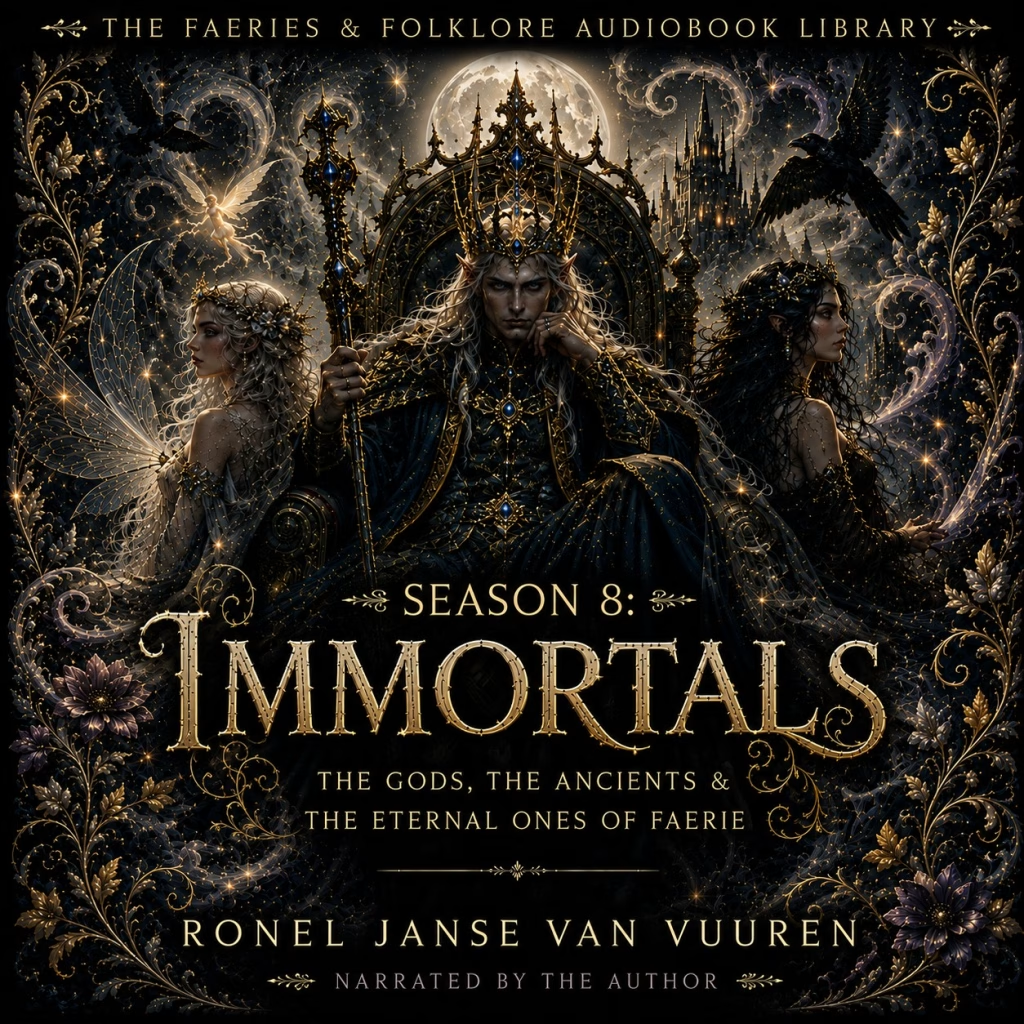
Listen to the full season with no interruptions.
Explore the Audiobook Library ✦ Browse the Lore Archive ✦ Discover the Faerie Mythos Books ✦ Join the Mythmaker’s Circle
Enjoying the podcast?
If you’ve enjoyed this episode, you can support the time and care that goes into researching, writing, recording, and producing the Faeries & Folklore Podcast by buying me a coffee.
Your support is always appreciated, whether it’s a one-time thank you or an occasional coffee whenever you feel like it. Every contribution helps me continue sharing the folklore, myths, and legends that inspire the Faerie Mythos.